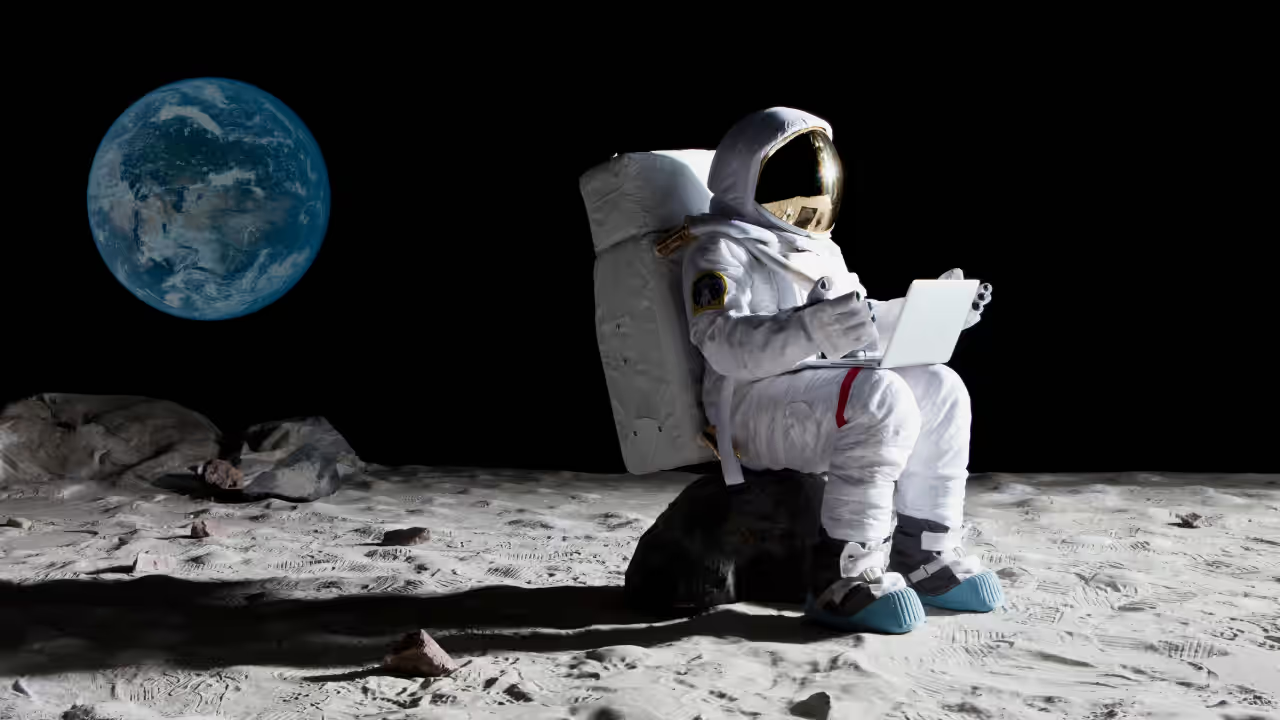
Discover NASA's bold Artemis IV mission plan to land astronauts on the Moon's south pole. Learn about the week-long stay and the new strategy for a lasting human presence.
After decades of planning, NASA is getting ready for a new phase in human space exploration. The agency has shared new details about its upcoming Artemis IV mission, which will send astronauts to the Moon for the first time since the Apollo 17 mission. This mission is part of a broader effort to create a long-term human presence beyond Earth.
Mission Plan
Artemis IV will include four astronauts travelling to lunar orbit, with two of them landing close to the Moon’s south pole. This area is significant because it is thought to contain water ice, which could be useful for future missions. The entire journey, from launch to return, is expected to take approximately 21 days.
Surface Stay
Once on the Moon, the two astronauts will remain on the surface for about a week. This is a major step up from earlier Apollo missions, where astronauts only stayed for a few days. The longer stay will enable them to perform more detailed experiments and explore the area more thoroughly.
Related Articles

Also read: Gaganyaan Astronauts Train in Zero Gravity Ahead of Historic Space Mission
Programme Changes
NASA has also updated its overall Artemis programme. The earlier mission, Artemis III, is now scheduled for 2027 but will focus on testing systems in Earth orbit rather than landing on the Moon. This gradual approach is meant to ensure that everything functions safely before astronauts attempt another landing.
Future Strategy
NASA aims to make Moon missions more frequent and sustainable. It plans to conduct crewed landings more regularly, possibly every year or even every six months in the future. To achieve this, NASA is working on improving its rocket systems and using more reusable and commercially developed technologies.
Long-Term Goals
Looking forward, NASA is also rethinking how it will support astronauts on the Moon. Instead of focusing heavily on the Gateway space station, the agency is prioritizing the development of habitats, power systems, and vehicles for the lunar surface. These efforts are intended to help astronauts stay longer and work more effectively, setting the stage for a lasting human presence on the Moon.