
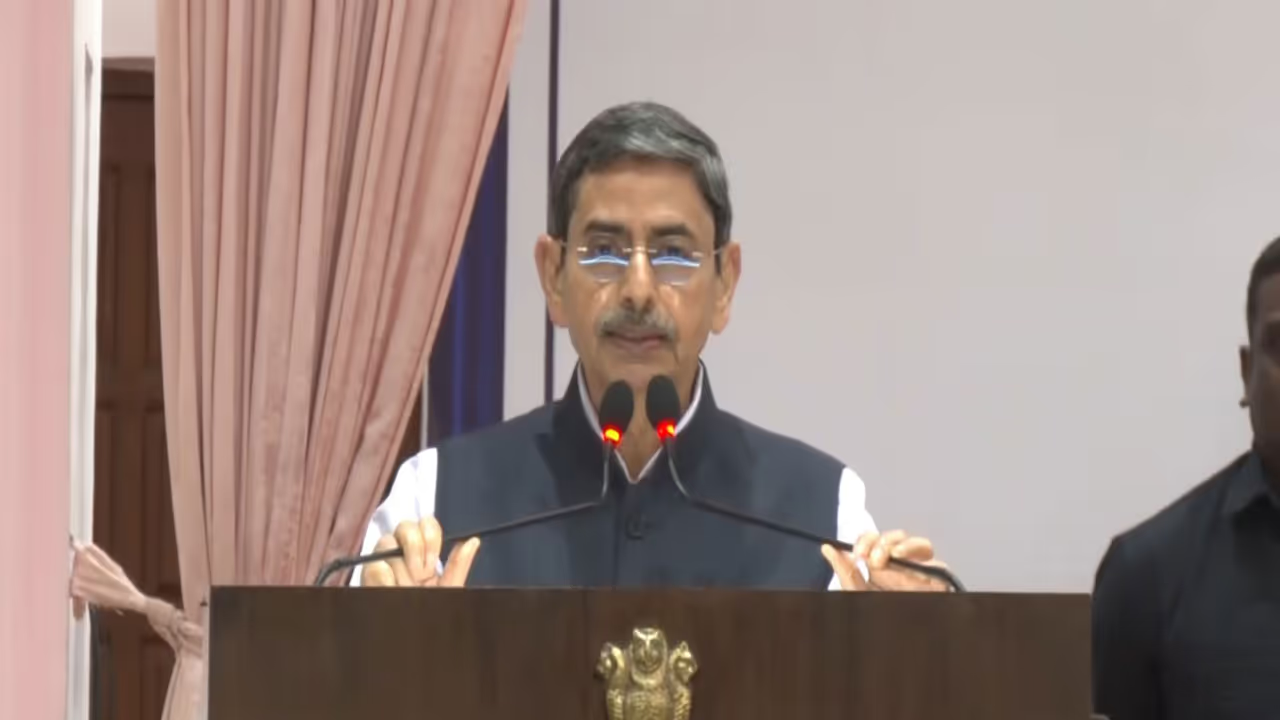
West Bengal Governor RN Ravi has called upon all universities and colleges in the state to observe August 14 as Partition Horrors Remembrance Day, aiming to educate students about the immense suffering and trauma of the event, especially in Bengal.
West Bengal Governor RN Ravi has called upon all State and Private Universities in West Bengal, along with their affiliated colleges and institutions, to observe August 14 as Partition Horrors Remembrance Day, bringing students, faculty members and parents together to remember the horrors of Partition and its profound impact on Bengal.
Remembering Partition's Impact on Bengal
According to a release from Lok Bhavan, Bengal bore the worst horrors of Partition, with millions facing displacement, loss of precious lives and livelihoods, and profound social, cultural and economic disruption. The observance will help our younger generation understand one of the darkest chapters of our national history: the horrors of Partition, the immense suffering of those who lived through it, and the forces that led to it--and remain vigilant against forces that seek to divide us.
National Observance
In 2021, the Government decided to observe August 14 every year as the day to commemorate the sacrifice of all those who lost their lives due to the partition of the nation and were displaced from their root. The declaration of such a day would remind present and future generations of Indians of the pain and suffering faced by the people during the partition, according to the Ministry of Information & Broadcasting.
The Trauma of Partition
India attained its freedom from British rule on August 15, 1947. Independence Day is a joyous and proud occasion for any nation; however, with the sweetness of freedom came also the trauma of partition. The birth of the newly independent Indian nation was accompanied by violent pangs of partition that left permanent scars on millions of Indians.
The partition caused one of the largest migrations in human history, affecting about 20 million people. Millions of families had to abandon their ancestral villages/towns/cities and were forced to find a new life as refugees. (ANI)
(Except for the headline, this story has not been edited by Asianet Newsable English staff and is published from a syndicated feed.)