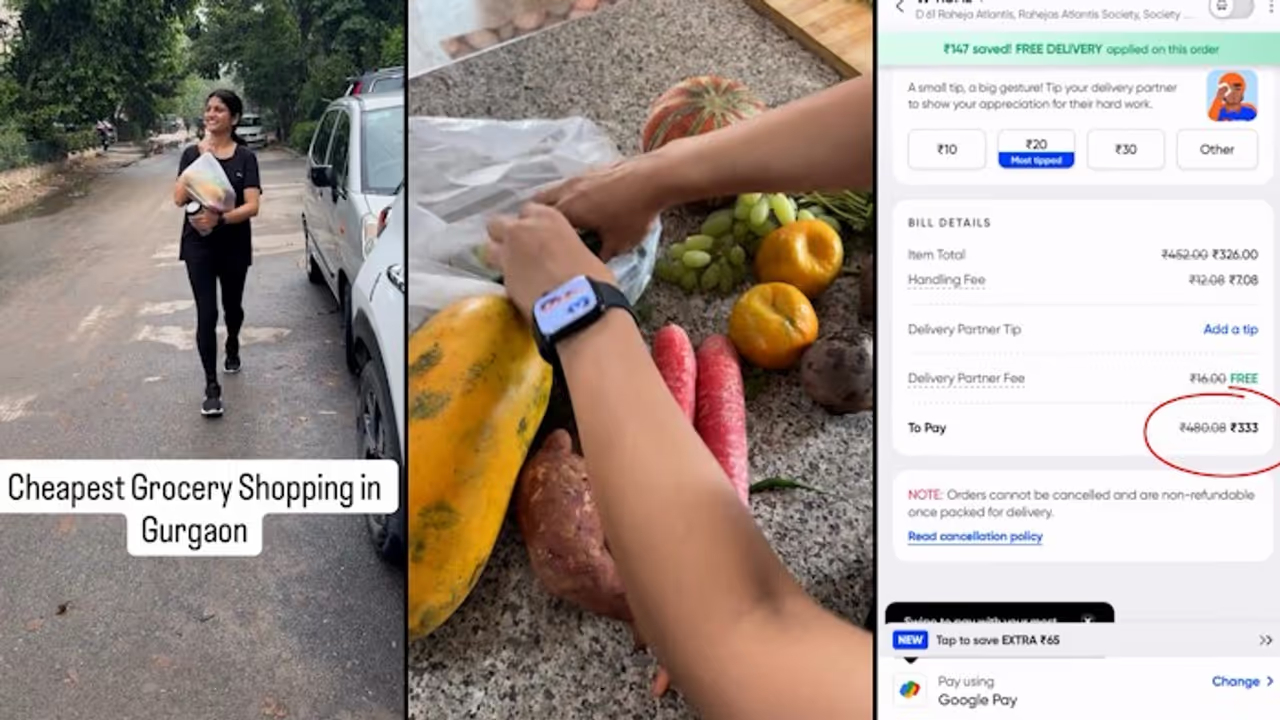
A Gurugram resident, Mahek Akhtar, conducted a price comparison for the same list of groceries from Instamart, Blinkit, and a local roadside vendor. Her experiment revealed that the local seller was significantly more cost-effective than the quick-delivery apps.
A common urban discussion has been sparked by a Gurugram resident's straightforward grocery comparison: are rapid delivery apps worth the additional expense, or do local merchants still provide superior value? Recently relocated to the city, Mahek Akhtar posted a video of her little experiment on Instagram. In order to determine which was the most cost-effective, she set out to purchase the same assortment of fruits and vegetables from three different vendors: Instamart, Blinkit, and a roadside seller.
She took viewers through her shopping in the video, describing what she bought, including fruits, veggies, beets, and coriander. Her total from the roadside vendor was Rs 280, and she didn't have to pay extra for extras like green chillies and coriander. The amount increased to almost Rs 365 when she looked at the identical list on Blinkit, while Instamart had a little lower total of Rs 333.
Based on this, she said that, particularly for regular groceries, local sellers continue to be the most affordable choice. In the caption, Akhtar explained that she is trying to understand how to manage expenses better while adjusting to life in Gurgaon. She acknowledged that delivery apps bring groceries to your doorstep, but added that traditional vendors are easily available across neighbourhoods.
Related Articles

Watch Viral Video
How Did Social Media React?
Online responses to the video were mixed. Some users concurred with her conclusion, stating that street sellers are typically more reasonably priced and even permit haggling. Others emphasised the importance of convenience, particularly for individuals with hectic schedules. Some noted that applications like Instamart and Blinkit are designed for speed and convenience rather than necessarily for cost savings.
The conversation represents a larger reality of modern city living, where individuals are always trying to strike a balance between time, comfort, and expense.