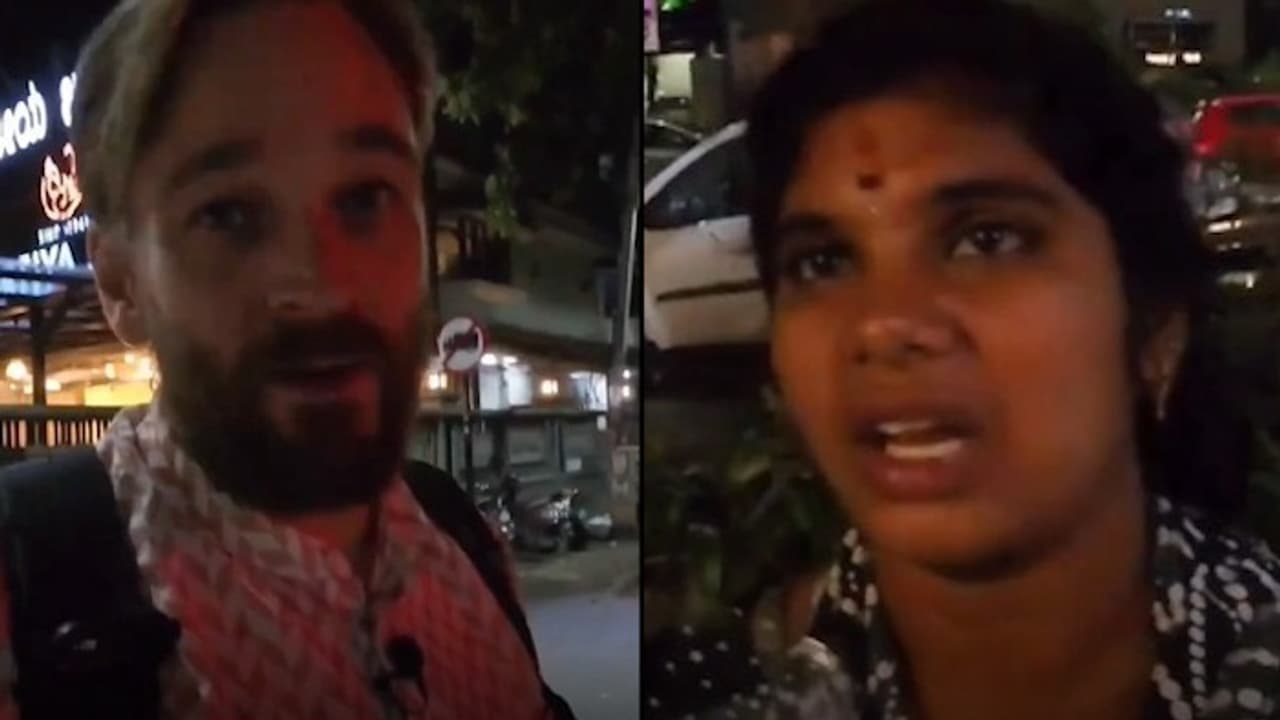
A viral video from Bengaluru shows a flower seller becoming hostile after a tourist refused to buy flowers, citing lack of cash. The woman allegedly verbally abused and physically struck the man.
A video shared on Reddit’s r/IndiaFreakoutDesi forum has drawn attention to an unsettling encounter between a tourist and a flower seller in Bengaluru, prompting widespread reactions online. In the clip, a man identified as a tourist is approached by a woman begging to buy her flowers. When he refuses - explaining he did not have cash to give - the interaction quickly turns hostile.
According to the footage and accompanying post, the woman becomes visibly frustrated at the refusal and begins to verbally confront the tourist. She allegedly insults him, referring to him with abusive language and accusing him of being “crazy.” At one point, she even strikes him physically after he maintains that he cannot provide any donation.
The incident highlights the sensitive dynamics often involved in panhandling situations, particularly in busy public areas where beggars and tourists may interact. While begging is a common feature in many Indian cities and towns, confrontations - especially those that turn aggressive - tend to spark strong reactions on social platforms.
Related Articles

Online users who viewed the clip expressed a range of responses. Some criticised the beggar’s conduct, suggesting that approaching tourists aggressively can deter visitors and contribute to negative perceptions of local hospitality. Others pointed out socio-economic factors, noting that individuals who resort to begging may be under severe financial stress and that interactions can escalate when expectations clash with reality.
The post also reignited discussions about tourist safety, personal boundaries, and public behaviour, with many commenters calling for better awareness and possible measures to ensure respectful engagement between locals and visitors.
While the identities of those involved have not been independently verified, the clip has underscored how seemingly everyday interactions can quickly escalate and become emblematic of broader tensions in public spaces.