
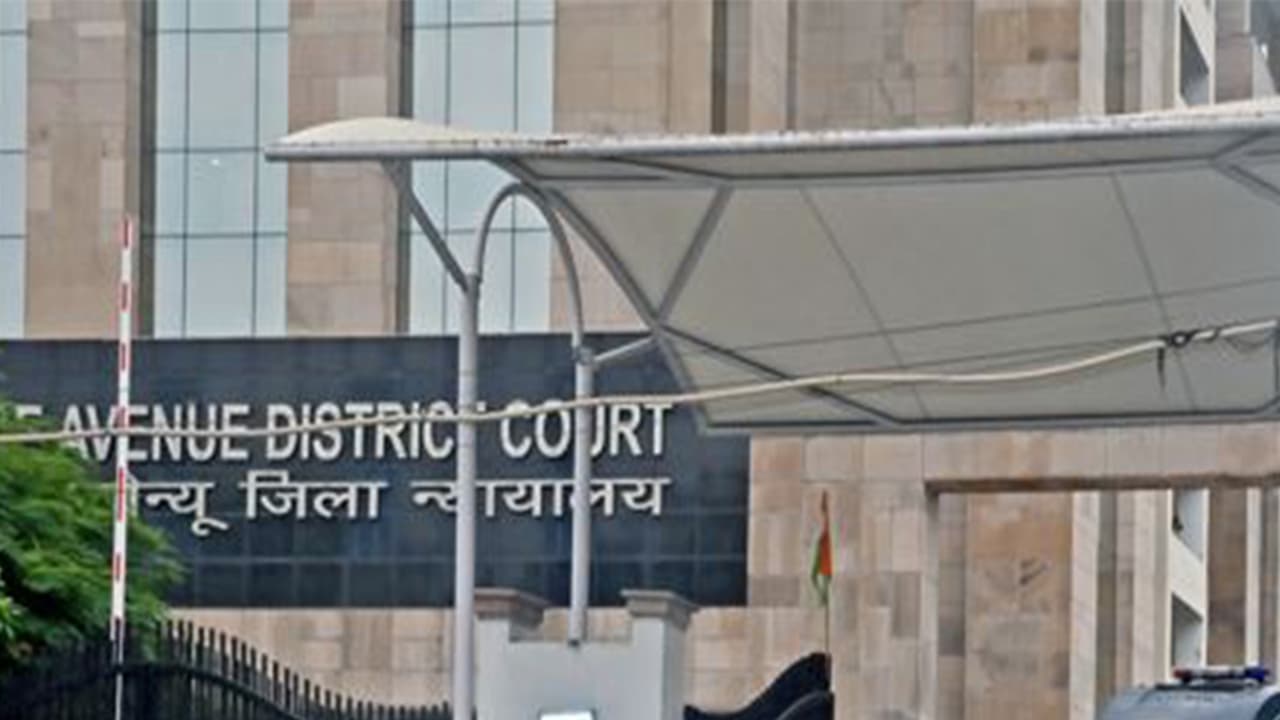
A Delhi court acquitted three UP police officers accused by the CBI of failing to file an FIR in the Unnao rape case. The court ruled that a complaint on a CM portal did not satisfy the legal requirement for registering an FIR under Section 154 CrPC.
A Rouse Avenue Court has acquitted three Uttar Pradesh police officers who were prosecuted by the Central Bureau of Investigation (CBI) for allegedly failing to register an FIR on a complaint related to the Unnao rape case involving former MLA Kuldeep Singh Sengar.
Court Cites Failure to Prove Essential Ingredients
Delivering judgment on March 14, ACJM Mayank Goel held that the prosecution failed to prove the essential ingredients required to establish an offence under Section 166A of the Indian Penal Code (IPC), which penalises a public servant for knowingly disobeying legal directions to record information regarding certain cognizable offences, including rape.
The case was registered against Kunwar Bahadur Singh, then Circle Officer of Safipur; Dharam Prakash Shukla, then Station House Officer of Police Station Makhi; and Digvijay Singh, then Sub-Inspector at the same police station.
The CBI had alleged that the officers failed to register an FIR despite receiving information about the alleged rape incident of June 4, 2017. According to the prosecution, the victim had submitted a complaint on the Uttar Pradesh Chief Minister's grievance portal (IGRS) alleging sexual assault by Kuldeep Singh Sengar and also raising concerns about police inaction.
Portal Complaint Not Equal to FIR Filing, Court Rules
The complaint was forwarded to the district police and marked to the accused officers for enquiry and report. However, the court observed that merely filing a grievance on the Chief Minister's portal or similar administrative platforms cannot be treated as compliance with Section 154(1) of the Criminal Procedure Code, which mandates recording of information relating to a cognizable offence by the officer in charge of a police station.
The court noted that the statutory obligation to register an FIR arises only when information about the commission of a cognizable offence is directly given to the police officer in the manner contemplated under Section 154 CrPC. In the present case, the evidence only showed that a grievance was lodged on the CM portal and subsequently forwarded to the police for enquiry.
Victim's Testimony Acknowledged
Importantly, during cross-examination, the victim admitted that she had not filed any complaint with any police station regarding sexual assault by Kuldeep Singh Sengar before submitting the complaint on the IGRS portal dated August 17, 2017. The victim's mother also confirmed the same during her testimony.
Further Legal Observations
The court further held that criminal liability under Section 166A IPC, being penal in nature, must be strictly construed. Unless it is established beyond a reasonable doubt that the accused public servant was directly given information about a cognizable offence and deliberately failed to record it, the offence cannot be said to be made out.
The judge also clarified that although an FIR was subsequently registered and the accused in that case was ultimately convicted, such subsequent developments cannot automatically establish that the police officers had knowingly disobeyed their legal duties at the relevant time. Finding that the prosecution had failed to establish the foundational requirement for invoking Section 166A IPC, the court acquitted all three accused officers.
The court also directed that the bail bonds of the accused be accepted under Section 437A CrPC and ordered the file to be consigned to the record room after necessary compliance. Senior Public Prosecutor Anurag Modi appeared for the CBI, while Advocate Surya Nath Pandey represented the accused persons. (ANI)
(Except for the headline, this story has not been edited by Asianet Newsable English staff and is published from a syndicated feed.)