
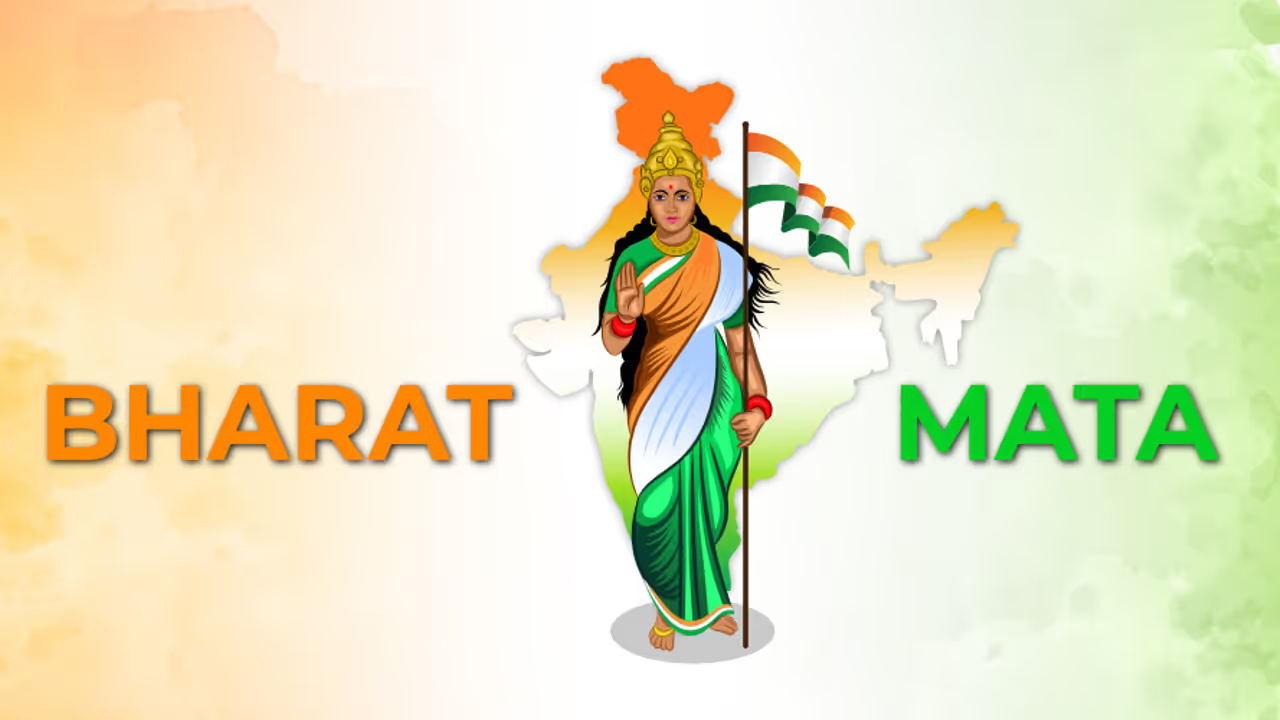
When we think of Bharat Mata, we picture a woman in a tricolour saree holding a flag. But did you know the very first painting was completely different? Here's the story of who painted it and why.
The image of Bharat Mata we see everywhere today—in our textbooks, as statues—is usually a woman wearing a saffron, white, and green saree and holding the national flag. But the first-ever painting of her was actually called 'Banga Mata', which means 'Mother of Bengal'. This original painting was made back in 1905 by Abanindranath Tagore. This was during the Partition of Bengal, and the painting was created to inspire a feeling of nationalism and unity among people. It became a powerful symbol of that time.
Puri Jagannath: Why The Temple Idols Are Secretly Changed Every 12 Years? Find Out Now
By the way, Abanindranath Tagore was the nephew of the famous poet Rabindranath Tagore. In Abanindranath's painting, the mother figure is shown wearing simple saffron clothes and has four arms. In one hand, she holds a book, in another, some paddy sheaves. A third hand has a *japamala* or prayer beads, and the fourth holds a piece of white cloth. Abanindranath Tagore was basically giving a visual form to the idea described by Bankim Chandra Chatterjee, the author of 'Vande Mataram'.
Darjeeling's Toy Train Day celebrated to promote UNESCO heritage site
So, what was the inspiration for this painting?
The idea of creating a mother figure for the nation actually came from Europe. During the French Revolution in 1789, a female figure named 'Marianne' was created as an official symbol for liberty, equality, and fraternity. Similarly, Germany created a heroic female figure called 'Germania'. The idea was to create a similar national symbol for India, which led to the concept of Bharat Mata.
