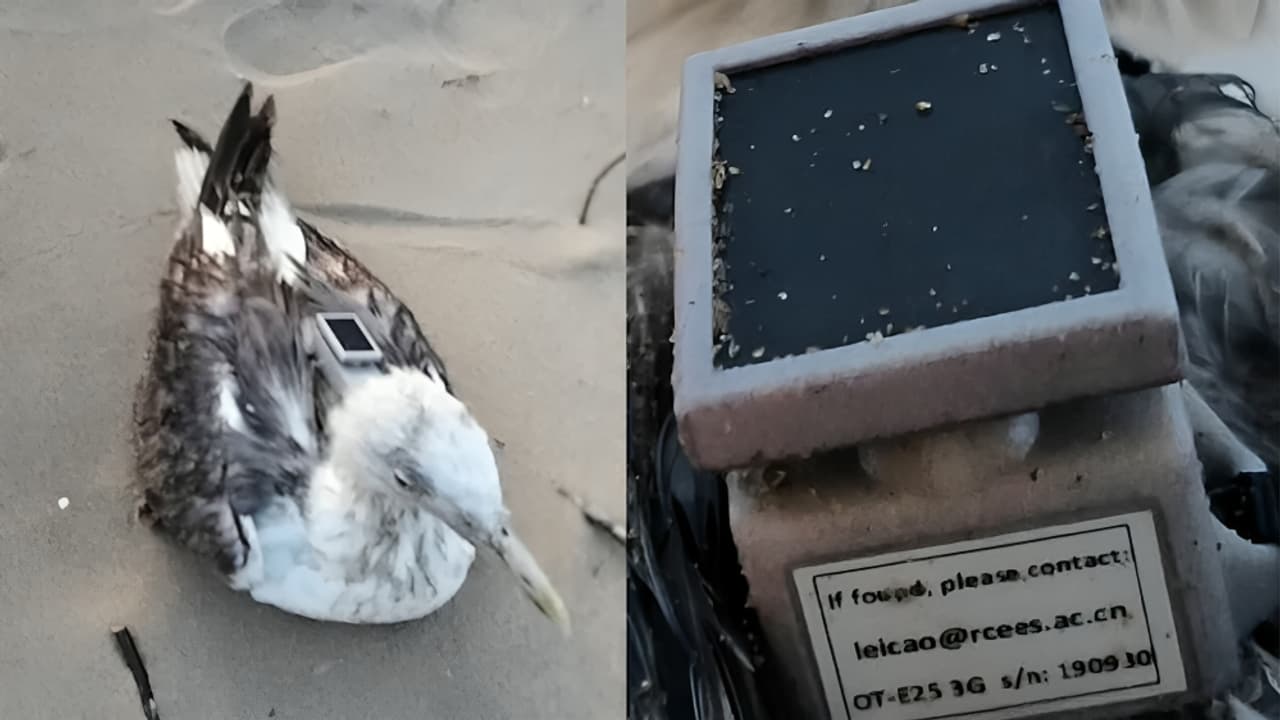
A GPS-tagged seagull found on Karwar beach sparked spy rumours after locals noticed a China-made tracker. Forest officials later confirmed it was part of scientific study by a Sri Lankan wildlife group. The exhausted bird had travelled over 10,000 km
A strange discovery on a beach in Karnataka's Karwar town caused confusion and concern among locals after a seagull fitted with a GPS tracker was found resting on the shore. At first, many people feared the bird could be part of a spying attempt, especially after noticing that the device attached to it was made in China, according to a report by The Times of India.
However, forest officials later confirmed that the tracker was part of a scientific wildlife study, and there was no threat to security.
Bird spotted on Karwar beach
The incident took place on Wednesday at Karwar beach. Locals noticed a seagull with a small electronic device tied to its body. Since it looked unusual, they raised an alert with the forest department.
Officials arrived and found that the bird was exhausted and had minor injuries. The seagull was rescued and taken to the forest department office for a health check, the TOI report added.
Related Articles

Tracker linked to scientific research
After examining the device, forest officials confirmed that it was a GPS tracking unit used for studying bird migration. There was no camera or recording equipment attached to it.
Forest department sources said they contacted the Wildlife and Nature Protection Society of Sri Lanka (WNPS). The organisation confirmed that it had tagged the seagull as part of a long-term research project to track migratory routes of seabirds.
Officials also clarified that while the tracker was manufactured in China, this is common for wildlife tracking equipment and does not suggest any spying activity.
Spy rumours and security checks
Soon after the bird was found, rumours spread online and in some media reports suggesting that the seagull might be a spy bird. This speculation grew because the INS Kadamba naval base is located near Karwar.
Police and intelligence officials visited the beach and checked the device. After verification, they confirmed that the incident posed no security risk and that the tracker was used only for scientific purposes.
Authorities strongly denied any link to surveillance or espionage.
Bird's long journey revealed
Data recovered from the GPS tracker showed that the seagull had travelled more than 10,000 kilometres. Its journey included flying across Arctic regions before reaching the Karnataka coast.
Officials said this information highlights how important GPS tagging is for understanding bird migration, climate patterns, and conservation needs.
Public urged not to spread rumours
Forest officials urged people not to spread misinformation or panic over such findings. They explained that GPS tagging of birds is a standard global practice used by researchers to protect wildlife and study nature.
The rescued seagull is expected to be released once it fully recovers.