
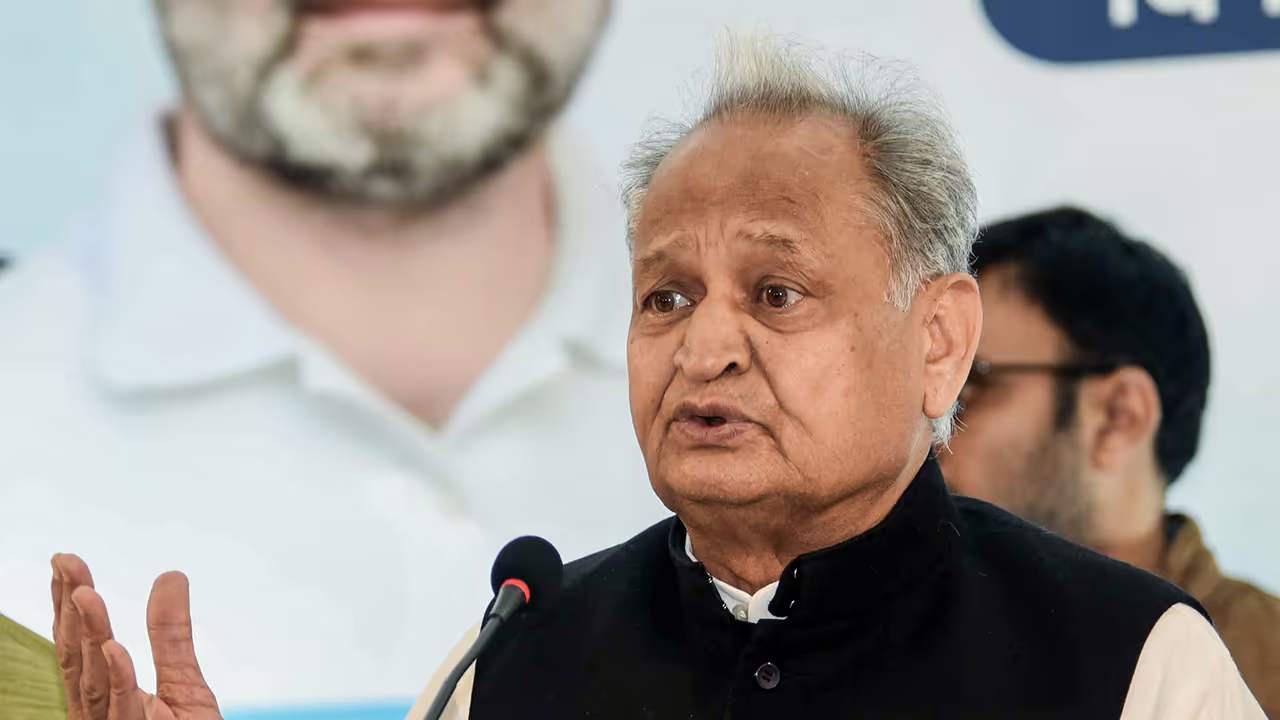
Former Rajasthan CM Ashok Gehlot supports the #SaveAravalli campaign, protesting a new definition that excludes hills under 100m from protection. He warned it threatens North India with desertification, pollution, and water shortages.
Former Rajasthan Chief Minister Ashok Gehlot on Thursday expressed support for the #SaveAravalli campaign, changing his social media display picture (DP) to show solidarity. He said that this was not just a symbolic change of photo but a protest against the new definition under which hills shorter than 100 meters are no longer recognised as part of the Aravalli range.
In a post shared on X, Gehlot warned that these changes regarding Aravalli conservation pose a major threat to the future of North India. He urged citizens to change their display pictures as well to join the campaign. आज मैं अपनी प्रोफाइल पिक्चर (DP) बदलकर #SaveAravalli अभियान का हिस्सा बन रहा हूँ। यह सिर्फ एक फोटो नहीं, एक विरोध है उस नई परिभाषा के खिलाफ जिसके तहत 100 मीटर से कम ऊंचाई वाली पहाड़ियों को 'अरावली' मानने से इंकार किया जा रहा है। मेरा आपसे अनुरोध है कि अपनी प्रोफाइल पिक्चर बदलकर… pic.twitter.com/pt9u1O8UpX — Ashok Gehlot (@ashokgehlot51) December 18, 2025
Gehlot Outlines Major Ecological Concerns
The former Chief Minister highlighted three major concerns regarding the new definition of Aravalli. The first is "A wall against desert and heatwaves". Gehlot said the Aravalli is not just ordinary hills but a natural "green wall" created by nature. It prevents sand from the Thar Desert and hot winds from reaching the fertile plains of Delhi, Haryana, and Uttar Pradesh. "If the smaller hills (Gaping Areas) are opened up for mining, the desert will reach our doorstep, and the hot winds will drive up temperatures," he added.
The second is "Protection from Pollution". Gehlot added that these hills and forests act as the "lungs" of the National Capital Region (NCR) and nearby cities. They help curb dust storms and reduce pollution. Gehlot expressed concern that if the Aravalli is already under threat, the situation without it could be far more disastrous.
The third is "Groundwater". Aravalli is a key source of water conservation, Gehlot said. "Its rocks channel rainwater underground to replenish groundwater. If the hills disappear, we'll face a severe drinking water shortage in the future, pushing wildlife to the brink of extinction and threatening the ecology," he added.
Gehlot further emphasised that scientifically, the Aravalli forms a continuous chain. "Its smaller hills are just as vital as the taller peaks. If even one brick is missing from the wall, the protection crumbles," he added.
Appeal to Reconsider Based on 'Ecological Impact'
In conclusion, Gehlot made a humble appeal to the Central government and the Supreme Court to reconsider this definition in order to ensure a safe future for the coming generations. "Let Aravalli be judged not by 'ridges' or 'height,' but by its 'ecological impact' (Ecological Impact)," he added.
Supreme Court Accepts Centre's New Definition
Earlier, on November 20, the Supreme Court accepted the Centre's definition of the Aravalli hills, which states that "any hills in the range with an elevation of less than 100 metres are not subject to the strictures against mining." The apex court also accepted the recommendations for sustainable mining in the Aravalli Hills and the steps to be taken for preventing illegal mining. (ANI)
(Except for the headline, this story has not been edited by Asianet Newsable English staff and is published from a syndicated feed.)