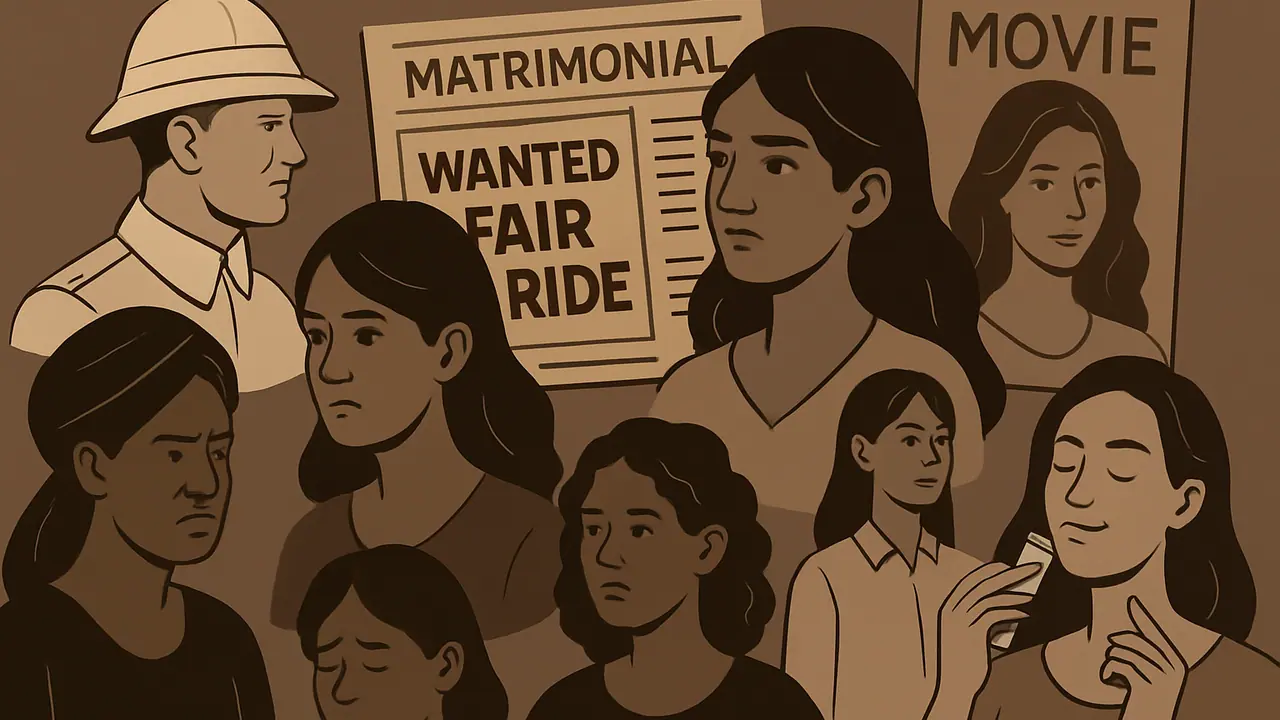
The tragic death of San Rechal, ex-Miss Puducherry and anti-colourism advocate, highlights how deeply colour bias is ingrained in India’s psyche, from media and culture to beauty standards and mythology
Popular model and former Miss Puducherry, San Rechal allegedly committed suicide on Sunday. The popular model and influencer was also crowned as Miss Dark Queen Tamil Nadu in the year 2019.
In light of this tragic incident, let's check out how colourism is deeply rooted to Indian psyche. Colourism is not a new affliction but it is deeply entrenched with cultural, religious, historical and commercial roots. It deeply continues to shape public perception. This deep rooted bias not only shapes public opinion but also media representation and personal identity in more ways than we can ever fathom.
Historical and Colonial legacy
Though India's fixation with fair and light skin colour predates British colonization, it certainly was solidified after almost two hundred years of British rule in the country. The British believed in white superiority, in the white man's intelligence and civility. While darkness symbolized servitude. This idea got seeped into the psyche of the subcontinent in the modern times. Post-independence it became very difficult to get rid of this mentality from collective Indian consciousness.

Cultural Stigmatization: 'Gori' as Ideal
In daily language, matrimonial ads, and family conversations, fair skin remains a prized attribute. A 2020 study by the Indian Journal of Dermatology found that 54% of Indian women had used skin-lightening products at some point. Terms like “gori” (fair) are still used as compliments, while “kaali” (dark) carries derogatory undertones.
Popular matrimonial platforms regularly feature "fair complexion" as a preferred trait. Fairness is often conflated with beauty, virtue, and even marriageability—especially for women. This is reinforced early in childhood when dark-skinned children are subjected to comparisons, mockery, or unsolicited advice on lightening their skin.
Media and Films
Indian movie and the television industry have long idealized the fair skin over Indian skin tones. A majority of Bollywood heroines are all fair skinned where as the number of coloured people in the country ranges from approximately 80-85% of the population. Leading Bollywood ladies Alia Bhatt, Katrina Kaif and Kareena Kapoor are all fair skinned ladies. We have seen fair skinned actresses made to look dark with make-up for portraying people of marginalized communities. For example, Bhumi Pednekar, a naturally fair actress, was darkened with makeup to play a character in Bala (2019), a film ironically about colourism.
In the film Gully Boy, Alia Bhatt who is naturally fair skinned was made to look darker to suit her character. Bollywood failed to find one capable dark skinned actress to play the role.
In 'Super 30', Hrithik Roshan, who is often considered a 'Greek god' was made to look completely different from his original skin tone to bring to terms with the character's representation from Bihar.
A 2019 study by the Journal of Creative Communications found that 71% of lead female roles in Indian ads were played by fair-skinned women, even though 80% of the population has a medium to dark skin tone.
The Fairness Industry
According to National Institute of Health, the fairness industry is estimated to be around $8.8 billion in 2022 and is projected to almost double in 2030. It accounts for almost half of all skincare spending by women in India which is a huge share.
Mythology and Spiritual Symbolism
Though Indian mythology portrays Kali, Shiv and Vishnu as all darked skinned Gods and Goddess, the idea has not seeped in the way it should have been. In early Indian texts, phrases like 'Gaura Varna' is associated with nobility, purity where as darkness metaphorically aligns with evil, sin or ignorance.
Social Hierarchies and Skin Colour
The correlation between caste, class and skin tone cannot be discarded. For working class people, long hours of exposure under the sun generally meant tanned skin whereas the privileged upper class people tended to be lighter-skin. Thus, over centuries this contributed to the false belief that lighter skin equates to higher social standing.
Digital and Social Media
Ironically, filters and photo-editing apps offer whitening tools as default features. Instagram, Snapchat, and TikTok perpetuate unrealistic beauty standards, subtly encouraging users to appear lighter. Influencers with Eurocentric features and lighter skin tones tend to gain faster traction, despite India’s massive diversity.
San Rechal’s life and voice were symbols of strength, but her death is a damning indictment of a society that still equates beauty with fairness. In mourning her loss, India must confront the toxic ideal that continues to marginalize millions.