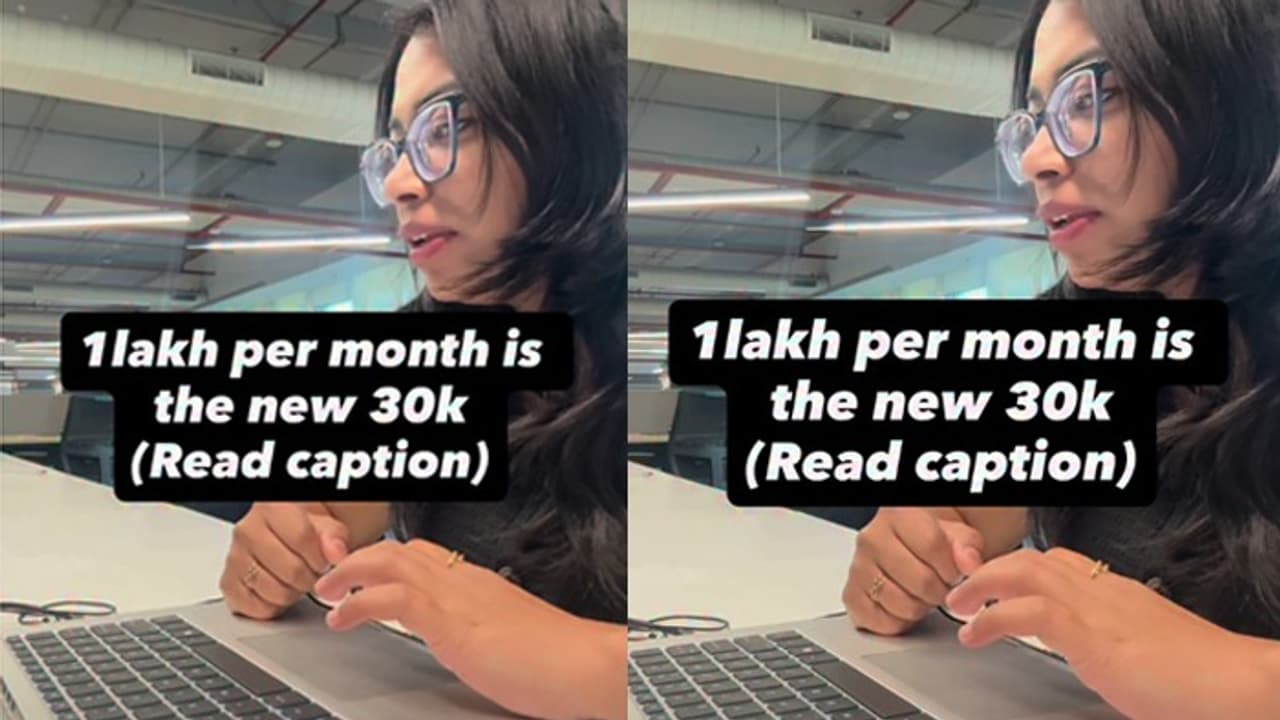
A Gurugram-based chartered accountant, Muskan Mittal, explains in a viral post why a Rs 1 lakh monthly salary now feels like Rs 30,000 due to inflation and rising living costs. She provides a detailed expense breakdown for a middle-class individual, covering everything from rent and groceries to savings, illustrating how the income is allocated.
A chartered accountant based in Gurugram has shared an Instagram post on rising living costs after breaking down why earning Rs 1 lakh a month no longer feels as comfortable as it once did for many middle-class salaried Indians. "Rs 1 lakh per month is the new Rs 30,000," according to Muskan Mittal, implying that inflation and growing living expenses have drastically changed what a six-figure monthly salary can actually afford.
"The new Rs 30,000 is Rs 1 lakh every month. Not because you're making careless purchases. "Because life has become costly," she remarked. Mittal described how a typical middle-class salaried person making Rs 1 lakh a month may split their income between savings, discretionary expenditures, and necessities.
According to her calculation, rent accounts for the biggest portion at Rs 25,000, with groceries and food coming in second at Rs 10,000. An additional Rs 5,000 is spent on commuting costs, such as petrol, taxis, and metro fare.
Related Articles

Shopping and personal care expenditures may cost up to Rs 5,000 per month, while basic utilities like power, Wi-Fi, and cellphone fees total about Rs 3,000. A further Rs 5,000 may be spent on entertainment and eating out.
Additionally, Mittal set aside Rs 5,000 for presents, family assistance, and other expenses, and Rs 7,000 for insurance, emergencies, and medical needs. On the savings front, she recommended setting aside Rs 20,000 for SIPs and investments, with another Rs 15,000 for an emergency fund or extra savings.
Watch Viral Video
Taken combined, these costs and savings allocations equal the whole Rs 1 lakh monthly income, leaving little leeway for excess. The goal of budgeting, she explained, is not to preserve every rupee, but to create a balance between current comfort and future security.
“The goal isn’t to save every rupee. The goal is to enjoy today without compromising tomorrow,” she said.