
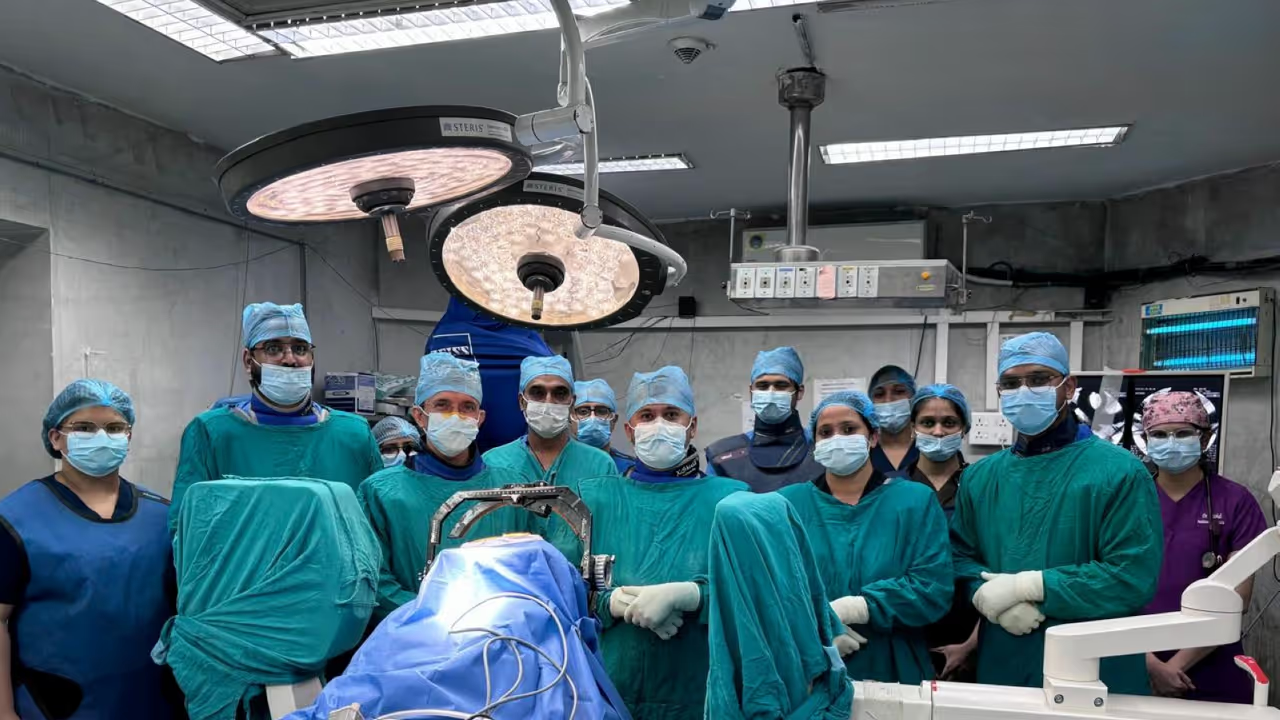
Delhi's RML Hospital successfully performed its first-ever Deep Brain Stimulation surgery on a 55-year-old Nepal official with Parkinson's. The complex procedure offers a low-cost alternative to expensive private hospital treatments.
A 55-year-old Nepal government official, who has been on long leave for the past six months after Parkinson’s disease left her struggling with tremors and difficulty walking, has undergone deep brain stimulation (DBS) surgery at Dr Ram Manohar Lohia Hospital. The procedure was performed for the first time at the hospital by its neurosurgery department, with support from doctors in the radiology and anaesthesia departments.
The woman is an Under Secretary in Nepal’s government. She had been receiving treatment at a private hospital but found the cost of the procedure prohibitive.
Affordable Alternative to Private Care
Doctors said the treatment could cost Rs 25 lakh to Rs 30 lakh at private centres, while the expense at RML Hospital was nominal. Sharad Pandey, professor in the neurosurgery department, told a media publication that the eight-to-nine-hour procedure began at around 9 am and concluded at about 5.30 pm last week. The patient will remain under observation for five to six days, with doctors planning to programme the implanted device and adjust its settings according to her symptoms.
How Deep Brain Stimulation Works
“Deep brain stimulation is generally considered for patients whose Parkinson's symptoms are not adequately controlled by medication,” he said. In deep brain stimulation, electrodes are implanted in specific areas of the brain to deliver electrical impulses that help regulate abnormal movement. A battery-powered device, usually implanted in the chest, is connected to the electrodes. Doctors can adjust the stimulation settings externally to optimise symptom control.
Surgical Precision is Key
The choice of target depends on the patient's condition. In Parkinson's disease, electrodes may be placed in structures such as the subthalamic nucleus (STN) or globus pallidus. The procedure requires detailed MRI and CT imaging, specialised planning software and precise targeting of deep-seated brain structures. “Even a deviation of one millimetre can make a difference to the outcome,” Dr Pandey said, explaining that the team maps the target and calculates the coordinates, angles and trajectory for electrode placement before surgery.
The Road to Recovery
Doctors expect initial improvements to become apparent within a month, with more substantial benefits emerging over the next three to six months. The patient will require follow-up visits for device programming and assessment of her response. If her symptoms improve, her medication may also be adjusted gradually under medical supervision.
Overcoming Challenges in Public Healthcare
The procedure requires a multidisciplinary team, specialised infrastructure and considerable expenditure, which can limit its availability in government hospitals. Doctors said that even when suitable patients are identified, the lack of necessary facilities can prevent them from accessing the treatment. The RML team worked with radiology specialists for the imaging required for surgical planning, while anaesthesia specialists supported the procedure. (ANI)
(Except for the headline, this story has not been edited by Asianet Newsable English staff and is published from a syndicated feed.)