
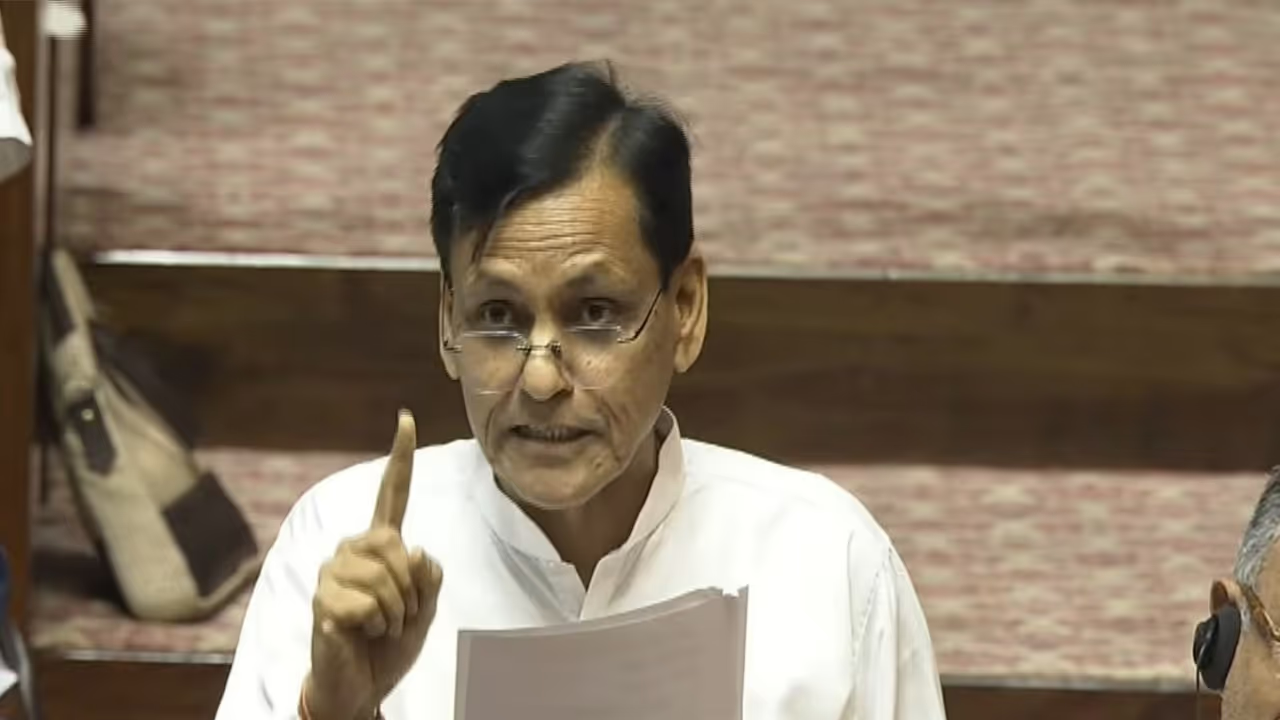
Union Minister Nityanand Rai accused the Congress of 'cheating democracy' over birth and death certificates while defending the Registration of Births and Deaths (Amendment) Bill, 2026, in the Rajya Sabha, highlighting stricter new rules.
Union Minister of State for Home Affairs Nityanand Rai on Tuesday accused the Congress of "cheating democracy" through alleged irregularities in the registration of births and deaths while defending the Registration of Births and Deaths (Amendment) Bill, 2026, during a discussion in the Rajya Sabha.
The Registration of Births and Deaths (Amendment) Bill, 2026, was taken up for debate and passage in the Rajya Sabha after it was passed by the Lok Sabha on July 31 amid protests and sloganeering by the Opposition. The proposed legislation seeks to strengthen the process of delayed registration of births and deaths and prevent its alleged misuse through stricter verification procedures.
Bill Aims for Transparency and Accountability
Speaking during the debate on the Bill, Rai said the Bill is aimed at ensuring greater transparency, accountability and authenticity in the registration process while moving the country towards universal registration of births and deaths. "How much the Congress people have cheated the country through birth and death certificates, they have cheated democracy," Rai said.
Highlighting the government's performance in improving civil registration, the Minister said the rate of birth registration in the country had increased significantly over the past decade. Rai stated that birth registration rose from 86.6 per cent in 2014 to 99.1 per cent in 2024, while death registration increased from 72.5 per cent to 99.4 per cent during the same period. "Look at the figure that Rahul Ji was just talking about: only 72 per cent of deaths were registered. Now it has also increased to 99.4 per cent," he said.
Stricter Rules for Delayed Registration
On the proposed changes to delayed registration, Rai said that if information about a birth or death is furnished after two years of its occurrence, the Registrar will be able to register it only on the order of a Judicial Magistrate of the first class. "Keeping in mind the potential misuse of delayed registration, it is proposed to amend Section 13(3) that if the information of birth or death is given after two years, then in such cases the Registrar will register only on the order of a Judicial Magistrate of the first class," Rai added.
The Minister said the government's objective is to ensure that every birth and death occurring in the country is properly recorded and that the registration system has been strengthened through digitalisation. "The only reason for more than two years is that now this country wants that if any child is born in our country, in the lap of Mother India, then its registration should be certain; this is the resolve of the Modi government," Rai said.
Rai Alleges Misuse of Registration by States
Taking a swipe at Congress, Rai alleged that there had been instances where people were brought into the country and provided birth certificates despite not being eligible for registration. "Seeing the opportunity, whose registration should not happen in India, but the government of some states of this country keeps their eyes open to call them and give them birth certificates before. Ready to welcome. That will not be allowed to happen now," he said.
Breakdown of Registration Timelines
Rai also said the Bill does not alter the existing registration process for cases where information is furnished within one year of the occurrence of a birth or death. He said registration within 21 days follows the existing procedure, while information furnished between 22 and 30 days is registered by the Registrar. For delays between 31 days and one year, registration is carried out with a delay fee and written permission from the District Registrar.
For information furnished after one year, registration is currently done on the order of an Executive Magistrate authorised by the District Magistrate, Sub-Divisional Magistrate or District Magistrate, he said. Under the proposed amendments, delayed information given after one year but within two years will require an order from a District Magistrate, Sub-Divisional Magistrate or an Executive Magistrate authorised by the District Magistrate, after verification of the correctness of the information.
In cases where information is furnished after two years, registration will require an order from a Judicial Magistrate of the first class after verification of the correctness of the information.
Rai said India is moving towards universal registration of births and deaths and cited appreciation received from several countries at a ministerial-level conference on the subject. "Under the leadership of the Prime Minister and under the guidance of the Home Minister, India is constantly moving towards the goal of universal registration with confidence," he said.
Earlier in the day, the Rajya Sabha witnessed two adjournments amid protests by Opposition parties over remarks related to Union Home Minister Amit Shah. Congress President and Leader of Opposition in the Rajya Sabha Mallikarjun Kharge demanded that the government make a statement on the alleged theft of donations received for the Ram Mandir in Ayodhya and on police action against students during protests organised by the Congress-led Opposition. (ANI)
(Except for the headline, this story has not been edited by Asianet Newsable English staff and is published from a syndicated feed.)