
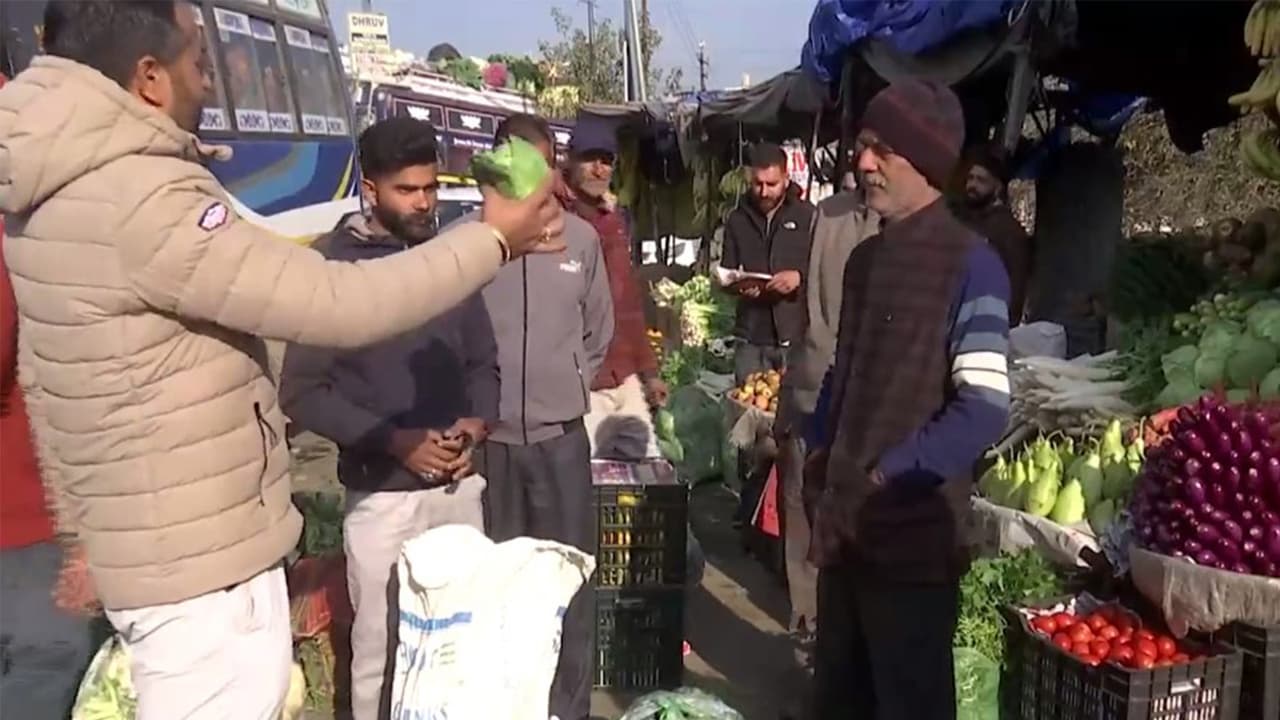
Sunderbani in J&K's Rajouri district is seeing an agricultural revolution. Farmers are shifting to organic vegetable farming, supported by government schemes. This has boosted their income, making farming a profitable and sustainable career.
Sunderbani, a block in the border district of Rajouri in Jammu and Kashmir, is undergoing revolution in the agriculture sector. The shift towards pure organic vegetable farming and farmers' cash sales at the Sundarbani vegetable mandi is a powerful economic engine for the region. This revolution, supported by government action, is transforming traditional farming into a profitable, sustainable career for both young and experienced farmers.
Core Pillars of Success
The success of organic farming in this border block can be attributed to a few core pillars. This primarily includes centrally sponsored schemes, with programs such as PM Kisan Yojna, PKVY (Paramparagat Krishi Vikas Yojana). These schemes provide the necessary financial backing to bridge the gap between traditional and organic methods. Diverse seasonal crops, on the other hand, have also been a significant contributing factor to this transformation. Farmers are now cultivating a wide variety of vegetables across both Kharif and Rabi seasons, including cauliflower, peas, broccoli, and leafy greens. Furthermore, the Department of Agriculture provides high-quality organic seeds, bio-fertilisers, and technical training. This ensures that even farmers in the most remote border areas can use modern agricultural technology.
Voices from the Ground
Ajay Gupta, President of the Fruit and Vegetable Association, Sunderbani, commented on this organic revolution and expressed gratitude towards the government for its support. "For the past 30-35 years, high-quality vegetables have been harvested. The farmers use high-quality seeds. Recently, the number of people engaged in this process has also increased. We received proper support from the government, which helps this growth further," Gupta told ANI.
Mintu Sharma, a local farmer, described the vegetable cultivation process in Sundarbani, noting that they use organic fertilisers and that people from nearby regions often visit their home to purchase the produce. "The vegetable produce here is very popular; people from far-off regions also make purchases from Sundarbani. We cultivate both winter and summer vegetables. With government irrigation support, farming has improved significantly. Our lives have changed because of this, and now we are entirely dependent on this," said Sharma.
Government's Strategic Focus
Rajesh Verma, Chief Agriculture Officer, Rajouri, said, "Agriculture these days is more focused on sustainable and organic farming. We have launched various schemes in this direction. We have identified clusters of organic agriculture and components of natural farming, such as the Alternative Agriculture System, and are training people for it. The government and the department are now focused on catering for the demand for clean and healthy produce."
A Movement Towards Self-Reliance
Moreover, the transition to organic farming in Rajouri has moved beyond "growing food"--it has become a movement toward farmers' self-employment. It has further proven beneficial for financial independence and environmental conservation, and awareness. Additionally, regular workshops and field demonstrations by the Department of Agriculture have empowered farmers to understand certification processes, which are key to getting better prices in urban markets.
The Path Forward
While the progress is impressive, the 'Big Revolution' continues to evolve. To maintain this momentum, the focus is shifting toward direct marketing, storage solutions and organic certification. This can be achieved by enabling farmers to sell directly to consumers, bypassing intermediaries, streamlining the process, and improving vegetable storage. (ANI)
(Except for the headline, this story has not been edited by Asianet Newsable English staff and is published from a syndicated feed.)