
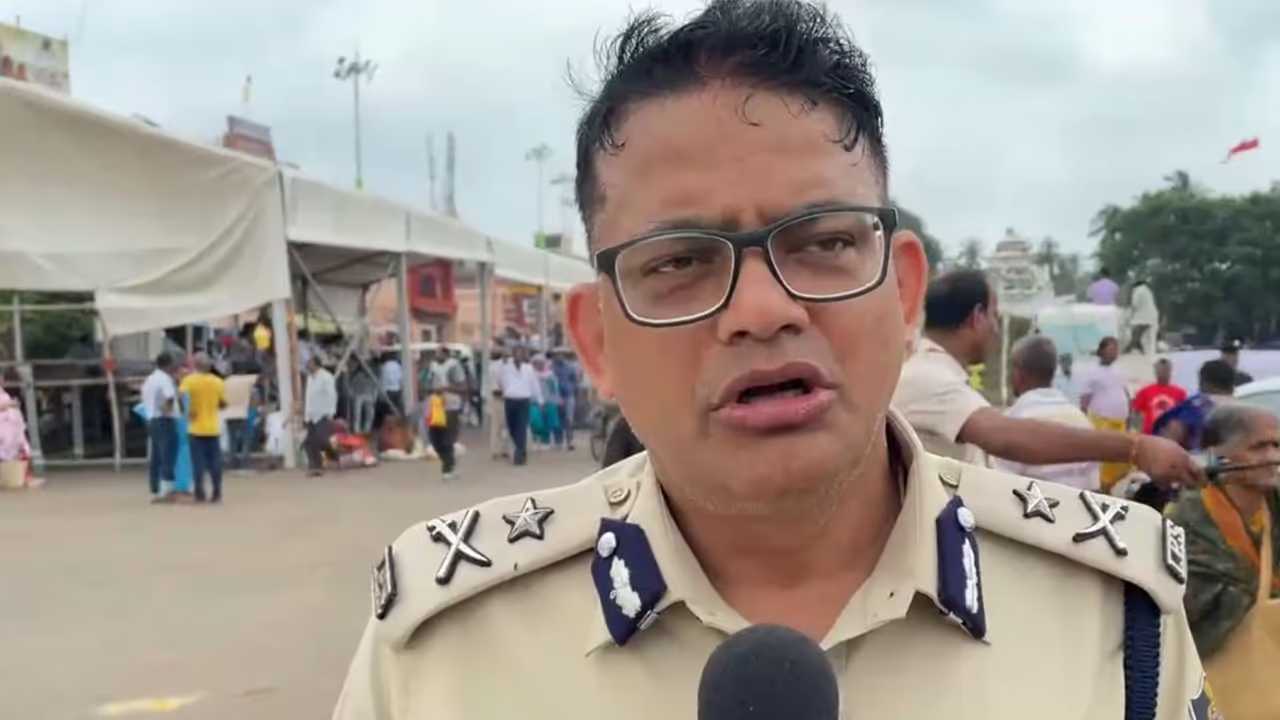
Central Range IGP Satyajit Naik argues that with Naxalism ending in Odisha, the focus must shift from policing to a multi-faceted approach of socio-economic development, community participation, and building trust to ensure long-term stability.
Following the end of Naxalism in Odisha, Central Range IGP Satyajit Naik has argued that Left-Wing Extremism (LWE) could not be addressed through policing alone and required a combination of security measures, good governance, socio-economic development and community participation.
A Multi-faceted Approach to Stability
In his policy paper, "An Analysis of Naxal Insurgency in Odisha: A Multi-faceted Approach", submitted to the ISB's Bharti Institute of Public Policy, IGP Naik highlighted that insurgency tends to grow in areas where government services are weak, and communities feel isolated. It recommended stronger intelligence and inter-agency coordination in the short term, socio-economic development in affected areas in the medium term and community policing to rebuild trust between citizens and the State in the long term.
From Counter-Insurgency to Development
With the Maoist footprint significantly reduced, the focus now needs to shift from counter-insurgency to development and state-building. Roads, schools, healthcare facilities, employment opportunities, banking services and digital connectivity will be crucial in ensuring that security gains translate into long-term stability, he said.
The next phase, according to Naik, should focus on creating employment, improving infrastructure, strengthening education and healthcare, protecting forest rights and ensuring fair rehabilitation for affected communities.
Community Policing and Continued Vigilance
The policy paper also underlined the importance of community policing, including the proposed three-tier 'AMA Police' model, to strengthen engagement between security personnel and villagers, tribal communities, youth, women and local institutions. He also cautioned against complacency, stressing that vigilance must continue in vulnerable areas to prevent any possible resurgence of extremism. CAPF and specialised units will continue to play a role in maintaining security.
Vision for a 'Peace-Secure' Odisha
The focus now, Naik said, should be on transforming former conflict-affected areas into centres of growth, with opportunities in tribal enterprise, eco-tourism, forest-based livelihoods, sports, education and digital development.
The goal, therefore, should move beyond being merely "Naxal-free" to becoming "peace-secure", where security, development and public trust reinforce each other, he stated. (ANI)
(Except for the headline, this story has not been edited by Asianet Newsable English staff and is published from a syndicated feed.)