
The bench also deemed the issue as "complex" and said that the notion of a man and a woman is not "an absolute based on genitals." Therefore, the Special Marriage Act, which refers to "man and woman," is not restricted to genitals.
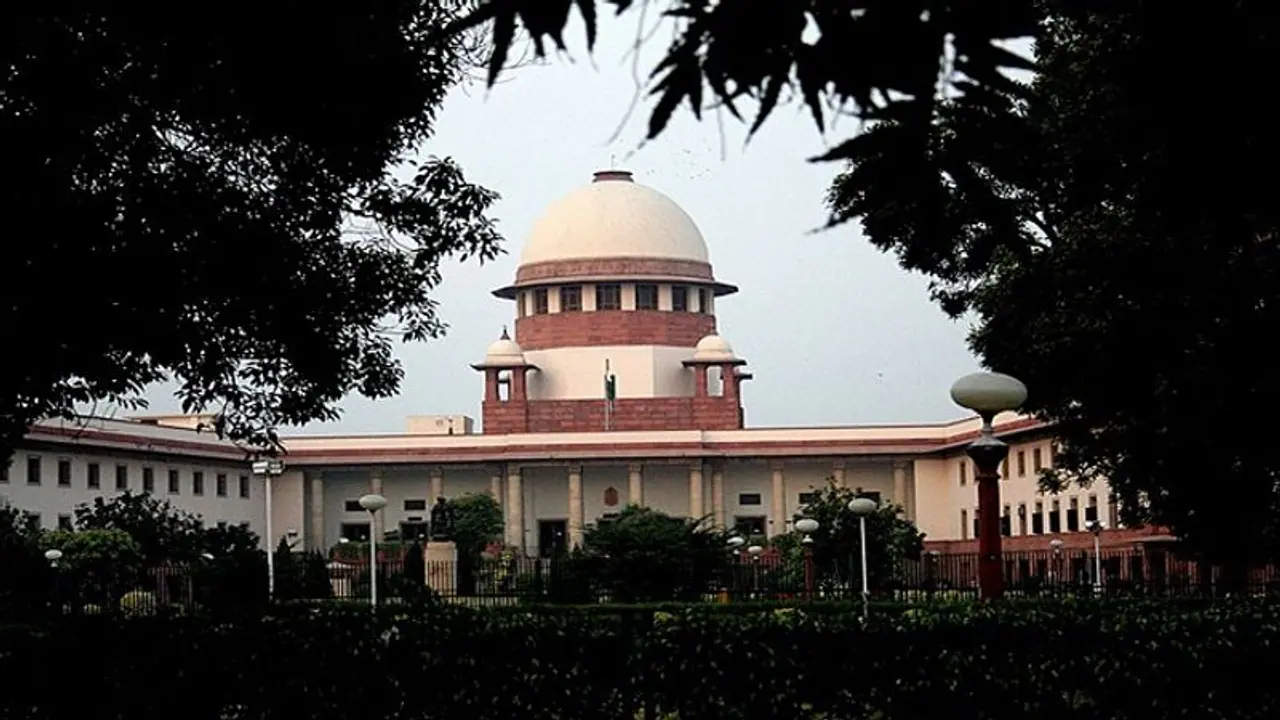
The Supreme Court on Tuesday (April 18) heard pleas seeking legal validation for same-sex marriages and said that they would not go into personal laws governing marriages while deciding the case. The bench, headed by Chief Justice DY Chandrachud said that they asked lawyers to present arguments on the Special Marriage Act, a law that provides a legal framework for the marriage of people belonging to different religions or castes.
The bench also deemed the issue as "complex" and said that the notion of a man and a woman is not "an absolute based on genitals." Therefore, the Special Marriage Act, which refers to "man and woman," is not restricted to genitals.
Addressing the court, the bench, which also comprised justices Justices S K Kaul, SR Bhat, Hima Kohli and P S Narasimha said, "It is not the question of what your genitals are. It is far more complex, that's the point. So, even when the Special Marriage Act says man and woman, the very notion of a man and a woman is not an absolute based on genitals."
Noting the difficulties and ramifications for the Hindu Marriage Act and personal laws of various religious groups if same-sex marriages are considered valid, the bench said, "Then we can keep the personal laws out of the equation and all of you (lawyers) can address us on the Special Marriage Act (a religion-neutral marriage law)."
Earlier today, the top court heard a batch of petitions seeking legal recognition for same-sex marriage. Senior Advocate Mukul Rohatgi, appearing for the petitioners, argued that the LGBTQ community should have the right to a life of dignity and to the institution of marriage and family which is available to heterosexual persons.
The petitioners are seeking the provisions of the Special Marriage Act, 1954, to read marriage as between "spouse" instead of "man and woman".
Meanwhile, Solicitor General Tushar Mehta, appearing for the government, stated that the court needs to first address whether the judiciary is the right forum to create new socio-legal relationships instead of Parliament.
