
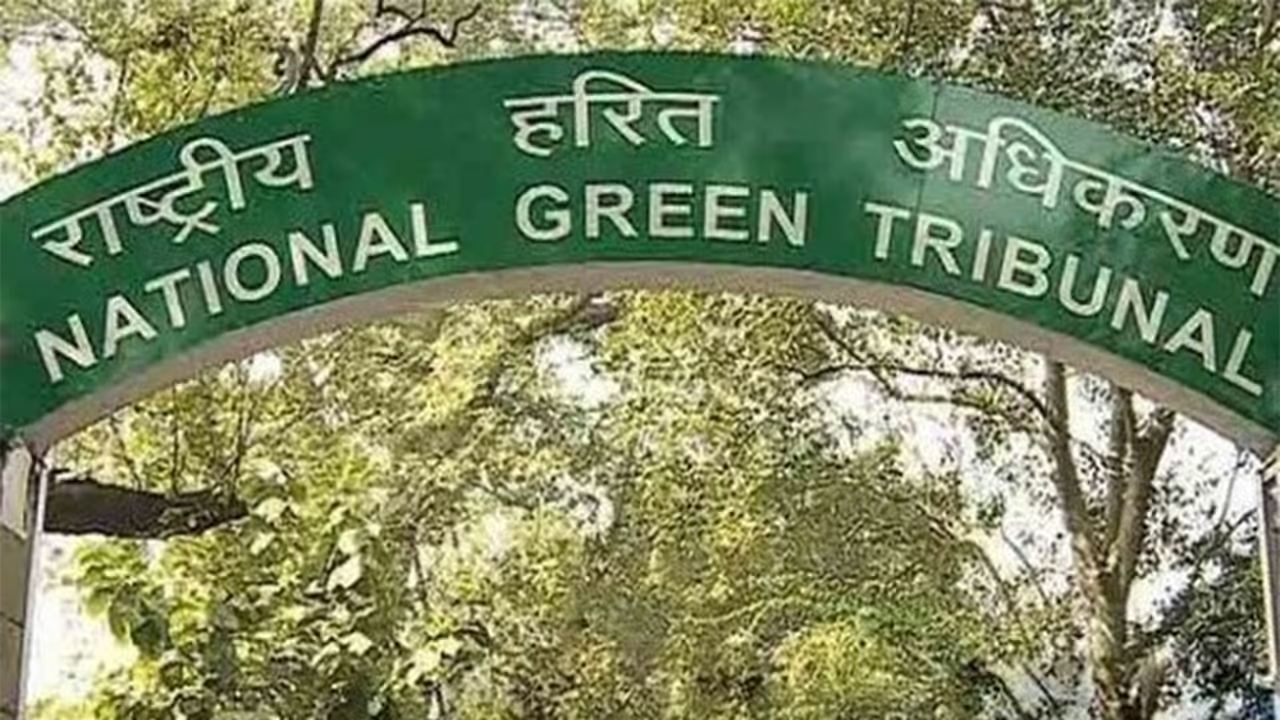
NGT forms a high-level expert committee to examine state lapses in regulating groundwater extraction and recommend corrective measures. The panel will address over-exploitation and promote recharge, submitting its report within three months.
The National Green Tribunal has constituted a high-level expert committee to examine lapses by States and Union Territories in regulating groundwater extraction and to recommend corrective measures for preventing over-exploitation and ensuring recharge of depleted aquifers.
Committee's Mandate and Composition
The panel will comprise representatives from the National Geophysical Research Institute (NGRI), Geological Survey of India (GSI), Ministry of Environment, Forest and Climate Change (MoEF&CC), an expert from IIT Roorkee, and the Central Ground Water Authority (CGWA), which will act as the nodal agency. The Tribunal has directed the committee to examine State-wise data, identify gaps in the implementation of existing groundwater guidelines, and suggest both general and state-specific measures to curb illegal extraction and promote groundwater recharge, especially in critically affected areas. The committee has been asked to submit its report within three months, and the matter is listed for hearing on August 25, 2026.
Report Reveals Widespread Violations
The case originated from a suo motu proceeding based on a news report warning that parts of the Indo-Gangetic basin have crossed groundwater depletion tipping points, with projections of critically low groundwater availability by 2025. Following this, the Tribunal had sought detailed responses from states and authorities regarding groundwater regulation mechanisms.
A comprehensive report compiled by the Central Groundwater Authority revealed significant inconsistencies across States, including a high proportion of over-exploited groundwater units in Punjab, Haryana, Delhi and Tamil Nadu. It also highlighted widespread illegal extraction, with over 20,000 unauthorised groundwater structures identified in Delhi and more than 21,000 notices issued in Uttar Pradesh.
Tribunal Highlights State Failures
The data further showed serious gaps in enforcement, particularly in the imposition and recovery of environmental compensation, with several States either not levying such charges or failing to implement them effectively despite guidelines issued in 2020 and amended in 2023.
The Tribunal observed that there has been a clear lapse on the part of States and their authorities in preventing illegal groundwater extraction and ensuring adequate recharge where levels have fallen below critical thresholds. It also noted that while some conservation measures exist, their impact remains limited due to weak implementation and a lack of coordination.
In view of these findings, the Tribunal emphasised the need for coordinated and scientific intervention, stating that the expert committee will play a key role in developing actionable recommendations for sustainable groundwater management across the country.
(Except for the headline, this story has not been edited by Asianet Newsable English staff and is published from a syndicated feed.)