
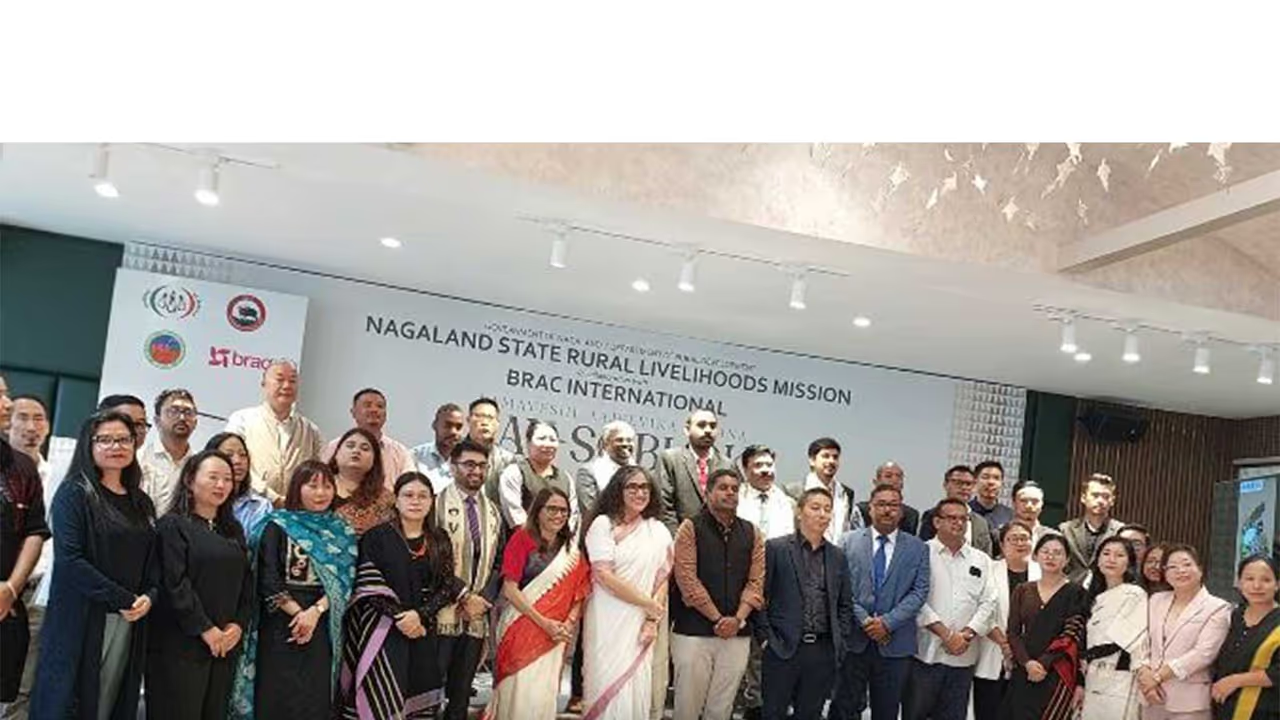
Nagaland's NSRLM and BRAC International have launched SAY-SOBLOK, a three-year initiative to support 4,000 vulnerable households. The program uses the globally tested Graduation Approach to provide sustainable livelihoods and economic security.
The Nagaland State Rural Livelihoods Mission (NSRLM), under the Rural Development Department of the Government of Nagaland, and BRAC International on Tuesday signed a Memorandum of Understanding (MoU) to implement SAY-SOBLOK, a programme aimed at supporting 4,000 extremely vulnerable households across the state.
The MoU was signed at Hotel Vivor in Kohima to formalise the partnership between NSRLM and BRAC International for the implementation of SAY-SOBLOK, aligned with the Samaveshi Aajeevika Yojana (SAY) under the Deendayal Antyodaya Yojana-National Rural Livelihoods Mission (DAY-NRLM).
The three-year initiative draws on BRAC's globally tested Graduation Approach and is designed to help extremely vulnerable households move towards sustainable livelihoods and greater economic security through a sequenced and time-bound intervention.
The programme will combine intensive household-level coaching with livelihood development, financial inclusion, access to government entitlements and essential services, social empowerment and resilience-building.
Guiding Principles of SAY-SOBLOK
Speaking at the launch, Commissioner and Secretary, Department of Rural Development, Nagaland, Thavaseelan K, IAS, said the initiative would focus on households that face difficulties in accessing livelihood opportunities, government entitlements and community institutions.
He said SAY-SOBLOK brings together different forms of support in a planned sequence to help vulnerable families address their immediate needs while simultaneously building sustainable livelihood opportunities.
Thavaseelan said the three-year collaboration between NSRLM and BRAC International would need to be adapted to the local socio-economic conditions of Nagaland.
He emphasised the importance of transparent identification of beneficiaries, livelihood choices suited to local markets, women's participation, convergence of government services and continuous support throughout the programme.
He said the success of SAY-SOBLOK should not be measured merely by the number of households enrolled or the assistance provided, but by whether participating families achieve more dependable incomes, gain access to essential services and become better equipped to withstand financial setbacks.
The official also stressed the need for stronger coordination between district and block-level teams, community institutions and frontline workers so that eligible households can access the government schemes and entitlements available to them.
He said the partnership should ultimately translate into greater economic security and confidence among vulnerable families, particularly women-led households.
BRAC's Role and Methodology
BRAC International India Country Lead Shweta S. Banerjee said the organisation is supporting the Ministry of Rural Development in implementing the Samaveshi Aajeevika Yojana in partnership with NSRLM.
Speaking to ANI, Banerjee said the SAY software was being launched in Nagaland under the leadership of NSRLM, with BRAC supporting its implementation.
She said the programme is based on the globally tested Graduation Approach, which seeks to help extremely vulnerable households move from immediate assistance towards sustainable livelihood pathways.
“The idea is that all extremely vulnerable households should have a livelihood pathway,” Banerjee said.
According to Banerjee, the three-year programme will identify the most vulnerable women-led households in targeted villages and guide them through a structured graduation process.
The approach is intended to provide households with a combination of livelihood assets and support, financial inclusion, access to public services and continued mentoring so that they can progressively move towards greater self-reliance.
Strengthening Livelihood Efforts
Following the signing of the MoU, SAY-SOBLOK was formally launched in Nagaland, marking the beginning of the implementation phase of the Graduation Approach tailored to the state's socio-economic landscape.
The programme is expected to work through government systems and community institutions while linking vulnerable households with existing welfare schemes, livelihood opportunities and financial services.
The partnership between NSRLM and BRAC International is aimed at strengthening the state's efforts to reach households that remain outside or at the margins of conventional livelihood programmes and support them in building more stable and resilient sources of income. (ANI)
(Except for the headline, this story has not been edited by Asianet Newsable English staff and is published from a syndicated feed.)