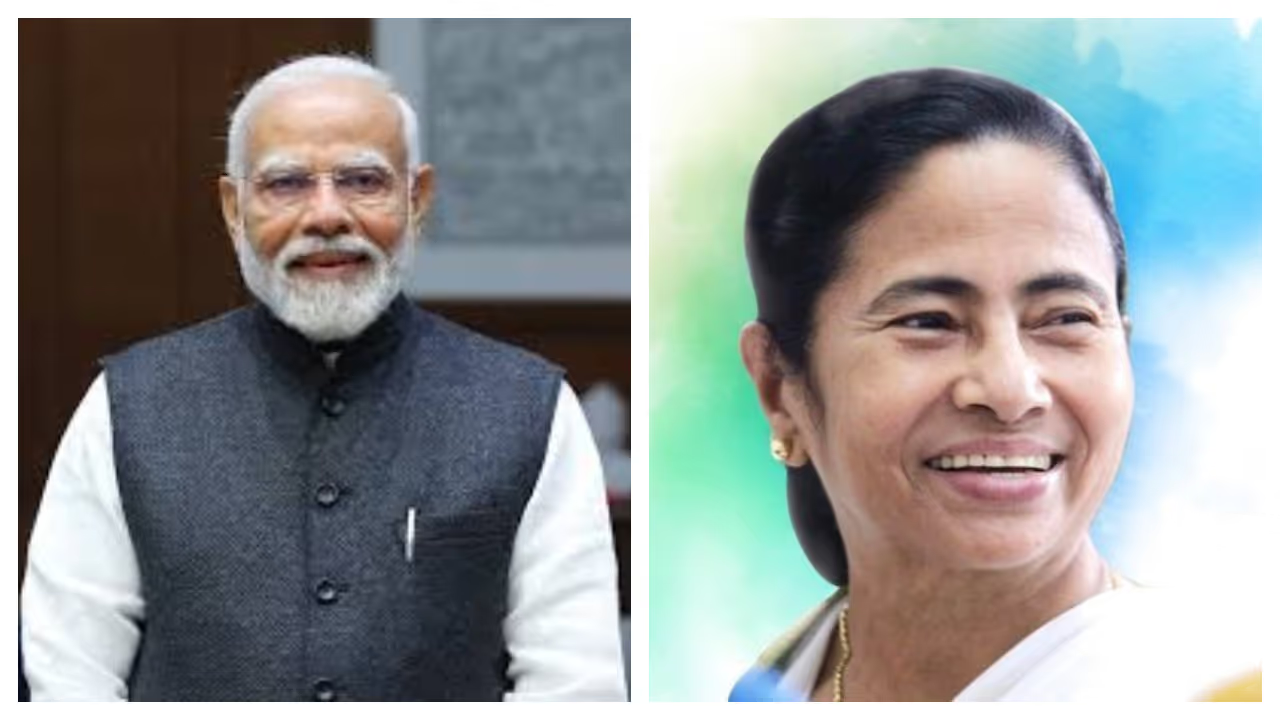
The Indian government has approved renaming Kerala to "Keralam" to align with its local Malayalam name, following state assembly resolutions. The change, which still requires parliamentary approval, honors linguistic heritage.
The Union government’s recent approval to rename Kerala as Keralam has reignited debate over state identity, language, and politics in India. While the decision marks a significant step toward aligning official nomenclature with local linguistic traditions, it has also drawn attention to why similar proposals—most notably West Bengal’s demand to be renamed “Bangla”—continue to face hurdles.
Kerala to Become Keralam
The move to rename Kerala stems from a long-standing cultural and linguistic argument. In Malayalam, the state has always been referred to as “Keralam.” The Kerala Legislative Assembly had unanimously passed resolutions in 2023 and again in 2024 urging the Centre to make this change official under Article 3 of the Constitution. The argument was simple: if Indian states were reorganised on linguistic lines in 1956, their official names should also reflect native usage.
The Centre’s approval in 2026 is being seen as recognition of this sentiment. It also carries political undertones, as the decision comes ahead of upcoming state elections. Leaders have framed the change as an effort to reconnect with heritage, history, and cultural identity.
Related Articles

However, the renaming is not yet fully complete. The process still requires a bill to be introduced and passed in Parliament after being referred to the President and the state legislature again. Once enacted, “Keralam” will become the official name across all government records.
Why Is Bengal Still Facing Hurdles?
In contrast, West Bengal’s attempt to rename itself “Bangla” has faced repeated setbacks. The state assembly passed a resolution in 2016 proposing the change in multiple languages—“Bangla” in Bengali and “Bengal” in English. However, the Centre raised objections, citing concerns over consistency and potential confusion with neighbouring Bangladesh.
Another major factor is procedural complexity. Changing a state’s name requires not just approval from the state assembly but also clearance from the Union government and Parliament. In some cases, geopolitical sensitivities, administrative clarity, and international implications are also taken into account.
The contrast between the two cases has triggered political reactions. West Bengal Chief Minister Mamata Banerjee has questioned why her state’s proposal remains pending despite following due process. Critics argue that political considerations may influence such decisions, especially when they intersect with regional identity and electoral timing.
The broader issue highlights how renaming is not merely symbolic but deeply tied to identity, governance, and federal dynamics. Across India, several cities and states have undergone name changes to shed colonial-era labels or align with indigenous languages. These changes often aim to restore historical authenticity or cultural pride, but they also require careful administrative coordination.
In Kerala’s case, the shift to “Keralam” reflects a linguistic correction rather than a political rebranding. The name itself has historical roots, with references dating back centuries and strong connections to the Malayalam language and regional identity.
For West Bengal, however, the situation is more complex. The proposed name “Bangla” carries linguistic and cultural significance but also overlaps with the identity of Bangladesh, raising diplomatic and administrative concerns. This has made the Centre more cautious in approving the change.
Ultimately, the approval of “Keralam” sets a precedent that may influence similar demands from other states. It demonstrates that linguistic authenticity can be a valid basis for renaming, provided procedural and political conditions align. At the same time, it underscores that each case is evaluated individually, with broader implications beyond symbolism.
As India continues to evolve, debates over names will likely persist—reflecting the country’s diversity, regional pride, and the delicate balance between identity and governance.