
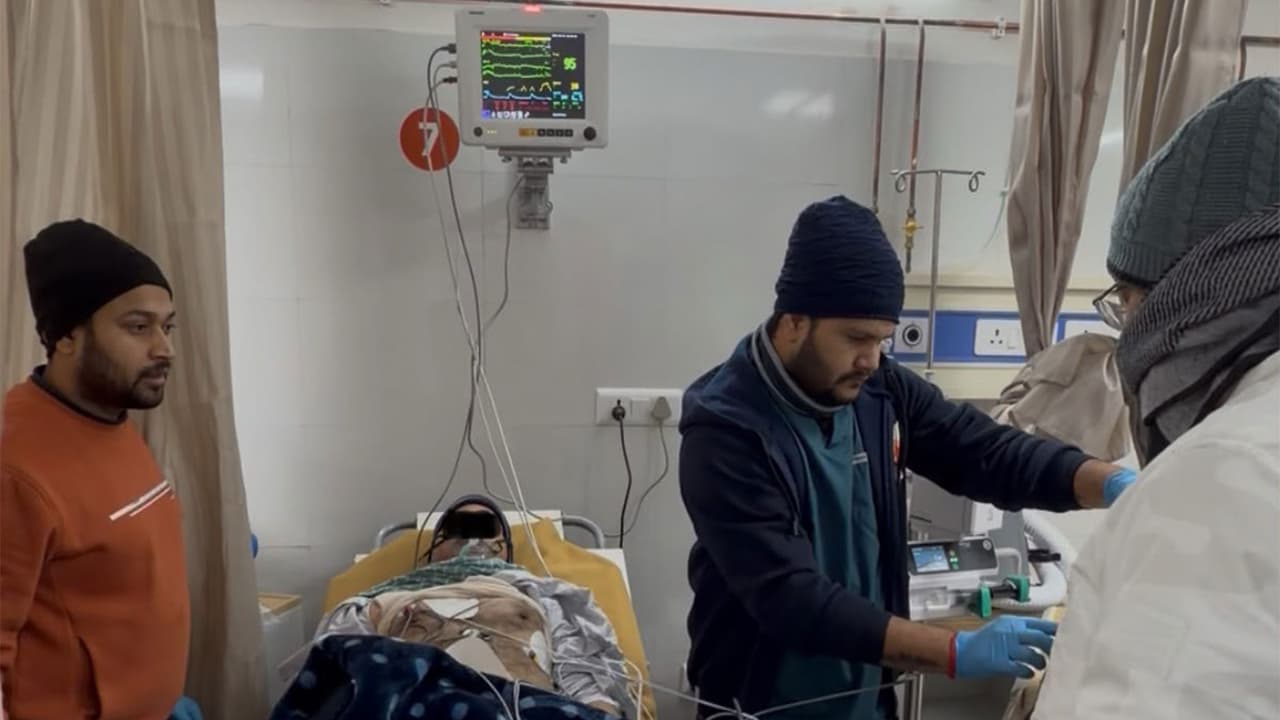
A 58-year-old pilgrim suffered recurrent cardiac arrests at Kedarnath. A medical team, in a remarkable display of high-altitude care, resuscitated him despite resource limitations before he was airlifted for further treatment.
In a remarkable demonstration of emergency medical care under extreme high-altitude conditions, the healthcare team at Swami Vivekanand Dharmarth Chikitsalaya, Kedarnath Dham, successfully resuscitated and stabilised a critically ill pilgrim who suffered recurrent cardiac arrests due to complete heart block during the ongoing Char Dham Yatra.
The 58-year-old male pilgrim, a resident of Ballia, presented to the hospital shortly after completing the challenging trek to Shri Kedarnath Ji Dham. He complained of severe chest heaviness and discomfort that had persisted for nearly two hours. The patient had a known history of type 2 diabetes mellitus, hypertension, dyslipidaemia, and coronary artery disease.
On initial evaluation, he was found to be critically unwell, with a pulse rate of just 34 beats per minute, blood pressure of 180/100 mmHg, oxygen saturation of 90% on room air, and markedly elevated blood glucose levels. Electrocardiography revealed complete heart block--a life-threatening cardiac conduction abnormality. Laboratory investigations further demonstrated significant metabolic acidosis and uncontrolled hyperglycaemia.
Emergency Response at High Altitude
Recognising the gravity of the situation and the challenges posed by the remote, resource-limited Himalayan setting, the medical team, led by Dr. Vinay Kumar, Assistant Professor at GIMS Greater Noida, who is serving voluntarily here during his summer vacation, immediately initiated advanced life support measures. Working alongside nursing officers Naveen, Narendra, Akshay, and Ravi, the team provided emergency transcutaneous cardiac pacing, continuous cardiac monitoring, oxygen therapy, insulin administration, correction of metabolic and electrolyte abnormalities, and intensive supportive care.
Despite aggressive management, the patient suffered multiple episodes of cardiac arrest with documented asystole. The medical team promptly initiated Advanced Cardiac Life Support (ACLS) protocols and multiple cycles of CPR /shocks were given, after which the patient successfully achieved return of spontaneous circulation (ROSC).
Evacuation Delayed by Weather
Following overnight resuscitation, the patient received vasopressor support, antiarrhythmic therapy, serial arterial blood gas monitoring, along with ongoing intensive care management. An emergency air evacuation to All India Institute of Medical Sciences Rishikesh was planned in the morning; however, severe weather conditions and poor visibility in the Himalayan region prevented helicopter transfer for one more day.
Throughout this critical period, the patient remained under continuous monitoring at the SVHM Kedarnath facility. The medical team maintained round-the-clock vigilance, gradually weaning and discontinuing vasopressor support as his condition improved. He subsequently regained full consciousness and achieved stable haemodynamic parameters.
Successful Recovery and Pacemaker Implantation
On the third day, a direct airlift to AIIMS Rishikesh was again planned. Owing to persistent weather-related constraints, the patient was eventually airlifted from Kedarnath to Phata and then transferred by road to Government Medical College Srinagar before being referred onward to AIIMS Rishikesh for definitive cardiac care. The patient later underwent successful permanent pacemaker implantation and is recovering well, with discharge expected in the coming days.
A Testament to Dedication and Preparedness
This extraordinary case highlights the ability of healthcare professionals working in extreme Himalayan environments to deliver advanced, life-saving interventions--including emergency cardiac pacing and ACLS-guided resuscitation--despite significant geographical, environmental, and logistical challenges. More importantly, it reflects the unwavering commitment, preparedness, and spirit of service demonstrated by the medical personnel serving pilgrims at Shri Kedarnath Ji Dham.
In a place where weather conditions can delay evacuation and every minute matters, timely clinical decision-making, teamwork, and compassionate care can make the difference between life and death. This successful rescue also underscores the critical importance of strengthening emergency preparedness and coordinated evacuation systems in remote pilgrimage destinations across India. (ANI)
(Except for the headline, this story has not been edited by Asianet Newsable English staff and is published from a syndicated feed.)