
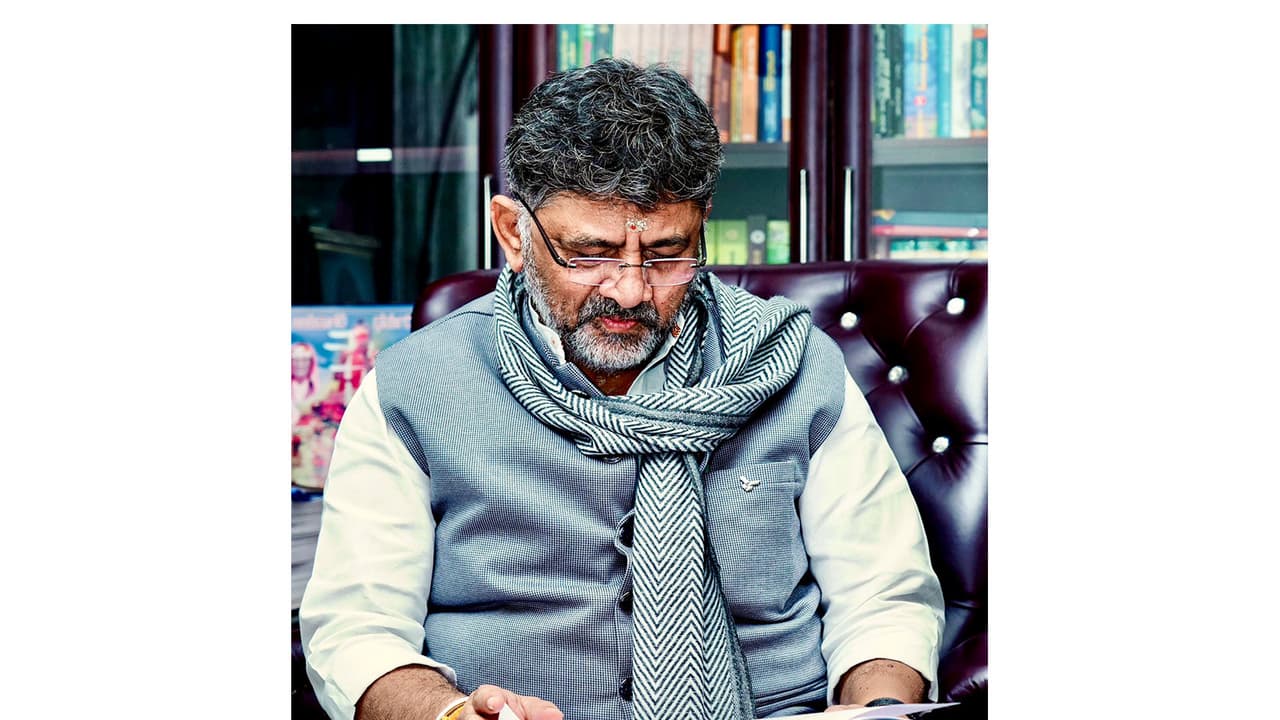
Karnataka CM DK Shivakumar has urged PM Modi to send a central team to assess the state's emerging drought. Citing a 30% rainfall deficit, delayed sowing, and low reservoir storage, he sought urgent intervention and support for farmers.
Karnataka Chief Minister DK Shivakumar has urged Prime Minister Narendra Modi to immediately depute a central study team to assess the emerging drought situation in the state, citing a 30% rainfall deficit as of July 11 due to the impact of El Nino.
CM's Plea for Central Intervention
In a post on X, Shivakumar posted the letter stating, "I have written to Hon'ble Prime Minister Shri Narendra Modi Seeking urgent intervention in view of the emerging drought situation in Karnataka. The State has recorded a significant monsoon deficit, delayed kharif sowing, low reservoir storage and increasing stress on agriculture, drinking water and rural livelihoods. While the Government of Karnataka has already initiated contingency measures and prioritised water conservation, I have requested the Centre to depute a Central Team to assess the situation on the ground and extend timely assistance to support our farmers and strengthen the State's drought mitigation efforts. We stand firmly with every farmer and every family affected during this challenging time." I have written to Hon’ble Prime Minister Shri @narendramodi seeking urgent intervention in view of the emerging drought situation in Karnataka. The State has recorded a significant monsoon deficit, delayed kharif sowing, low reservoir storage and increasing stress on… pic.twitter.com/C6TG0lFUjI — DK Shivakumar (@DKShivakumar) July 14, 2026
In a letter to the PM, the CM highlighted that Karnataka's agriculture is heavily dependent on the southwest monsoon and warned of severe consequences for farmers, water availability, and food prices if immediate support is not provided.
Widespread Rainfall Deficit
According to the letter, the India Meteorological Department had forecast below-normal rainfall for the 2026 southwest monsoon season due to El Nino. The situation has played out on the ground. As of July 11, 2026, Karnataka received only 203 mm of rainfall against the normal of 292 mm, categorised as a "deficient" monsoon.
Of the state's 31 districts, 18 are facing a deficit to large-deficit rainfall deficiency. At the taluk level, 141 out of 240 taluks have recorded deficient to severely deficient rainfall, indicating the problem is widespread. Among the four meteorological zones, the Malnad region, a key catchment for the Cauvery, Tungabhadra and Bhadra river systems, recorded the highest deficit of 34%. This was followed by Coastal Karnataka (-30%), North Interior Karnataka (-24%) and South Interior Karnataka (-18%).
State's Vulnerability to Drought
The CM noted that Karnataka is one of the most drought-prone states due to its agro-climatic conditions. About 77% of the state's geographical area falls under dry and semi-arid zones.
With 84.79 lakh hectares of rainfed agriculture, the second highest after Rajasthan, the state's crop production is critically dependent on monsoon rains. 74% of the state's annual rainfall comes during the southwest monsoon, making Karnataka highly vulnerable to rainfall variation and prolonged dry spells.
Impact on Sowing and Water Storage
The impact is already visible. As of the first week of July 2026, Kharif sowing covered only 28.36 lakh hectares, just 34% of the seasonal target of 84.10 lakh hectares.
The hydrological situation is equally worrying. In the 14 major reservoirs of the state, total storage as of July 10 was only 303 TMC, which is 34% of the total capacity of 895.65 TMC. The deficit in upper catchments is likely to affect inflow, irrigation, drinking water security and hydropower generation in the coming months.
National Implications Feared
The CM warned that the drought could have national implications as Karnataka is a major pulses-producing state. "Due to lack of adequate soil moisture and uncertainty of further rains, farmers are hesitant to take up sowing and are facing extreme uncertainty. Any significant drop in production will have wide-ranging implications on the availability and prices of pulses, especially tur dal, at the national level," he said.
State Initiates Mitigation Measures
The state government has already initiated precautionary measures. Crop advisories and district-wise contingency plans have been issued in consultation with agricultural experts.
Directions have been given to all departments to implement suitable drought mitigation measures. The government has also taken a policy decision to prioritise available reservoir water only for drinking water purposes, given the shortage.
Call for Timely Central Support
Shivakumar requested the Prime Minister to send a Central Team to Karnataka for an on-ground assessment of the situation, saying early evaluation and timely support from the Centre would strengthen the state's efforts to address the emerging drought conditions.
"Deputation of a Central Government team will help in directly assessing the severity of the emerging drought situation. It will also reassure the farming community that the Government of India stands with them during this difficult period. An early assessment and timely support from the Government of India will strengthen the efforts of the State Government to mitigate the adverse impacts of a situation that is turning into a disaster," Shivakumar stated in the letter. (ANI)
(Except for the headline, this story has not been edited by Asianetnews Editorial staff and is published from a syndicated feed.)