
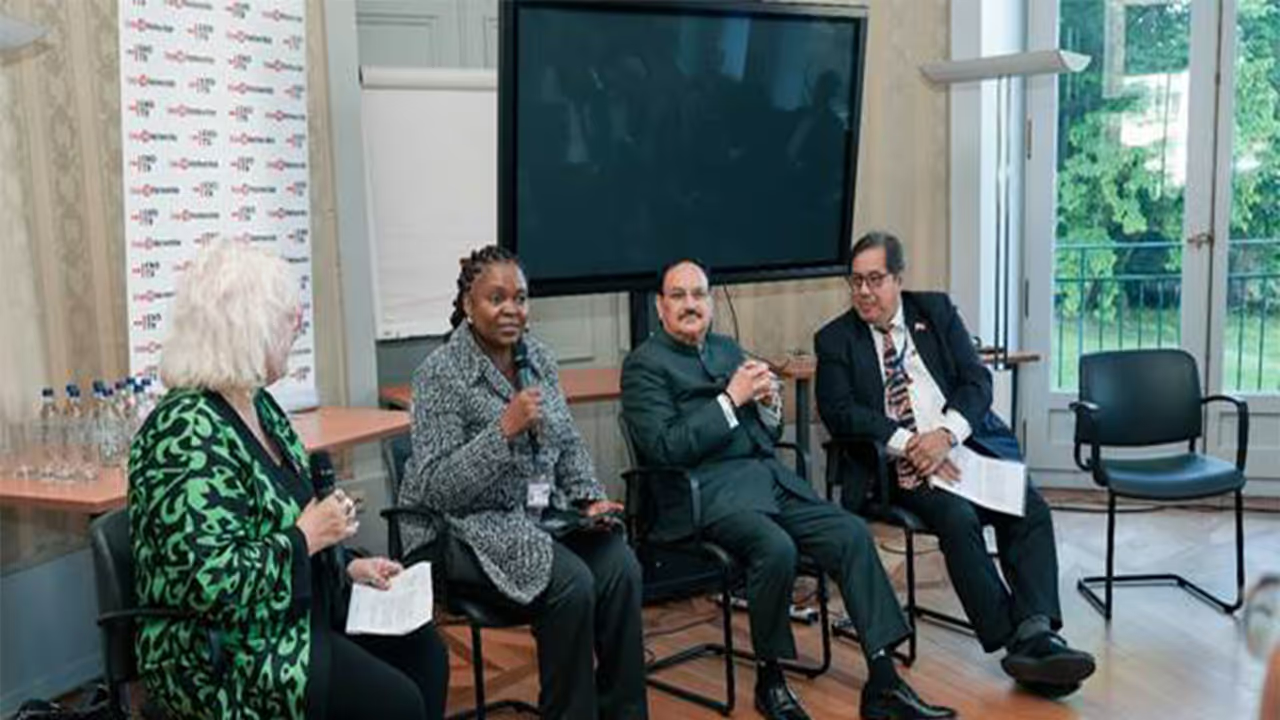
Union Health Minister JP Nadda highlighted India's efforts in lung health screening at a WHA event, emphasizing the 'TB-Mukt Bharat' campaign, advanced diagnostics, and the need for global collaboration to ensure equitable healthcare for all.
Union Minister of Health and Family Welfare JP Nadda addressed a high-level side event on "Ministerial Perspectives on Lung Health Screening" during the 79th Session of the World Health Assembly in Geneva. The event titled, "Does Your Health System Struggle with Lung Health Screening?" was organised by the Stop TB Partnership and co-hosted by India, Japan, the Philippines and Zambia.
According to the Ministry of Health and Family Welfare, Nadda emphasised that timely screening, early diagnosis and equitable access to care lies at the heart of resilient and people-centred health systems. He noted that strengthening lung health screening is not merely about technology or diagnostic tools, but about saving lives, reducing suffering, preventing catastrophic health expenditure, protecting livelihoods and strengthening healthcare systems.
India's Fight Against Tuberculosis
Highlighting India's commitment towards eliminating tuberculosis, the Union Health Minister stated that "under the National Tuberculosis Elimination Programme and the vision of a "TB-Mukt Bharat", India has undertaken one of the world's largest screening and early detection efforts." He underlined that the country has "expanded active case finding among vulnerable populations through house-to-house outreach, mobile screening teams, community campaigns and focused drives in high-risk areas and among vulnerable populations."
Scaling Up Diagnostics and Technology
Nadda further informed that India has significantly scaled up modern diagnostics to detect TB and other lung diseases. Molecular testing platforms, digital chest X-ray services, AI-assisted interpretation tools, handheld screening devices and decentralized testing systems are being deployed extensively to reduce diagnostic delays, particularly in remote and underserved regions. He stressed that "innovation must serve equity and technology must reach the last mile."
Strengthening Primary Healthcare and Community Support
The Union Health Minister also highlighted the role of primary healthcare reforms under Ayushman Bharat Health and Wellness Centres and the extensive frontline workforce in bringing healthcare services closer to communities. He reiterated that diagnosis alone is insufficient and emphasised the need for nutritional support, treatment adherence assistance, social protection and community solidarity. "Through the TB Mukt Bharat Abhiyaan, India has mobilised citizens, institutions, corporates, and communities to support TB patients and their families", he added.
Digital Initiatives for Patient Guidance
Speaking about India's digital initiatives, Nadda noted that the Ministry has launched the TB Mukt Bharat App featuring "Khushi", an AI-enabled multilingual chatbot designed to be accessible even on entry-level smartphones. The platform provides real-time guidance on symptoms, entitlements and nearest diagnostic facilities, thereby helping bridge the gap between symptom onset and timely care.
A Call for Global Collaboration
Calling for stronger global collaboration, Nadda proposed key international priorities for advancing lung health. These include mainstreaming lung health within Universal Health Coverage frameworks, expanding affordable access to diagnostics, digital tools and screening technologies, strengthening primary healthcare systems for respiratory health, promoting innovation, domestic manufacturing and technology transfer, and ensuring sustainable financing for prevention and early detection of TB and other lung diseases.
Reaffirming India's commitment to ending TB ahead of global targets, the Union Health Minister stated that the fight against TB can become a gateway to stronger health systems, better diagnostics, cleaner environments, improved nutrition and more equitable societies. He urged the global community to move from delayed diagnosis to early detection, from fragmented programmes to integrated care, and from disease control to health system transformation.
Nadda concluded his address by reiterating India's readiness to collaborate with governments, innovators, development partners and communities in advancing practical and scalable solutions for lung health screening worldwide. (ANI)
(Except for the headline, this story has not been edited by Asianet Newsable English staff and is published from a syndicated feed.)