
Professor Radhakant Padhi's unwavering confidence emphasizes the assured success of the Vikram lander in the forthcoming Chandrayaan-3 mission. Chandrayaan-3's robust design is highlighted by its capacity to withstand challenges within a "six sigma bounds."
As the eagerly anticipated lunar landing of Chandrayaan-3 approaches, substantial advancements have been implemented to ensure the mission's success. Aerospace scientist Professor Radhakant Padhi, a pivotal figure in both Chandrayaan 2 and 3, sheds light on the enhanced capabilities of Chandrayaan-3's Vikram lander.
Notably, this lunar lander incorporates an innovative "salvage mode," designed to facilitate a successful landing even in the face of unforeseen challenges. This feature exemplifies the mission's robustness and unwavering determination.
Addressing the challenges encountered during Chandrayaan-2's mission, Professor Padhi highlighted the Vikram lander's struggle to control its descent speed, leading to an uncontrolled tumble. An algorithm failure was identified as the root cause, prompting meticulous rectifications that have now been effectively implemented. Enhancements to the Vikram lander's structural design, particularly in its leg mechanisms, ensure increased stability during landing.
Drawing upon his expertise within the Aerospace department of the Indian Institute of Science in Bengaluru, Professor Padhi emphasizes the collective efforts contributing to the lunar missions. With involvement in both Chandrayaan 2 and 3, he offers a unique perspective on the evolution of India's lunar exploration capabilities.
Reflecting on past experiences, Professor Padhi acknowledged a degree of overconfidence among scientists at the Indian space agency, ISRO, during Chandrayaan-2. The design philosophy driving Chandrayaan-3 is grounded in resilience and adaptability – ensuring a successful landing even when facing unforeseen challenges. This commitment underscores the mission's unwavering determination to overcome obstacles and achieve a secure and triumphant lunar landing.
Professor Radhakant Padhi's unwavering confidence emphasizes the assured success of the Vikram lander in the forthcoming Chandrayaan-3 mission. Chandrayaan-3's robust design is highlighted by its capacity to withstand challenges within a "six sigma bounds."
Professor Padhi asserts that Chandrayaan-3 has undergone rigorous stress testing, showcasing ISRO's meticulous approach to addressing all potential uncertainties. Replicating lunar conditions on Earth remains infeasible, but the Vikram Lander's impressive hazard detection capabilities allow for the identification of optimal landing sites.
Amid threat from defections, BJP to go into a huddle in Karnataka
Distinguishing Chandrayaan-3 from its predecessor, Professor Padhi notes that the Vikram Lander now features two onboard computers, a significant advancement from Chandrayaan-2's single computer configuration. This enhancement contributes to his remarkable confidence level – a remarkable "99.9%" certainty – in the Vikram Lander's anticipated performance.
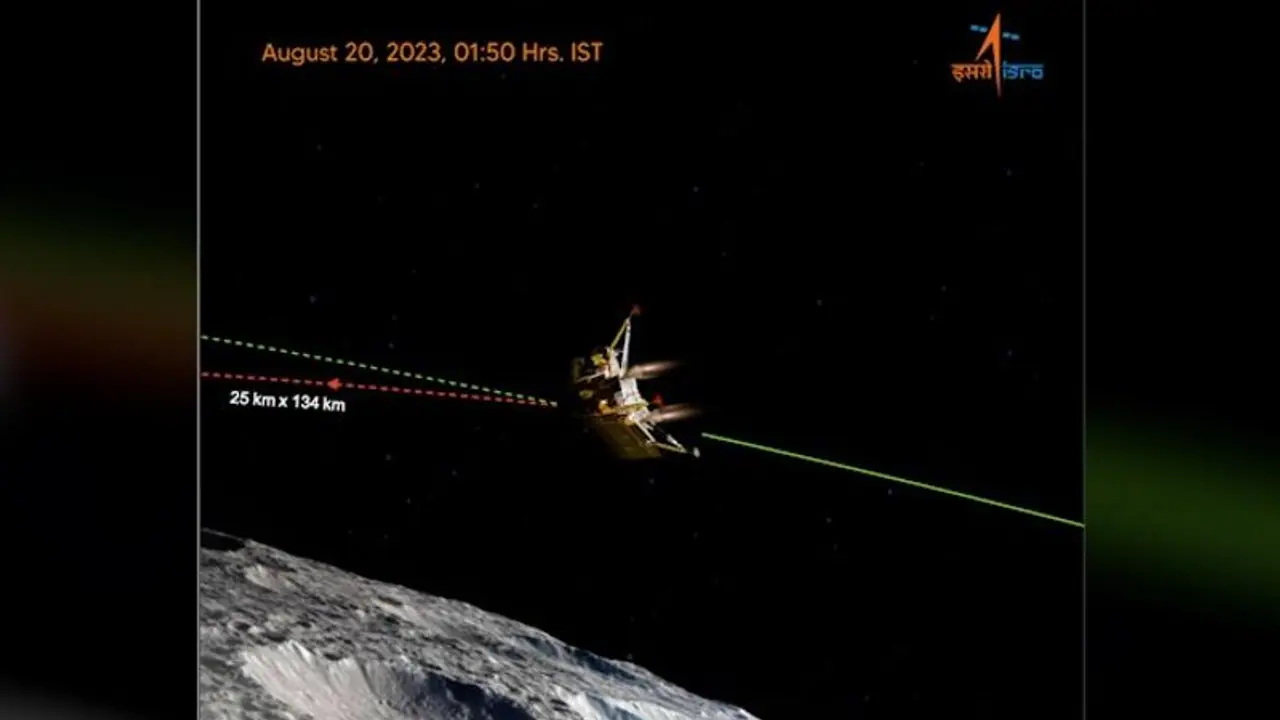
Recent images captured by Chandrayaan-3's lander reveal distinct lunar features, including prominent craters. These visuals, obtained through the lander's dedicated camera, play a crucial role in identifying a secure landing area for the historic touchdown planned in the uncharted lunar south polar region on Wednesday evening.
The scheduled lunar landing, set for Wednesday at 6:04 pm, holds the potential to elevate India's stature. In the event of success, India will join an exclusive league consisting of the United States, Russia, and China, becoming one of the few nations to accomplish this remarkable lunar feat.
