
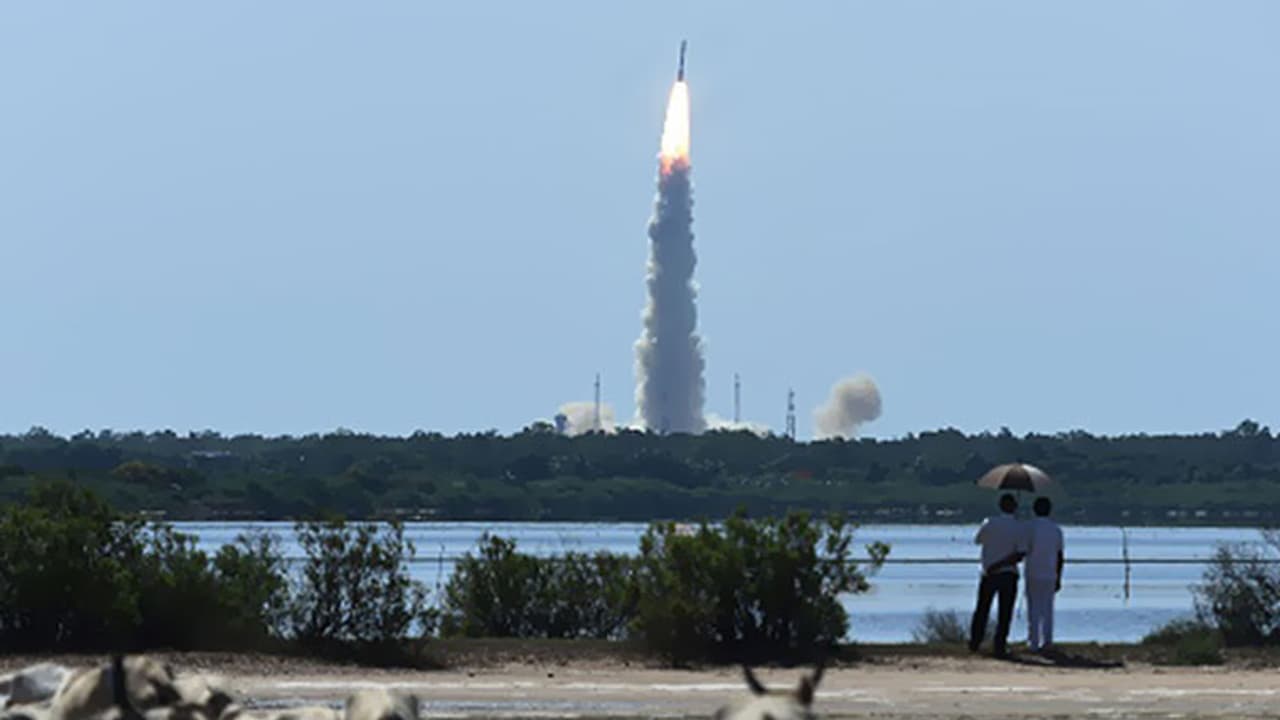
ISRO is has put India on the world map of space research and innovation. India's space program is yet to be big enough to complete with Russia and China. Government support and funds are issues that need to be addressed.
Indian Space Research Organisation (ISRO) is a globally prominent name when it comes to space research, scientific advancement, and technological achievement. It is the one government agency in the country that has made the country proud with multiple achievements.
Be it Mangalyaan, Chandrayaan, or Indian Regional Navigation Satellite System (IRNSS), the list of achievements of this agency has made it one of the leading space research agencies in the world that single-handedly put India on the global map of leaders in space exploration.
This year, in March, ISRO is set to launch 103 satellites on one go and these satellites belongs to countries like the USA and Germany. This will be another historic landmark for the agency since, in space history, no exercise of such large scale has been carried out till now.
The matter of the fact is that India's scientists are scripting history by achieving excellence through innovation and technical expertise. Despite, innumerable hurdles and infrastructural difficulties, ISRO is achieving what many nations can only dream of.
What ahead?
Time and again, ISRO has proved that it has tremendous potential, ideas, and brains to push the limits. However, there are various limitations that might overshadow the potential and bring stagnancy to the innovation in space research.
Research, Innovation and India:
It is indeed a recent phenomenon that science research has gained momentum in India and more and more young minds are open to the idea of research and innovation. The turn of the century witness many changes including government's willingness to investment in research and development.
Focus on funding, building the necessary infrastructure, scholarships, policy changes led more young minds to invest their efforts in scientific research. Also, generous fellowships inspired many Indian scientists working in abroad to return and work here to push the nation to a newer direction.
In short, a conducive environment was created for scientific work in the nation. However, when it comes to ISRO, we can not say the same about the funding part.
The space research requires a huge amount of money, and it does not come easy. Also, there are domestic private engineering firms that help the agency to build the satellite components and parts of orbiters creating a dependency for the agency. The government support is yet not complementing the potential and project scale is still substantially small which further limit the growth potential of the private companies eventually hampering the overall growth of ISRO.
Space research is a competitive sector with Russia and China growing in leaps and bounds with their grand, ambitious projects and India is still struggling to complete with them due to lack of government support and lack of willingness to make India's space projects bigger. With private company, SpaceX, becoming a game changer in space research. ISRO might find itself lagging behind in a highly competitive world.
The current achievements of ISRO prove that it has the right capabilities, willingness and sense of direction for India's future in space research, but is India ready to accommodate the same is the question that needs to be delved first.
