
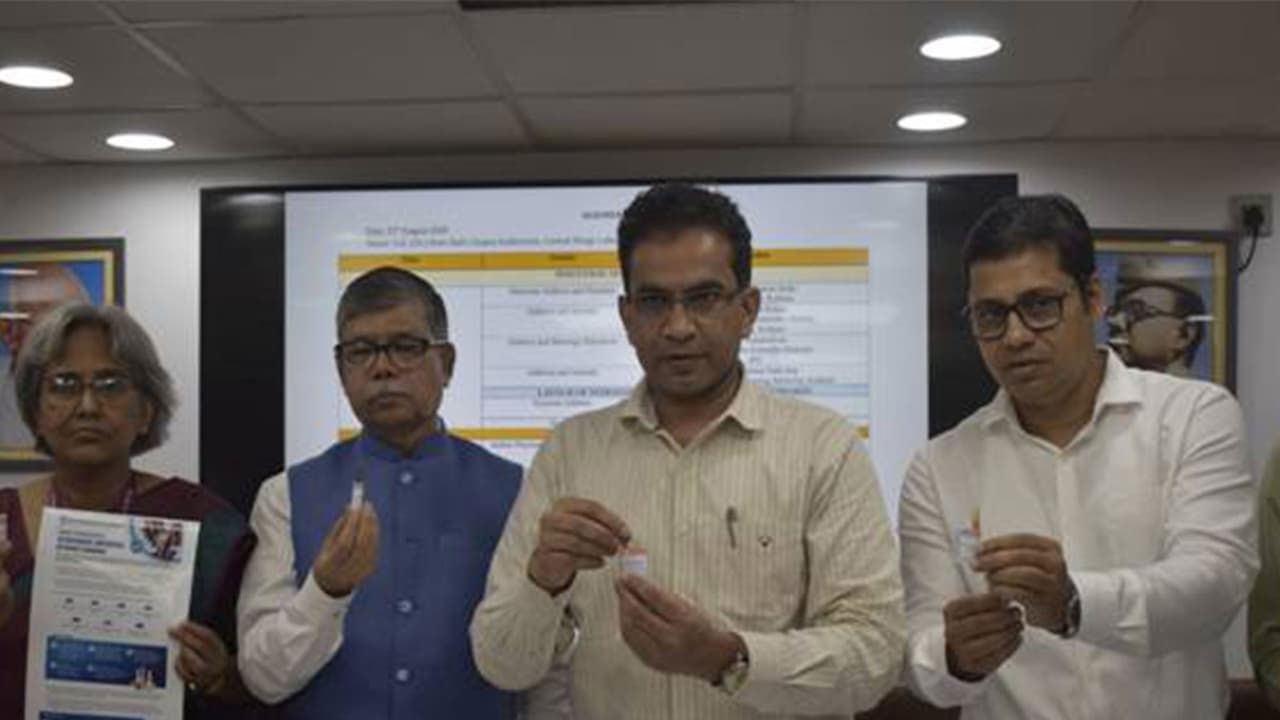
The Indian Pharmacopoeia Commission launched seven new Nitrosamine Impurities Reference Standards at its first-ever interactive meeting in Kolkata. This move aims to strengthen drug quality and safety by enabling accurate detection of these carcinogens.
The Indian Pharmacopoeia Commission (IPC), nder the Ministry of Health and Family Welfare, Government of India, organised its first-ever interactive meeting at the Central Drugs Laboratory (CDL) and Central Cosmetics Laboratory (CCL), Kolkata, focusing on strengthening pharmacopoeial standards and drug quality in the country. The meeting focused on "IP 2026: Perspectives, Suggestions & Way Forward", bringing together experts and stakeholders to discuss the way forward for pharmacopoeial standards and drug quality, as well as the significance of Indian Pharmacopoeia Reference Standards and Impurity Standards in assuring the quality, safety and efficacy of pharmaceuticals.
IPC Launches Key Nitrosamine Impurity Standards
A major highlight of the event was the launch of seven Indian Pharmacopoeia Nitrosamine Impurities Reference Standards, marking the first-ever introduction of these critical reference standards by IPC. The seven standards launched are N-Nitrosodimethylamine (NDMA), N-Nitrosodiethylamine (NDEA), N-Nitrosoethylisopropylamine (NEIPA), N-Nitrosodibutylamine (NDBA), N-Nitrosomethylphenylamine (NMPA), N-Nitrosodiisopropylamine (NDIPA), and N-Nitroso-N-methyl-4-aminobutyric acid (NMBA).
Nitrosamines are highly potent genotoxic and carcinogenic compounds that may arise unintentionally during manufacturing, storage, packaging or through contamination from various materials used in pharmaceutical production. Controlling these impurities is crucial in some drug formulations used for hypertension, gastric disorders, diabetes and tuberculosis, among others.
Boosting Drug Quality and Self-Reliance
According to the Ministry of Health and Family Welfare, the launch of the seven impurity reference standards will represent a significant step towards strengthening India's capability for accurate detection and quantification of nitrosamine impurities in pharmaceuticals. The initiative will support pharmaceutical testing, method validation, quality assurance and regulatory compliance, while promoting harmonisation with international quality standards and self-reliance in critical reference materials.
A Platform for Collaborative Action
V Kalaiselvan, Secretary-cum-Scientific Director, Indian Pharmacopoeia Commission, in his inaugural address, highlighted the importance of a collaborative approach with the CDL laboratory in ensuring the quality of medicines. Suparna Chatterjee, Professor and Head of Pharmacology, IPGMER Kolkata, and Rakesh Kumar Rishi, Director, Central Drugs Laboratory, also attended the event.
The meeting served as a platform for experts from regulatory authorities, laboratories and IPC to exchange perspectives, share suggestions and contribute towards further strengthening the Indian Pharmacopoeia and the national drug quality ecosystem.
(Except for the headline, this story has not been edited by Asianetnews Editorial staff and is published from a syndicated feed.)