
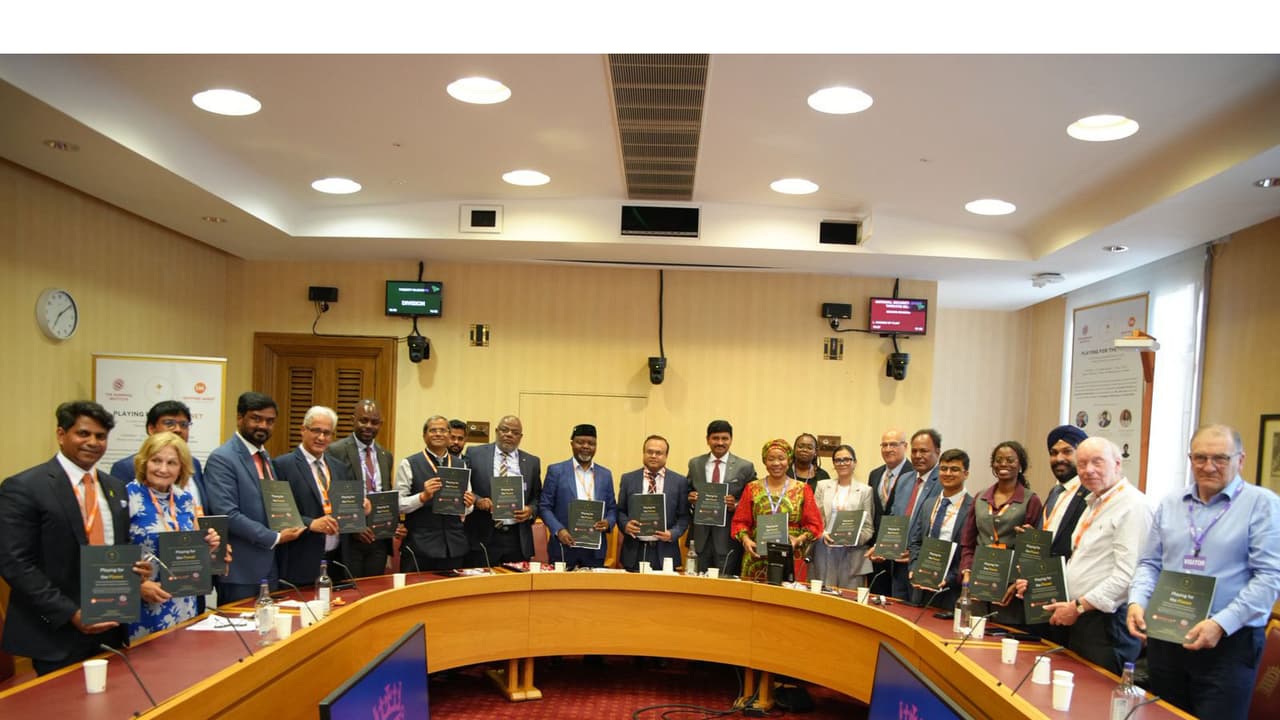
The Green India Challenge, a grassroots initiative by Joginipally Santosh Kumar, was elevated onto the world stage at a House of Lords dialogue. The movement's vast impact, including 196M saplings, gained praise from the Commonwealth.
The hallowed halls of the House of Lords in London bore witness to a historic convergence on June 23, 2026, as parliamentarians, diplomats, and environmental advocates gathered to elevate a grassroots Indian initiative onto the world stage. The event, "Playing for the Planet -- A Green Commonwealth Dialogue on Sport and Climate Action," served as the platform for Joginipally Santosh Kumar to demonstrate how a local village-level project has evolved into a powerhouse of international climate diplomacy.
From Local Initiative to Global Impact
The dialogue underscored the rapid ascent of the Green India Challenge, an initiative founded by Shri Joginipally Santosh Kumar in 2018. What began as a localised effort in Telangana has matured into a verifiable, data-driven movement that has transcended borders. The scope of the impact presented at the Palace of Westminster was staggering. Over 196 million saplings were mobilised, with modern geo-tagging and satellite monitoring for afforestation. 21,000+ conservation structures were constructed for water security across 33 countries, yielding an estimated annual saving of 3.57 TMC of water. A massive network of 44 million participants, proving that climate action can be a mass-mobilisation event rather than just a policy aspiration.
Commonwealth Endorsement and South-South Cooperation
The dialogue acted as a bridge between the Global South and the North, attracting high-level support from across the Commonwealth. A high-powered Kenyan parliamentary delegation, led by Deputy Speaker Senator Kathuri Murungi, lauded the initiative as a "noble and globally relevant movement." In a major endorsement, the delegation expressed interest in appointing Shri Santosh Kumar as a Green Ambassador for Kenya, signalling a new era of South-South cooperation in rewilding and environmental restoration.
Aligning with Commonwealth Sporting and Sustainability Goals
Recognising the unique power of athletics to mobilise youth, the dialogue aligned with the sustainability goals of the upcoming Glasgow 2026 Commonwealth Games. Commonwealth Sport outlined a "Zero Waste" vision for the games, framing sport as a primary vehicle for driving environmental change. Representatives from the Commonwealth Secretariat and the Ramphal Institute highlighted the model's compatibility with the Commonwealth Blue Charter, emphasising that such proven, citizen-led models are essential for meeting the Sustainable Development Goals (SDGs).
A Clear Trajectory for Future Action
The event concluded with a clear trajectory for the movement. The participants committed to carrying the momentum from London to three critical global stages. The Glasgow 2026 Commonwealth Games: Integrating the "Playing for the Planet" ethos into international sporting events. CHOGM 2026 (Antigua and Barbuda): Positioning community-led models as central to the Commonwealth's climate strategy. Hyderabad Climate Action Week 2026: Establishing the city as a premier hub for "climate delivery" and scientific collaboration.
By focusing on "proof, not promises," the dialogue in the House of Lords marked a definitive shift in international climate discourse--moving away from theoretical frameworks toward a scalable, verifiable, and deeply human-centric model of environmental stewardship.
(Except for the headline, this story has not been edited by Asianet Newsable English staff and is published from a syndicated feed.)