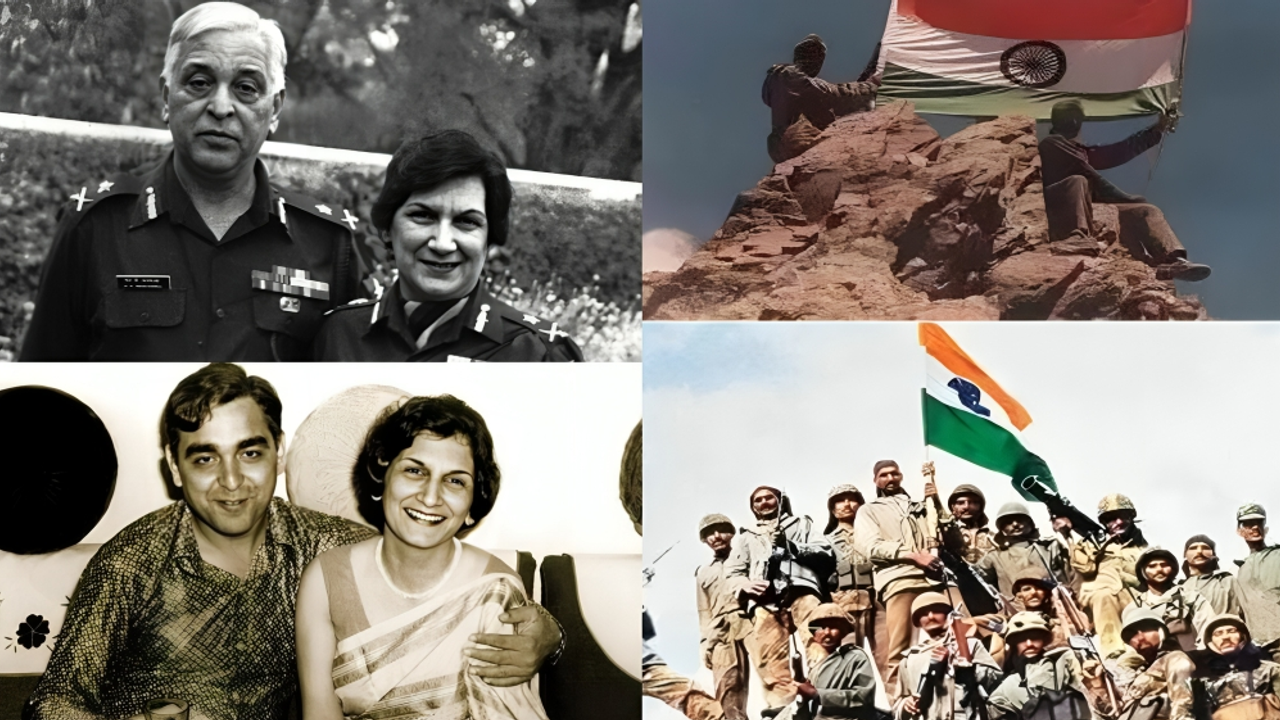
Major Generals Anju and NK Manchanda served during the 1971 and Kargil wars, treating soldiers, POWs and civilians with care and courage. Their inspiring journey proves that healing, too, is a powerful act of patriotism.
As India is remembering its heroes and bravehearts today on Kargil Diwas (July 26), one story stands out, not from the frontlines, but from the wards of military hospitals.
On Kargil Vijay Diwas, Indians pay tributes to nation's heroes, to mark India's victory over Pakistan in the Kargil War of 1999. The country honours the courage of Indian soldiers who ousted Pakistani forces from mountain-top positions in northern Kargil district of Ladakh.
While many soldiers fought with guns in icy altitudes, others fought their own battles in hospital corridors with scalpels, syringes and compassion. Among them were two doctors who served not just in the Kargil War but also in the 1971 Bangladesh Liberation War. This is their story.
Related Articles

In February 1967, at Delhi Cantonment, two young lieutenants of the Indian Army met at a military hospital. Dr NK Manchanda and Dr Anju, both newly commissioned, shared a love for medicine and duty. A year later, they got married, beginning a lifelong journey of healing and service together in uniform, together in battle.
They would go on to become Major Generals and serve India during two of its biggest wars. For over three decades, they were not just partners in life, but also on the battlefield of care.
A love story that began in service
In February 1967, at Delhi Cantonment, two young lieutenants of the Indian Army met at a military hospital. Dr NK Manchanda and Dr Anju, both newly commissioned, shared a love for medicine and duty. A year later, they got married, beginning a lifelong journey of healing and service, together in uniform, together in battle.
They would go on to become Major Generals and serve India during two of its biggest wars, the 1971 Bangladesh Liberation War and the 1999 Kargil War. For over three decades, they were not just partners in life, but also on the battlefield of care.
Healing the wounded of Kargil
When the Kargil War broke out in May 1999, both doctors were stationed in Delhi. Major General NK Manchanda was at the Army Headquarters, training teams for rapid medical response. Meanwhile, Major General Anju was at the Army Research and Referral (R&R) Hospital, where she led the treatment of soldiers critically injured in the war.
She was the first woman officer to become Deputy Director General of Medical Services (now called MG Med) at Central Command. Her calm leadership during the chaos of war turned the hospital into a place of hope. Injured soldiers who arrived with severe wounds often left with a second chance at life.
Her quiet strength during chaos
Major General Anju wasn't just a skilled doctor. She was a source of strength. She worked long shifts without rest, managed trauma teams under pressure and ensured that no soldier was left behind in care. Her hospital operated like a military unit with precision, discipline and deep compassion.
She received the Vishisht Seva Medal for her dedication, but the respect she earned from fellow officers, patients and juniors was even more powerful. She showed that wars are not only fought on mountains, but also inside hospital walls.
Their service during the 1971 war
In 1971, just four years into their careers, the Bangladesh Liberation War began. NK Manchanda was deployed as a regimental medical officer to Tripura and later to Bangladesh. Anju remained in Delhi. She was the brave doctor who accompanied Pakistani prisoners of war on their return flights and helped bring back Indian soldiers who were held on the other side.
This role required courage, care and firm resolve. Even at a young age, Anju had all three.
A life of service after the army
The couple retired in 2004, but their service didn't end. At the request of former Defence Minister George Fernandes, they were invited to work at private hospitals in Bengaluru. NK joined Mallya Hospital for a year. Anju, however, continued working much longer, helping patients, mentoring doctors and doing community service.
Though she began writing her autobiography, titled Bold, her patients always came first. She passed away before completing the book. NK Manchanda later ensured the book was finished, saying her story had to be told to inspire other women in the military, as quoted by the Times of India.
The legacy they leave behind
Serving as a doctor-couple in the armed forces was not always easy. They were posted apart for years, once for over 18 months while NK served in Ladakh. But their dedication to duty never wavered.
Major General Anju Manchanda's story is a reminder that heroism comes in many forms. Not all warriors carry weapons, some carry stethoscopes. Some fight not to take lives, but to save them.
Her life, her work and her legacy continue to inspire. Especially today, on Kargil Diwas, we remember not just the soldiers who fought, but also the doctors who healed.