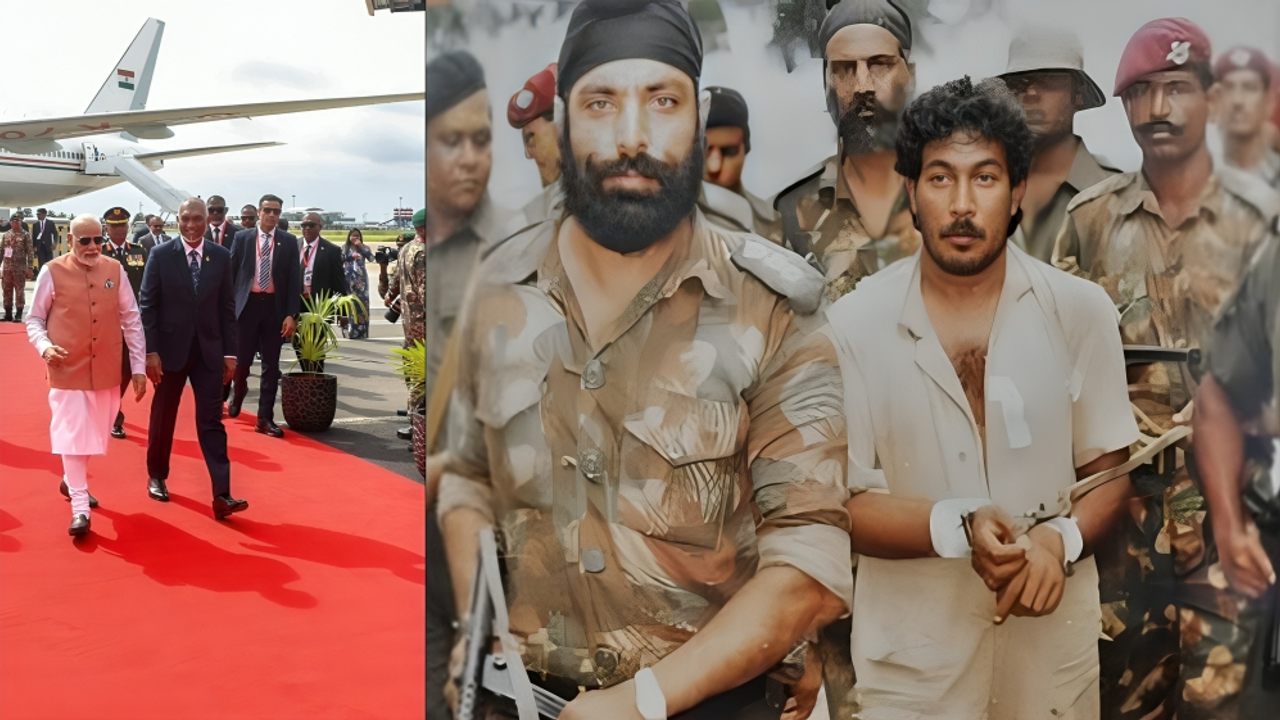
India saved the Maldives from a violent coup in 1988 through Operation Cactus. This military help laid the foundation for decades of strong ties, now being revived as PM Modi visits Maldives after tensions under President Mohamed Muizzu.
On July 25, 2025, Prime Minister Narendra Modi received a grand welcome in the Maldives. He was greeted with a 21-gun salute and a ceremonial reception at Republic Square in Male. Children performed cultural dances and waved Indian flags. His giant photo was even displayed on the Ministry of Defence building.
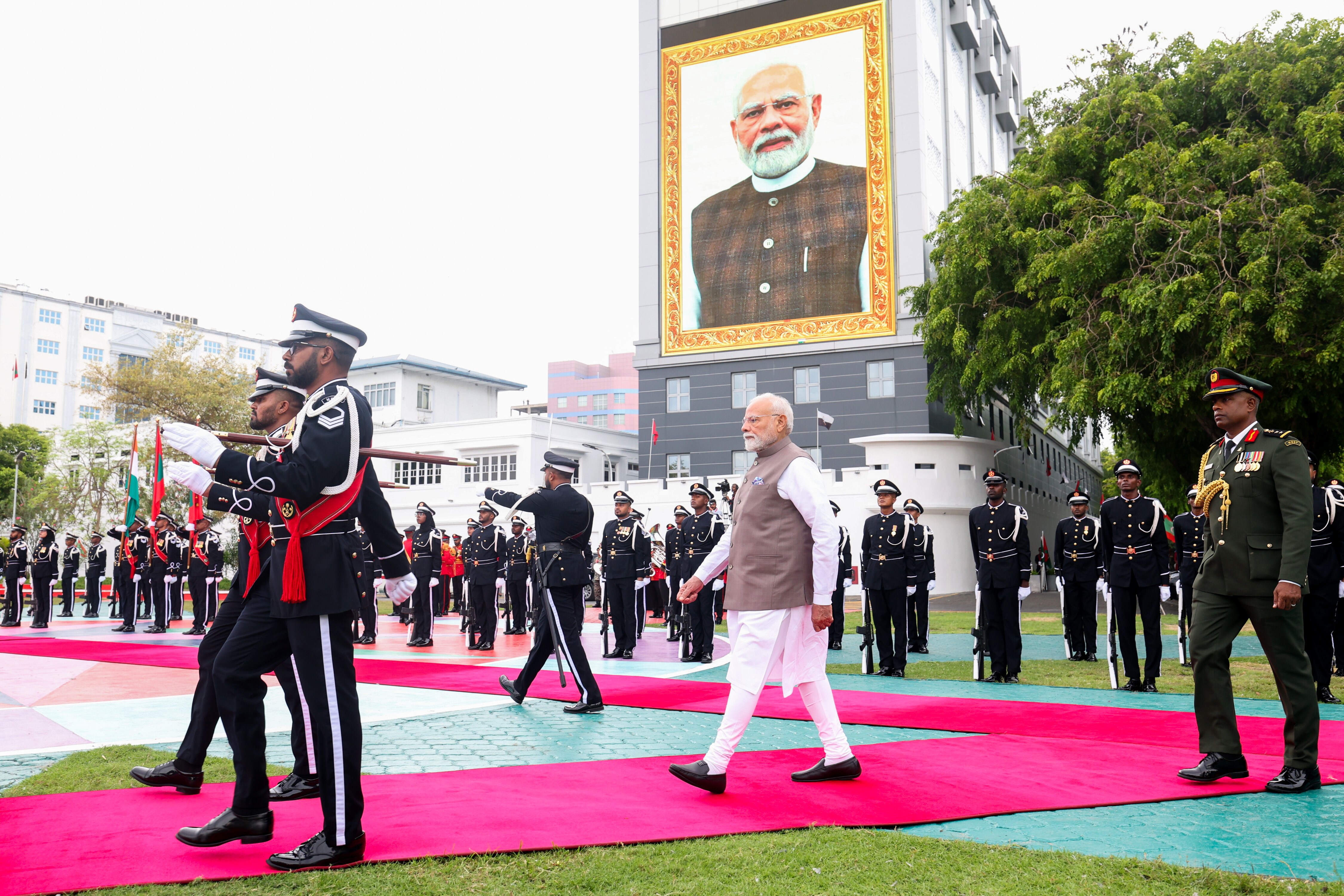
This warm reception shows that the friendship between India and Maldives is getting stronger again, despite recent tensions between the two countries.
Related Articles

A rocky patch in India-Maldives ties
When Mohamed Muizzu became President of the Maldives in 2023, he came to power after running an 'India Out' campaign. His government made unfriendly comments about India and Prime Minister Modi. Some Maldivian officials posted insulting remarks on social media.
This angered many Indians, who began cancelling their holiday plans to Maldives. Lakshadweep and other Indian islands became the preferred tourist spots. President Muizzu’s government also asked Indian military personnel to leave Maldives.
These moves created a serious low point in the long friendship between the two countries.
Talks and reconciliation in 2024
By 2024, both India and Maldives realised the need to repair their relationship. Diplomatic talks resumed, and both sides agreed to work together again. Now, the friendly visit by Prime Minister Modi shows that the ties are getting back on track.
But this relationship is not just about recent events. It has deep roots going back decades, including a time when India helped save Maldives from a dangerous coup attempt.
When India saved Maldives in 1988
In 1988, a group of Sri Lankan Tamil militants and Maldivian rebels tried to take control of the Maldivian government. The group was led by a Maldivian businessman named Abdullah Luthufee and supported by the People's Liberation Organisation of Tamil Eelam (PLOTE).
President Maumoon Abdul Gayoom sent an urgent SOS message to India on November 3, 1988. At that time, Indian troops were already involved in the Sri Lankan civil war, but India still responded quickly.
Within hours, India launched Operation Cactus to save the Maldivian president.
Operation Cactus: A daring rescue mission
The Indian Army sent its best soldiers, paratroopers from the 50th Independent Parachute Brigade and other elite units on a long flight from Agra to Maldives. They landed at the Male airport, which luckily was not taken over by the rebels.
The Indian troops then crossed the lagoon and reached the capital, Male. They quickly took control of the city and rescued President Gayoom.
Some rebels tried to escape by boat with hostages. But the Indian Navy sent two warships, INS Godavari and INS Betwa, which stopped the rebels and saved the hostages.
This mission was completed within hours and was a major success. Many countries praised India’s action, which helped a small neighbour during a serious crisis.
India and Maldives: A long friendship
The 1988 operation built a strong bond between India and Maldives. Over the years, India helped Maldives in many ways:
- Water crisis in 2014: When Maldives faced a drinking water shortage, India sent Navy ships with water-making machines to help.
- Medical and education links: Many Maldivians come to India for healthcare and higher studies, especially in Tamil Nadu and Kerala.
- Trade and supplies: Since 1981, a special trade deal has helped Maldives get essential items from India.
- Tourism: Thousands of Indian tourists visit Maldives every year.
Despite political ups and downs, the people-to-people connection between the two countries remains strong.
A relationship tested, but not broken
Even when the recent 'India Out' movement strained ties, India continued to support Maldives. Indian officials handled the crisis with care and diplomacy.
Now, with Prime Minister Modi’s visit and the red-carpet welcome he received, it is clear that both countries want to rebuild the trust.
India's role in 1988 shows that its friendship with Maldives is not based on politics alone, it is built on deep ties, history and goodwill.