
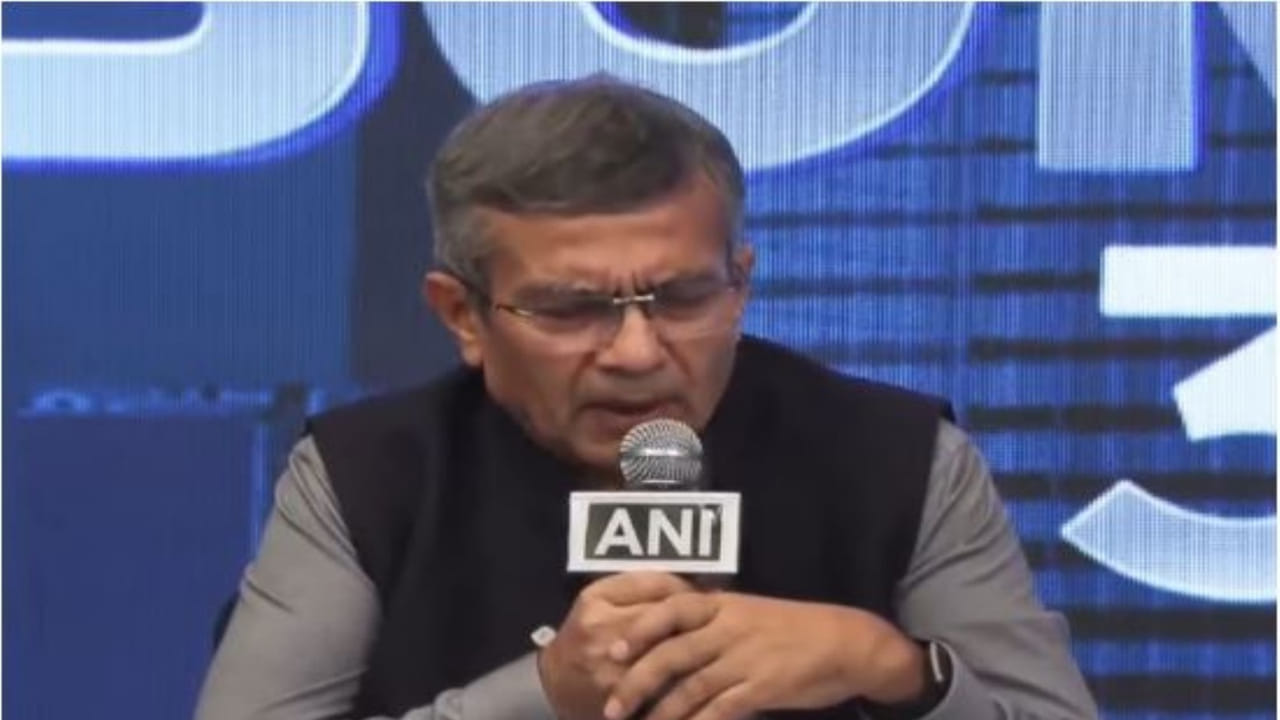
Defence Secretary Rajesh Kumar Singh announced that India's naval expansion plans, including significant submarine procurement, are in the final stages of approval to ensure maritime superiority amid growing regional security challenges.
India Poised for Major Naval Expansion with New Submarine Proposals
New Delhi [India], November 16 (ANI): India is poised to announce a major expansion of its underwater naval fleet, with the internal procurement cycle for two significant submarine proposals now complete and awaiting final clearance at the highest level of government, Defence Secretary Rajesh Kumar Singh said on Monday.
Speaking at the ANI National Security Summit 3.0 in New Delhi, Singh dismissed concerns that delays in submarine acquisitions could create a strategic vulnerability amid deepening naval cooperation between China and Pakistan, including Islamabad's induction of Chinese-built Hangor-class submarines, assuring that New Delhi will not allow its maritime advantage to erode. "The internal procurement cycle for a significant increase in our underwater platforms has been completed. Both proposals are lying at the highest level in government, so you will hopefully see some good news on that front fairly soon," Singh said. "It will be a fairly large programme, I can assure you, and we will not allow the existing advantages that we have on the naval side vis-à-vis the adversary that you mentioned to slip away."
Notably, the strategic partnership model with German firm TKMS and Mazagon Dock Shipbuilders Limited (MDIL) is in its final stage and has been placed before the Cabinet Committee on Security (CCS). On Scorpène-class, the government is also looking at three additional submarines to use MDIL's existing production line for faster induction. For undersea capability, the Defence Ministry is pushing faster, localised upgrades — including clearing major capital and torpedo procurement packages and setting up testing infrastructure like the SONAR Engineering Assembly, Test & Evaluation Center (SEATEC) in Kochi.
Earlier, addressing a session titled "Strengthening India's Defence Preparedness", the Defence Secretary underscored that modern warfare is evolving rapidly—pointing out that India had to adapt in real time during Operation Sindoor and draw critical lessons for future conflicts.
"The true strength of a nation's defence preparedness is not determined merely by what it possesses, but what it can bring to sustain and adapt when confronted with a challenge," Singh said, noting that "the world is on fire in many ways." "The issue is how we acquire these capabilities and build a defence ecosystem capable of anticipating, developing, and sustaining the capabilities required for tomorrow."
Warning that future conflicts will likely involve simultaneous, multi-domain threats rather than isolated conventional battles, he stressed the need to prepare for overlapping disruptions. "The character of warfare is changing, and some dimensions of those changes were brought home to us during Operation Sindoor. Obviously, we had to take lessons from that," Singh said. "We also have to consider the possibility of simultaneous and interconnected contingencies in the future—a combination of conventional military confrontations with cyber disruptions, electronic interference, attacks on communication networks, and disruption to critical infrastructure."
To stay ahead of rapidly shifting battlefield conditions, Singh emphasised that India must pair credible operational capabilities with deep technological and industrial strength—anchored primarily in domestic design and manufacturing. "The challenge is not merely to prepare for the next conflict, but to prepare for the changing conditions under which these future conflicts may be fought," he said. "For comprehensive defence preparedness, we need first and foremost credible operational capabilities. We require technological and industrial strength, preferably with indigenous design and manufacturing capabilities."
Outlining a holistic roadmap for national security, the Defence Secretary called for deepening jointness and integration across the armed forces, fostering a robust research and innovation ecosystem alongside indigenous manufacturing, ensuring robust logistics, modern border infrastructure, and assured availability of ammunition and spares and developing skilled human resources while forging mutually beneficial international partnerships with trusted nations. (ANI)










