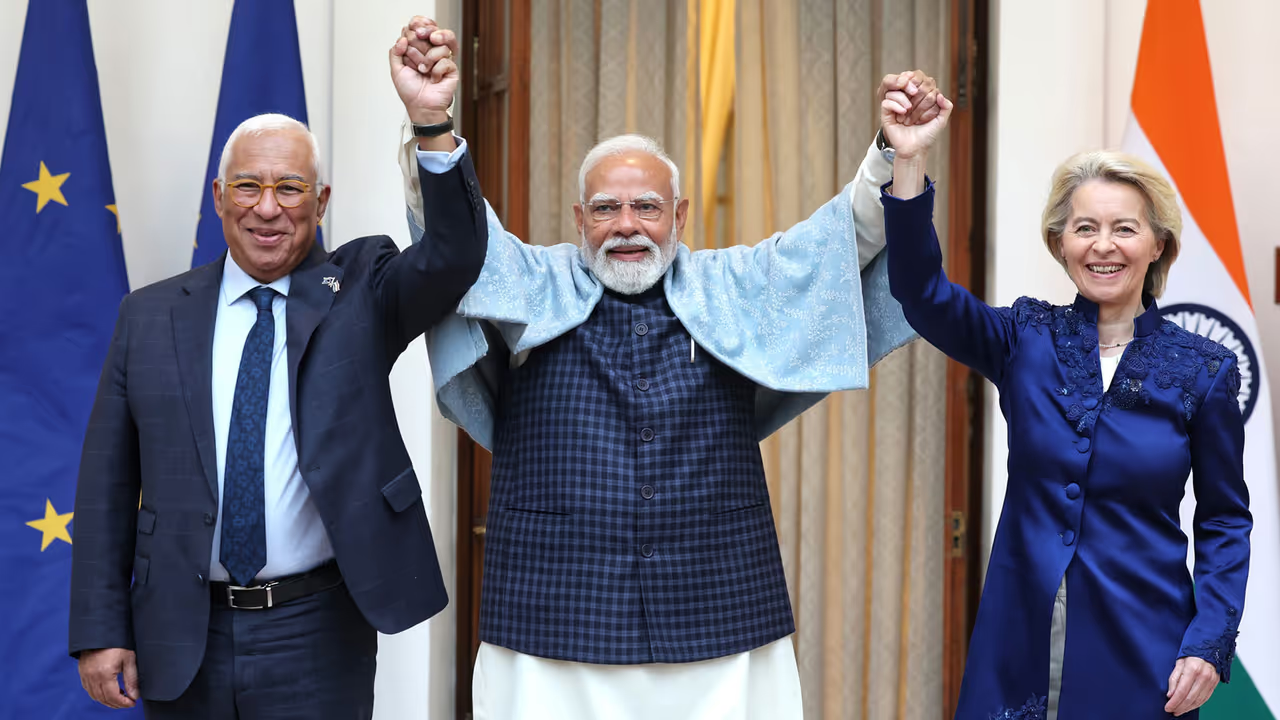
Due to the free trade agreement between India and the European Union, 93% of Indian products exported to Europe will become duty-free.
Due to the free trade agreement between India and the European Union, 93% of Indian products exported to Europe will become duty-free. Similarly, the prices of expensive luxury cars, medicines, wine, and liquor imported from Europe will significantly decrease in the Indian market.
After the implementation of the finalized free trade agreement between India, the world's 4th largest economy, and the European Union, the world's second-largest economy, a significant increase in trade between the two is expected.
This agreement will create new opportunities in the European market for 99% of India's exports. After this agreement is implemented, more than 93% of India's export products, excluding auto and steel, can enter the European market with zero tariffs. The remaining more than 6% of export products will benefit from tax cuts and quota-based tariff exemptions, said Commerce Minister Piyush Goyal.
Related Articles

Average tax to drop to 0.1%:
Currently, the European Union imposes an average tax of 3.8% on products imported from India. After the FTA, this will drop to 0.1%. Some products exported from India, mainly marine products (0-26%), chemicals (up to 12.8%), plastics and rubber (up to 6.5%), leather and footwear (up to 17%), textiles and garments (up to 12%), gems and jewelry (up to 4%), railways, aircraft, ships, boats (up to 7.7%), furniture, light consumer goods (up to 10.5%), toys (up to 4.7%), and sports goods (up to 4.7%) are subject to high taxes. However, after this agreement, they can enter the European market duty-free.
In return, 90% of European Union's product imports will become duty-free over a period of 10 years. On the first day of the agreement's implementation, India will only reduce the duty on 30% of European Union products. Currently, India's bilateral trade with Europe in the 2024-25 fiscal year is Rs 12 lakh crore. This makes the EU India's largest trading partner. 17% of India's total exports are to Europe. Now, with the free trade agreement, it is expected that exports to European countries will double by 2032, saving about Rs 43,572 crore that was going towards taxes.
Which European goods will be imported duty-free?
- Automobiles, wine, spirits, beer, olive oil, kiwi, pears, fruit juice, processed foods like bread, pastries, biscuits, pasta, chocolate, pet food, sheep meat, sauces, and other meat preparation products.
- Currently, these products are taxed from 33% to 150%.
- The price of premium luxury cars from European companies like BMW, Mercedes, Lamborghini, Porsche, and Audi will now decrease in the Indian market.
India will provide tariff exemptions for European cars on a quota basis. India will gradually reduce the tax on cars to 10%. Only 2.5 lakh cars per year will get this benefit.
- Machinery, electrical equipment, aircraft and spacecraft, optical, medical, surgical instruments, plastics, chemicals, iron, steel, and pharma products will enter India duty-free.
- In the case of automobiles, India has decided to offer a cautious quota-based tariff exemption package. The Commerce Ministry expressed confidence that this will not only allow European car manufacturers to introduce luxury cars in India but also create opportunities for 'Make in India' and future exports from India.
Dairy, grains excluded from the agreement
India has excluded dairy products, soya meal, and grains from the agreement. The European Union has also kept sugar, beef, meat, and poultry sectors away from tariff exemptions.
Key countries of the European Union
France, Germany, Spain, Italy, Austria, Belgium, Bulgaria, Finland, Hungary, Iceland, Netherlands, Portugal, Poland, Denmark, and Sweden