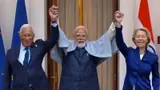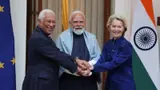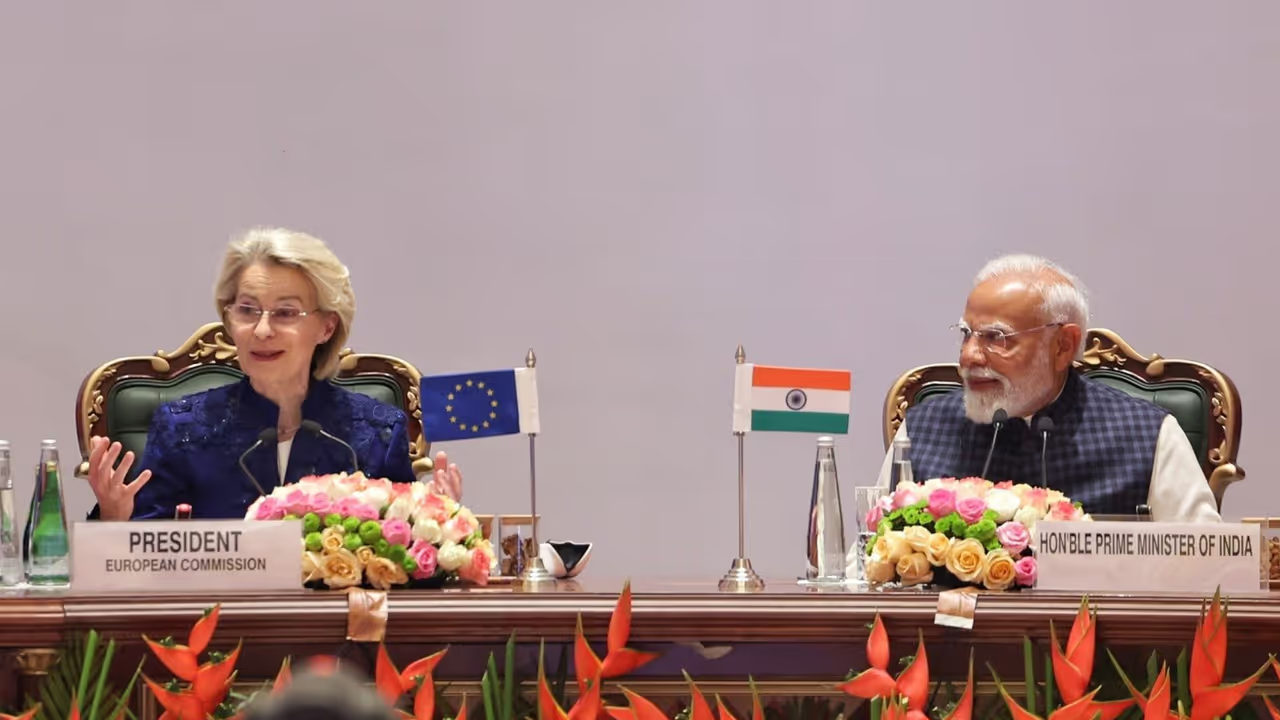
India and the EU have concluded a historic FTA, marking a major milestone in economic cooperation. The pact will significantly reduce tariffs, granting preferential market access to over 99% of Indian exports, including textiles and chemicals.
India and the European Union have formally concluded negotiations on a historic Free Trade Agreement (FTA), marking the biggest such deal in India’s history and a major milestone in global trade relations. Announced on January 27, 2026, the pact was celebrated by leaders from both sides as a game-changer for economic cooperation, strategic alignment, and prosperity across continents.
Prime Minister Narendra Modi described the FTA as the “mother of all deals”, underscoring its significance not just for bilateral trade but for setting a new benchmark in India’s foreign economic policy.
He said the agreement represents a “new blueprint for shared prosperity,” reflecting the depth of trust and ambition between the world’s second-largest and fourth-largest economies. Modi emphasised that the pact will unlock unprecedented opportunities for businesses, workers, and consumers in India and Europe alike.
Related Articles

Why Modi Went Multilingual
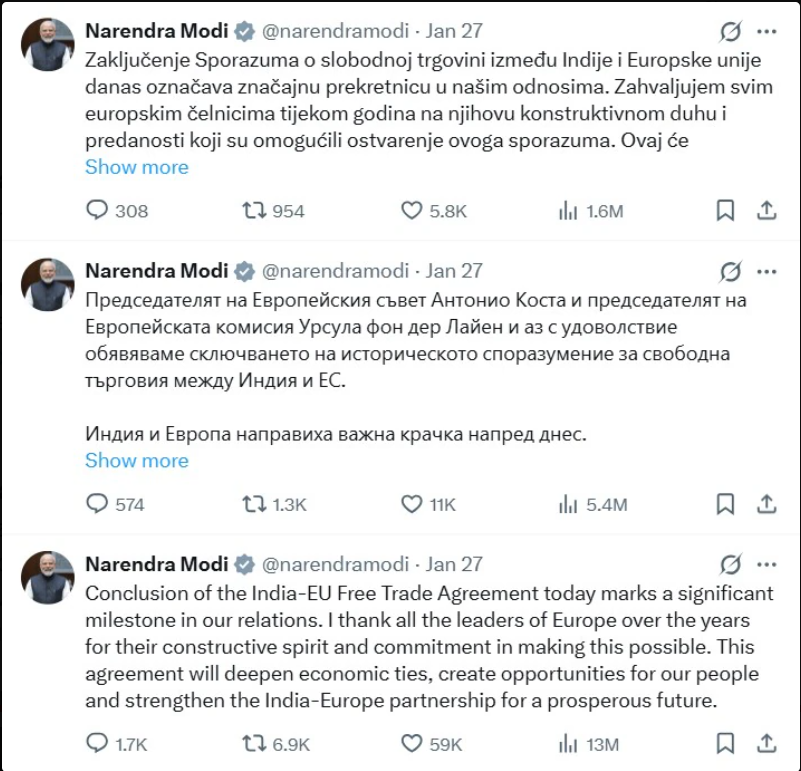
In a novel diplomatic gesture, the PM took to social media to share his message about the agreement in 24 different European Union languages, ensuring that leaders and citizens across all 27 member states could engage with the milestone in their native tongue. Political commentators described this as a strategic outreach that humanised the deal and reinforced India’s commitment to meaningful partnership with Europe.
Key Highlights of the FTA
The FTA is expected to dramatically reduce tariffs on goods and expand market access for both Indian and European industries. Over 99% of Indian exports are set to enter the EU on preferential terms, opening up vast opportunities for textiles, leather, gems and jewellery, chemicals, and other labour-intensive sectors. European exporters will benefit from reduced duties on machinery, pharmaceuticals, automobiles, and high-end manufacturing inputs, fostering deeper industrial cooperation.
One of the most significant changes will be in the automotive sector, where tariffs on EU-made cars entering India will be lowered from historically high levels to as low as 10% over time, under phased quotas. Agriculture and food products, including wine, spirits, and processed foods, will also see major tariff cuts, bringing down costs for consumers and boosting trade flows.
Beyond tariff reductions, the FTA includes provisions aimed at strengthening supply chains, enhancing market access for services, protecting intellectual property, and simplifying customs procedures. Small and medium-sized enterprises (SMEs) stand to gain from improved trading conditions, while investors on both sides look forward to a more predictable and transparent business environment.
The deal arrives at a time of shifting global trade dynamics, with rising protectionism in some major markets. EU leaders, including European Commission President Ursula von der Leyen, framed the pact as a strategic alliance that strengthens economic resilience and reduces dependency on unilateral trade pressures. They highlighted that the combined market of India and the EU will encompass nearly two billion people and account for a significant share of global GDP.
(Tweet)
Political leaders from both sides also noted that the FTA goes beyond commerce — it symbolises shared commitment to a rules-based global order and cooperation on climate, technology, and sustainability initiatives. As part of the broader summit, India and the EU also announced plans to deepen cooperation in defence, security, and people-to-people exchanges.
Expert Reactions to PM Modi’s Multilingual Message
Dr. Cristina Vanberghen, political commentator and senior expert at the European Commission, described Modi’s gesture as a “graceful hat tip” to all 27 EU nations. She said that by tweeting in each country’s language, the Prime Minister turned what could have been a routine announcement into a personal and respectful diplomatic outreach, making the Free Trade Agreement feel human rather than bureaucratic.
(Screen shot)
While the legal review and ratification process may take several months, business groups and trade bodies have already praised the agreement as a timely response to global economic challenges. They expect it to significantly boost exports, create jobs, and enhance India’s competitiveness on the world stage.
Overall, the India-EU Free Trade Agreement heralds a new era in bilateral ties, reinforcing economic integration while signalling a robust partnership poised to shape global trade in the years ahead.