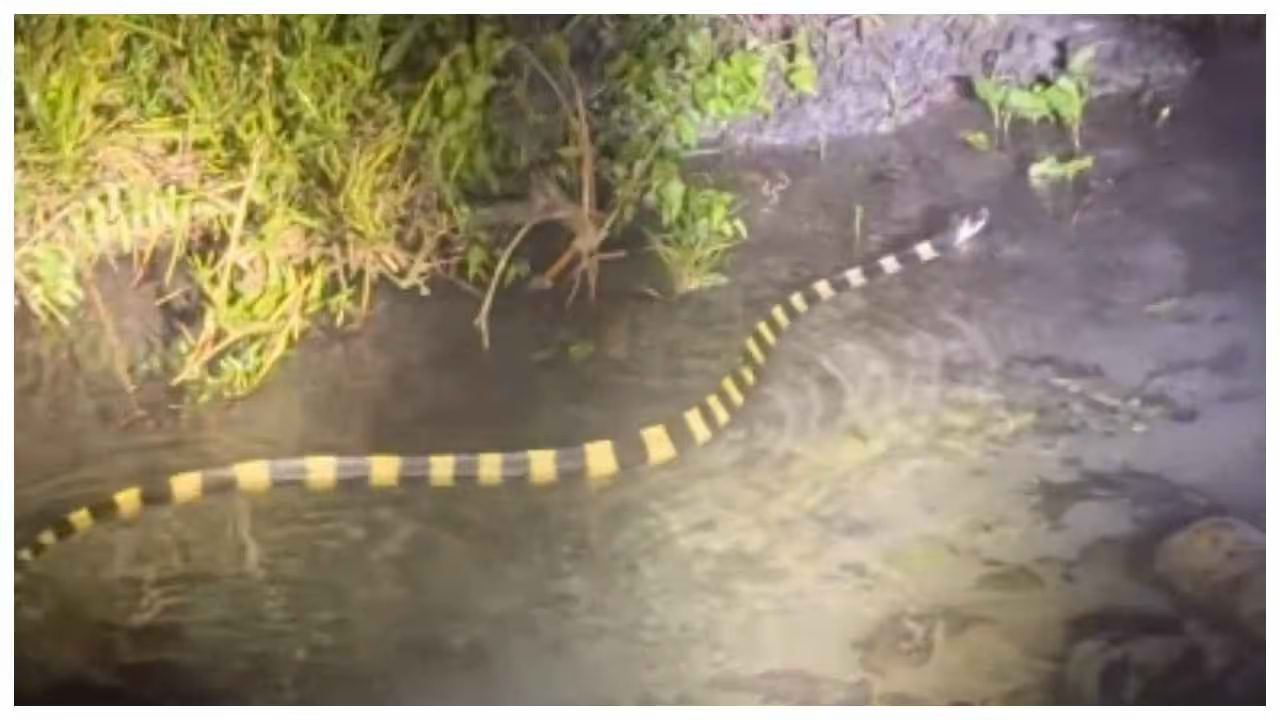
IFS officer Parveen Kaswan filmed a rare, highly venomous Banded Krait gliding through dark waters on night patrol, its striking black-yellow bands glowing in torchlight and stunning viewers online.
It was the kind of quiet, in-between hour when the world feels half-asleep. During a routine night patrol, Indian Forest Service (IFS) officer Parveen Kaswan swept his torch across a stream — and something unusual moved through the water. A sleek shape, marked in stark bands of black and yellow, slipped effortlessly with the current.
Kaswan pulled out his phone. Moments later, the world was seeing what he saw: a rare sighting of a Banded Krait, one of India’s most venomous — and most misunderstood — snakes.
“Those Beautiful Bands”
Sharing the now-viral video on X, Kaswan wrote with almost childlike wonder:
Related Articles

“Those beautiful bands. The Banded Krait is a highly venomous snake found in India. Found this randomly during night patrolling. How nature provided them so distinct bands!!”
The torchlight picks up the snake’s colours dramatically — bold yellow rings cutting across jet-black scales. Within a single day, the video crossed 3.25 lakh views, with viewers pausing their endless scrolling to take in this glimpse of the wild.
Fear, Fascination and Everything in Between
Not everyone saw beauty first. One viewer admitted he was terrified even remembering a chance encounter with a snake:
“Are you sure it’s beautiful?” he asked, recalling how he once froze when he saw one just a few feet away.
Others were charmed — or at least intrigued. Someone joked that even highway dividers don’t have such perfect stripes. Another suggested nature had painted the krait this way as a warning sign, advertising its potent venom.
Between the awe and fear, though, ran a common thread: respect.
Meet the Banded Krait
Found across the Indian subcontinent and parts of Southeast Asia, the Banded Krait is instantly recognisable thanks to its bright rings and slightly triangular body. Despite its reputation, it is shy, mostly nocturnal, and avoids humans whenever possible.
During the day, it prefers to stay hidden — in burrows, leaf litter, or near water. At night, it hunts quietly, often feeding on other snakes, lizards and small animals, playing its own quiet role in keeping ecosystems balanced.
Its venom is neurotoxic, meaning it affects the nervous system — but experts repeatedly stress that bites are rare and the snake is not aggressive unless handled or provoked.
Why Sightings Like This Matter
Because kraits tend to stay hidden and are active at night, videos like Kaswan’s are uncommon. They serve as powerful reminders that a complex world of wildlife moves around us, often unseen.
They also show that fear and appreciation can coexist. The krait is dangerous — yes — but it is also a stunning example of nature’s design.