
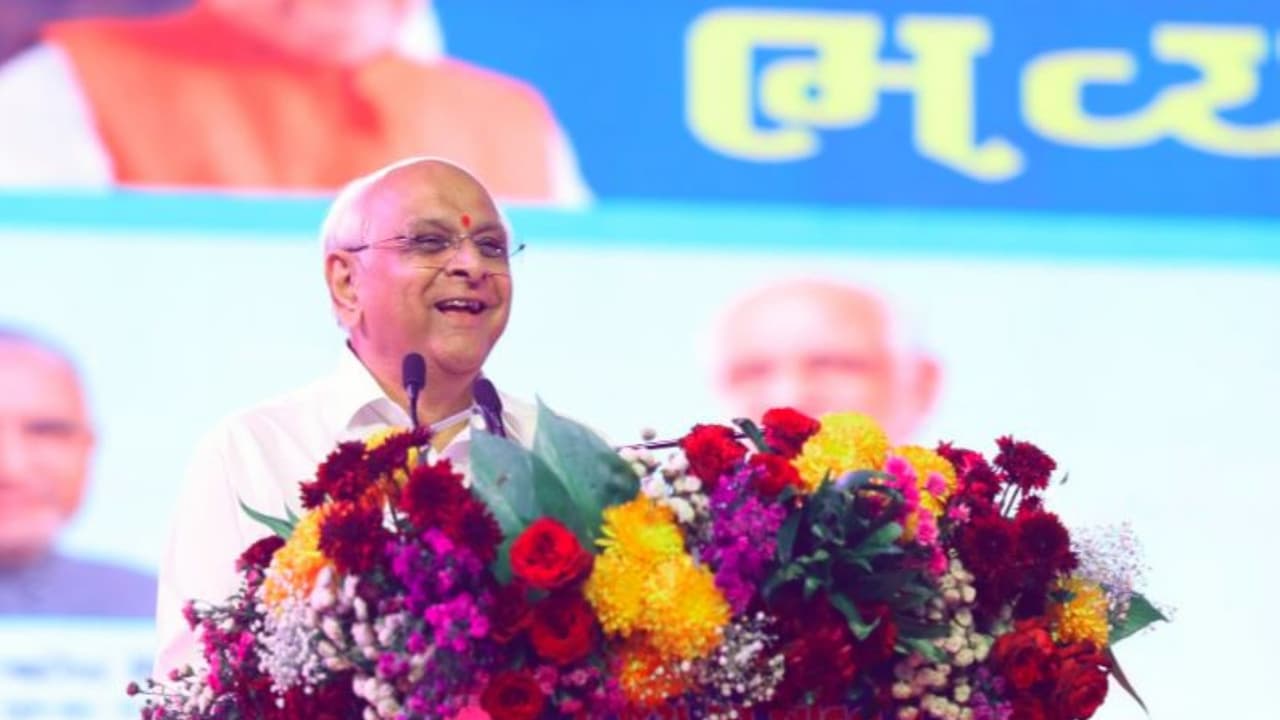
Gujarat CM Bhupendra Patel has committed to making the state a model for urban water management. Under Urban Development Year 2025, the 'Mission Daily Water Supply' and SCADA system are being implemented to provide daily potable water to all cities.
Gujarat Chief Minister Bhupendra Patel has reaffirmed the state's strong commitment to positioning Gujarat as a leading national model for sustainable urban water management. Under his leadership, the Gujarat Government prioritises ensuring a reliable daily water supply and equitable access to safe, potable drinking water across all urban areas.
Aligned with this vision, urban water resources have been increased by 92.97 MLD, and transmission systems have been expanded by 528.35 KM during Urban Development Year 2025, according to the release.
Initiatives such as 'Mission Daily Water Supply' are being implemented to provide a daily water supply across all urban areas. Through this program, the State Government supports urban local bodies in carrying out various water supply and sanitation projects, as stated in the release.
It is worth mentioning that the State Government has declared 2025 as the 'Urban Development Year' to fast-track the development of world-class cities, with a special focus on strengthening infrastructure facilities across urban areas.
Expanding Daily Water Supply Coverage
The Gujarat Government currently provides daily water supply in 103 cities under various schemes and initiatives.
In 30 other cities, water supply works are in progress under different schemes.
To extend the daily water supply to the remaining 32 urban local bodies, 'Mission Daily Water Supply' is being implemented, with works planned under the same initiative for various components.
Leveraging Technology for Efficient Water Management
The SCADA system has been successfully implemented in major cities to facilitate digital monitoring of water distribution and other water resource-related services in urban areas. The system supports leak detection, identification of low-pressure pockets, reduction of non-revenue water (NRW), improved per capita water supply at the required pressure, pumping station monitoring to ensure optimal pumping efficiency, valve monitoring, and other operational functions.
As a result, losses due to non-revenue water have reduced, and real-time monitoring of water distribution and related services has become possible.
Improving Ease of Living for Citizens
It is worth mentioning that with the implementation of 'Mission Daily Water Supply', along with other water supply-related schemes and initiatives, citizens will receive potable drinking water daily, reducing the need for long-term water storage.
The availability of daily drinking water will also lower dependence on alternative water sources.
Through structured and planned urban development, the Urban Development Department remains committed to improving the Ease of Living for urban citizens.
(Except for the headline, this story has not been edited by Asianet Newsable English staff and is published from a syndicated feed.)