India is undertaking a massive $40 billion military modernization to counter threats from China and Pakistan. Key acquisitions include 114 Rafale fighter jets, advanced missiles, and surveillance aircraft to bolster its air and maritime capabilities.
India is undertaking one of the most ambitious military modernization drives in its history, propelled by strategic imperatives, technological ambitions and geopolitical pressures from neighbours such as China and Pakistan. In early 2026, the Government of India and the Defence Acquisition Council (DAC) approved a sweeping ₹3.6 trillion (~$40 billion) capital procurement programme that underscores this rapid expansion. The key components of this plan include a massive expansion of Rafale fighter jets, acquisition of advanced missiles, long-range spy and surveillance aircraft, and investments in indigenous defence manufacturing under the ‘Make in India’ initiative.
Air Power & Strike Capability
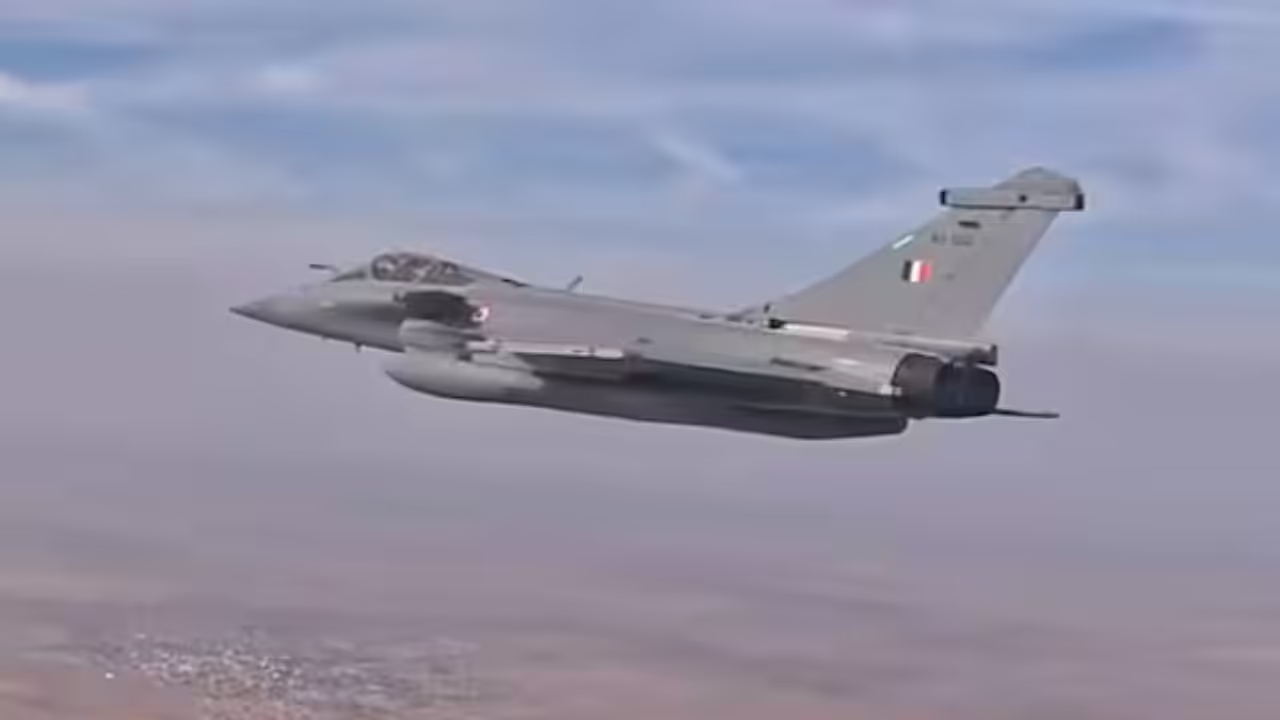
At the forefront of the drive is the proposal to acquire 114 additional Rafale multirole fighter jets from France — the largest single fighter aircraft procurement plan in India’s history. Under the current structure, early batches of these jets would be delivered in fully built-up (“fly-away”) condition, while the remaining aircraft will be manufactured domestically through a partnership between French aerospace firm Dassault Aviation and Indian industry, aligning with the government’s target to boost local defence production. Close to 80 % of the jets are expected to be built in India, with Indian aerospace companies fabricating structural components and gradually taking on final assembly roles.
This expanded Rafale fleet — which would bring India’s total Rafale inventory to approximately 176 aircraft, including existing air force and naval variants — is intended to address the stark shortfall in fighter squadrons. The Indian Air Force (IAF) currently operates around 29 squadrons, far below the sanctioned strength of 42, a gap widened after the retirement of legacy aircraft such as the MiG-21 and MiG-29. Modern fighters like the Rafale are seen as essential to maintain air superiority and deter potential aggression along multiple fronts.
Related Articles

Complementing offensive air power, the DAC has also cleared purchases of additional long-range missiles, including SCALP cruise missiles for precision deep-strike capability, and systems for air defence and standoff engagement. The acquisition of these weapon systems is designed to enhance India’s deterrence posture across a spectrum of potential conflict scenarios, enabling both air dominance and precision ground attack potential.
Beyond fighter jets and missiles, India is strengthening its maritime and intelligence capabilities. The programme includes the acquisition of six additional Boeing P-8I Poseidon maritime surveillance aircraft, reinforcing naval reconnaissance and anti-submarine warfare capabilities. Long-range patrol aircraft and specialized spy planes equipped with advanced sensor suites play a vital role in gathering intelligence, monitoring adversary movements, and providing early warnings — especially in contexts involving both China in the Himalayas and Pakistan along the western frontier.
‘Make in India’ Defence Push
Crucially, this modernisation drive is being pursued alongside a renewed focus on indigenous development and production. India’s ‘Make in India’ initiative seeks not only to manufacture advanced defence hardware domestically, but also to develop a robust defence industrial base capable of future exports. The Rafale plans, for example, envision significant technology transfer and localisation in airframe production, avionics integration, and sustainment operations. In addition, Indian firms are increasingly involved in developing missile systems such as the Pralay tactical missile and the emerging Mission Sudarshan Chakra multi-layer air defence architecture — homegrown programs aimed at reducing dependence on foreign suppliers while enhancing sovereign capability.
This integrated approach — blending foreign procurement with domestic manufacturing — also includes upgrades to existing platforms such as the indigenous HAL Tejas fighter, radar systems, UAVs, and helicopter fleets. It reflects India’s long-term ambition to become a global defence production hub, with industry players ranging from public sector units like HAL and Bharat Electronics to private aerospace firms and international partners.
The geopolitical context fuelling this military bolstering is vital. India shares complex and often tense borders with China and Pakistan. China’s rapid military modernization, marked by its growing fleet of advanced fighter aircraft and missile capabilities, and periodic skirmishes along the Line of Actual Control in the Himalayas have underscored the need for credible deterrence. Similarly, Pakistan’s conventional and asymmetric threats continue to shape India’s defence planning. These regional security concerns, along with broader strategic interests in the Indo-Pacific, have driven Indian policymakers to prioritise rapid enhancement of operational readiness across land, air, and maritime domains.
In practical terms, these acquisitions are designed to enhance India’s combat readiness, surveillance reach, and precision strike capability. Rafale jets with advanced sensors and weapons will give the IAF a technological edge, while enhanced maritime patrol aircraft and integrated missile systems will ensure improved monitoring and response options across air and sea theatres. With continued investments in indigenous innovation and defence exports, India’s military expansion now blends hard-power upgrades and industrial ambition in a way that could shape regional defence dynamics for decades.