
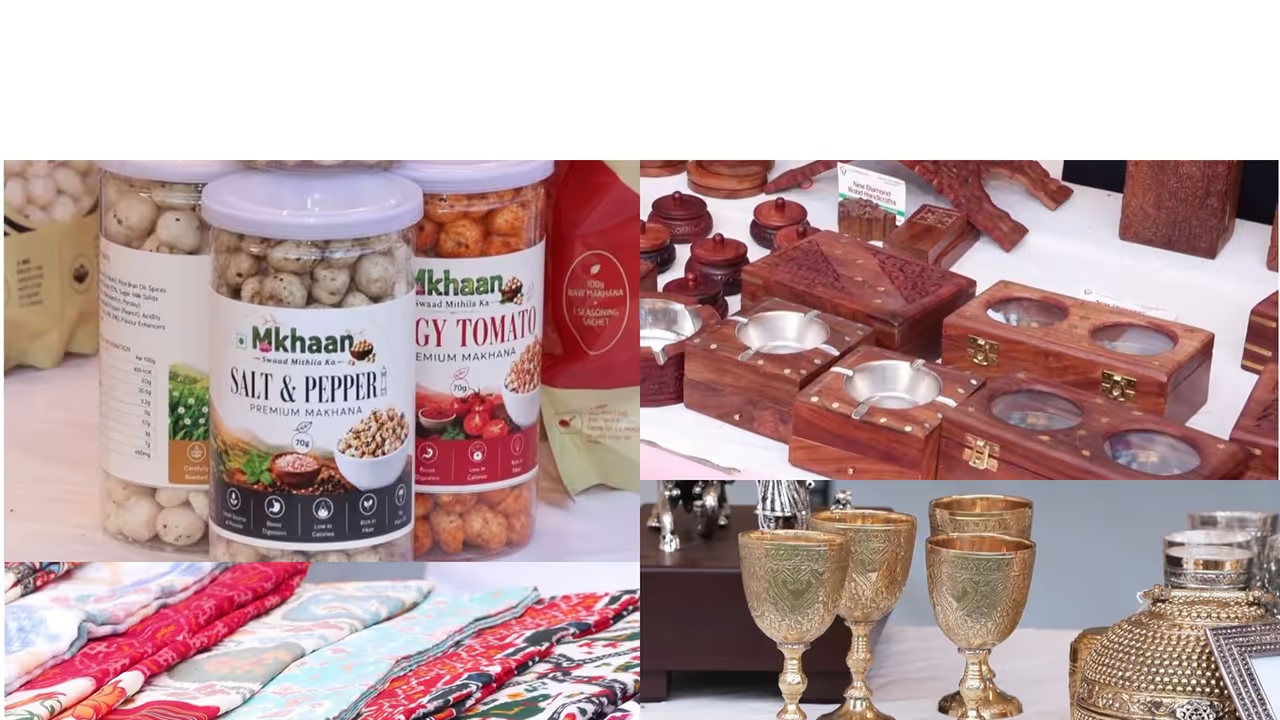
Indian artisans showcase diverse handicrafts and regional products, including makhana and handlooms, at a special exhibition during the BRICS Parliamentary Forum to boost global visibility and provide economic opportunities for local creators.
Promoting India's Cultural Heritage at BRICS
Traditional Indian handicrafts, handlooms and regional products are being showcased at an exhibition organised alongside the BRICS Parliamentary Forum at Parliament House, giving artisans and exhibitors from across the country an opportunity to present their work to international delegates and promote India’s cultural heritage.
From silver-plated copperware and intricate Saharanpur wood carvings to Telangana’s ikat sarees, handloom products from Patiala and a range of products made from Bihar’s makhana, the exhibition brings together crafts and products representing different regions of India. Exhibitors said such platforms help them reach wider audiences, generate business opportunities, secure orders and create employment for artisans.
Metalwork and Woodcraft Displays
Mahesh Chandra Verma, an exhibitor showcasing metalwork, said his products were entirely handcrafted, with copper serving as the base material for items finished with silver plating. Explaining the process, he said, “Our entire handicraft work is handmade. All the items are made using copper, on which we have done silver plating. For example, this glass is made of copper. After shaping and working on it, we apply silver plating and then carry out the finishing.” Verma said considerable time and effort went into making each item, with a single glass taking around three days to complete. He said the opportunity to display his work at an international event provided artisans with a wider platform to showcase their skills. “The benefit is that we get to come onto a somewhat bigger platform, and that is the advantage,” Verma said, describing the opportunity to exhibit at the BRICS summit.
The exhibition also features traditional woodcraft from Saharanpur in Uttar Pradesh. Md. Atir Ansari, a wood artist, said his work involved intricate hand carving on sheesham wood, with detailed designs created by artisans. “This is woodwork, and carving is done on it. The carving involves fine, intricate work, and everything is done by hand. We work on sheesham wood,” Ansari said. He added that his family had received recognition for its work, including national and state-level awards for his father and a state award for himself in 2024. Ansari also said the craft had received Geographical Indication (GI) recognition, linking the product to its geographical origin. Highlighting the commercial benefits of participating in exhibitions, Ansari said, “Through such platforms, we also get orders, and our work reaches not just people in India but also abroad. Our artisans get work through this as well.” He said opportunities to display the craft at different events helped promote both the traditional art form and Uttar Pradesh. According to Ansari, such platforms could help the craft reach new markets while supporting the artisans whose livelihoods depend on it.
Textiles and Regional Specialities
Textile products from Telangana form another part of the exhibition. Shankar, an exhibitor from the state, said his stall featured ikat sarees and other textiles made using different materials and techniques, including cotton, mulberry silk and linen. The collection also included value-added designs incorporating Kalamkari-style elements and other artistic patterns. Explaining the range of products, Shankar said, “This is all ikat saree work. These are made using cotton and mulberry silk, and there are also value-added products featuring Kalamkari designs. We also make different styles using linen and other materials.” He said artisans were adapting traditional techniques to develop different designs for younger consumers while continuing to showcase the craft of Telangana. Shankar said participation in international events such as the BRICS summit helped increase the visibility of regional products. “The most important benefit is that our work gets more exposure. It also helps with advertising. When we appear in the media, our products reach more people, and they become interested in wearing them,” he said.
Handloom products from Patiala are also being showcased at the exhibition. Kiran, an exhibitor from the city, said the products displayed at her stall included work created by her mother, Lajwant, who has received the Padma Shri award. She said the collection featured handwork and handloom-based designs and had received a positive response from visitors. “We have been invited here for the exhibition, and the products feature handwork and handloom work. We are getting a very good response from customers. Some customers are buying products and returning to purchase them again,” Kiran said. Asked about the challenges faced by handloom artisans amid the availability of machine-made and imported products, she maintained that traditional handloom continued to have its own place in the market. She said the work displayed at the stall was handmade rather than machine-produced.
Bihar's Makhana as a Superfood
The exhibition also highlights Bihar’s makhana, or fox nuts, with a range of products demonstrating its potential beyond conventional consumption. Rajeev Rajan Jha, an exhibitor from Darbhanga, said he had showcased makhana products at several major events, including the G20 and BRICS platforms, as well as the Conference of Speakers and Presiding Officers of the Commonwealth (CSPOC). Jha said the growing recognition of makhana as a superfood had increased demand for the product and created opportunities to introduce it to international audiences. “This is the pride of Mithila, which we can call makhana. Since it gained recognition as a superfood, its demand has increased significantly,” Jha said. Explaining the purpose of participating in such events, he said, “Whenever such opportunities arise, we are invited to showcase our products and explain what makhana is, what can be made from it and what its potential is.” His stall features around 18 to 20 products made from makhana, including brownies, ready-to-use kheer, flavoured products, flour and roasted makhana. Jha said delegates from several countries had visited the stall, tasted the products and shown interest in them. He added that international exhibitions were particularly important for producers from regions such as Darbhanga, where development challenges, including recurring floods, affect livelihoods. Wider exposure and access to markets, he said, could help strengthen the value chain and improve returns for farmers. “Today, makhana has gained international recognition, and its exports have started. This is benefiting farmers as well,” Jha said.
Comparing prices, he said makhana sold for around Rs 600 per kilogram in 2020-21, while prices in some premium domestic markets had since reached between Rs 1,500 and Rs 2,700 per kilogram. He added that prices in overseas markets could range from Rs 3,000 to Rs 8,000-9,000 per kilogram, depending on the market and product. Jha said farmer producer organisations (FPOs) working directly with farmers could help them receive a greater share of the returns by reducing dependence on intermediaries. “When we work with farmers through our FPO, and there are no middlemen, the benefits reach the farmers more fully,” he said.
The exhibition at the BRICS Parliamentary Forum Summit provides a platform for artisans, weavers and regional producers to present traditional skills and locally made products to an international audience. Exhibitors said the exposure could help expand markets, generate orders and support livelihoods while bringing greater visibility to India’s diverse handicrafts, handlooms and regional products. (ANI)
(Except for the headline, this story has not been edited by Asianetnews Editorial staff and is published from a syndicated feed.)