
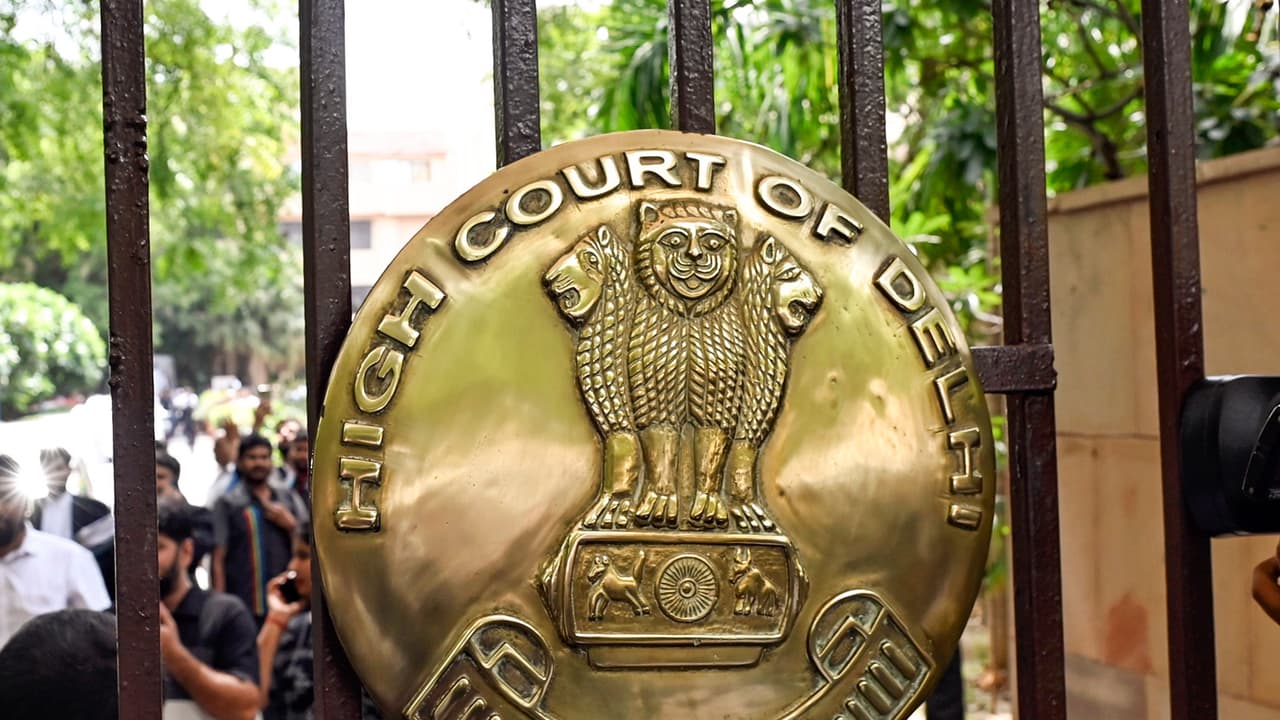
Delhi HC referred the excise policy case to another bench after Justice Swarana Kanta Sharma initiated criminal contempt proceedings against Arvind Kejriwal and AAP leaders over an alleged social media campaign targeting the judiciary and the judge.
The Delhi High Court on Thursday referred the Delhi excise policy case to the Chief Justice for transfer to another Bench after Justice Swarana Kanta Sharma initiated criminal contempt proceedings against former Delhi Chief Minister Arvind Kejriwal and several leaders of the Aam Aadmi Party over alleged social media campaigns, public statements, edited videos and letters targeting the judiciary and the judge.
Justice Sharma clarified that the Court was not recalling or reversing its earlier order rejecting Kejriwal's plea seeking her recusal from the matter. However, since contempt proceedings had now been initiated regarding allegations directed against the Court and the judge personally, judicial propriety required that the main excise policy matter be heard by another Bench. "The recusal issue stands concluded," the Court observed, while adding that the present controversy concerned subsequent acts allegedly amounting to criminal contempt.
The Court directed that the matter be placed before the Chief Justice for assignment to another Bench, while contempt proceedings would continue separately in accordance with law. Justice Sharma initiated criminal contempt proceedings against Kejriwal, former Deputy Chief Minister Manish Sisodia, AAP Rajya Sabha MP Sanjay Singh, AAP MLA Vinay Mishra and AAP leader Saurabh Bharadwaj, among others.
'Calculated Campaign to Scandalise Judiciary'
In a detailed order dictated in open court, Justice Sharma held that statements, videos, social media posts and public campaigns against the Court amounted to a "calculated campaign" intended to scandalise the judiciary, lower the authority of the Court and interfere with the administration of justice. The Court observed that the alleged contemnors publicly questioned the integrity, impartiality and independence of the judge by linking her to a political ideology and suggesting that justice could not be expected from the Court in matters involving leaders of a particular political party.
According to the Court, such conduct crossed the line between fair criticism of judicial orders and criminal contempt. Justice Sharma made several strong observations during the proceedings, saying the judiciary cannot be intimidated through organised campaigns on social media. "The robe that I wear is not so fragile that a few criticisms would leave scars on it," the Court observed, while adding that judges are trained to endure criticism and hostility.
However, the Court said silence could not continue when campaigns were allegedly designed to intimidate judges and shake public confidence in the judiciary. "They wanted to intimidate me. Mujhe darana chahte the. I refuse to be intimidated," Justice Sharma said in open court. The Court further observed that if such conduct were normalised, judges may begin deciding cases based on anticipated political backlash or social media pressure rather than law, and "justice itself may become a casualty."
Allegations of Political Bias
Justice Sharma referred extensively to videos, public letters, interviews and social media posts allegedly circulated by Kejriwal and other AAP leaders after rejection of the recusal plea. The Court noted that instead of challenging the recusal order before the Supreme Court, allegations against the judge continued to be repeated publicly. According to the Court, the alleged campaign openly questioned the Court's independence and suggested that the judge was politically aligned with the BJP and RSS. Referring to remarks allegedly made by Saurabh Bharadwaj questioning "Justice Swarana Kanta Sharma ka BJP se rishta kya kehlata hai," the Court said such statements were contemptuous and intended to create suspicion regarding the functioning of the judiciary. The Court also referred to statements by Sanjay Singh and Vinay Mishra allegedly suggesting ideological bias and even claiming that a Rajya Sabha seat had been "fixed" for the judge. "What can be more contemptuous than this?" Justice Sharma remarked while referring to one such post.
Edited Videos and 'Distorted' Narrative
A substantial part of the order dealt with edited videos of a lecture delivered by Justice Sharma at a workshop in Varanasi. The Court observed that a 59-second clip from a longer lecture was selectively edited and circulated on social media after removing the event backdrop and context, allegedly to falsely portray the event as associated with a political organisation.
Justice Sharma said references made during the speech were to Lord Shiva and the spiritual significance of Kashi, but were deliberately distorted to create an impression of political affiliation and ideological proximity. The Court also noted that fact-check reports and clarifications issued by the institution hosting the lecture allegedly confirmed that the video had been misleadingly edited, but those clarifications were ignored while the edited clip continued to circulate online.
Justice Sharma further indicated that separate action may also follow against certain YouTubers and online platforms allegedly involved in amplifying "contemptuous" material against the judge and judiciary. "We are in the process of collating materials," the Court said.
Solicitor General Backs Court's Stand
Solicitor General Tushar Mehta and Additional Solicitor General S. V. Raju strongly supported the Court's observations during the hearing. Mehta argued that the alleged campaign was not merely against an individual judge but against the institution of the judiciary itself and warned that if such tactics were permitted, litigants may begin using public campaigns and recusal allegations as a "standard operating procedure" to get rid of inconvenient judges.
He submitted that if a litigant loses a recusal plea, the proper legal remedy is to approach a higher court and not launch social media campaigns alleging bias and victimhood. The Solicitor General also remarked that "Mahatma Gandhi never filed recusal applications" and faced even British judges because he had the courage of conviction. He further stated that judges facing such attacks often stand alone because they have no public platform to defend themselves except through judicial orders.
According to Mehta, a dangerous message was being sent to judges that if they do not "toe the line" of politically influential litigants, they would face public vilification campaigns targeting not only judges but also their families.
Despite Mehta requesting Justice Sharma to continue hearing the excise policy matter, the judge said judicial discipline required the case to be heard by another Bench after initiation of contempt proceedings. Justice Sharma clarified that this should not be treated as acceptance of the recusal plea or as a victory for those who had raised allegations against the Court. The Court observed that the main excise policy matter could be heard by any Bench, but the alleged contemptuous acts directed against the judge and the judiciary could only have been addressed by the present Court itself. The Court ultimately directed that the excise policy case be placed before the Chief Justice for transfer and reassignment to another Bench, while contempt proceedings against the proposed contemnors would proceed separately. (ANI)
(Except for the headline, this story has not been edited by Asianet Newsable English staff and is published from a syndicated feed.)