
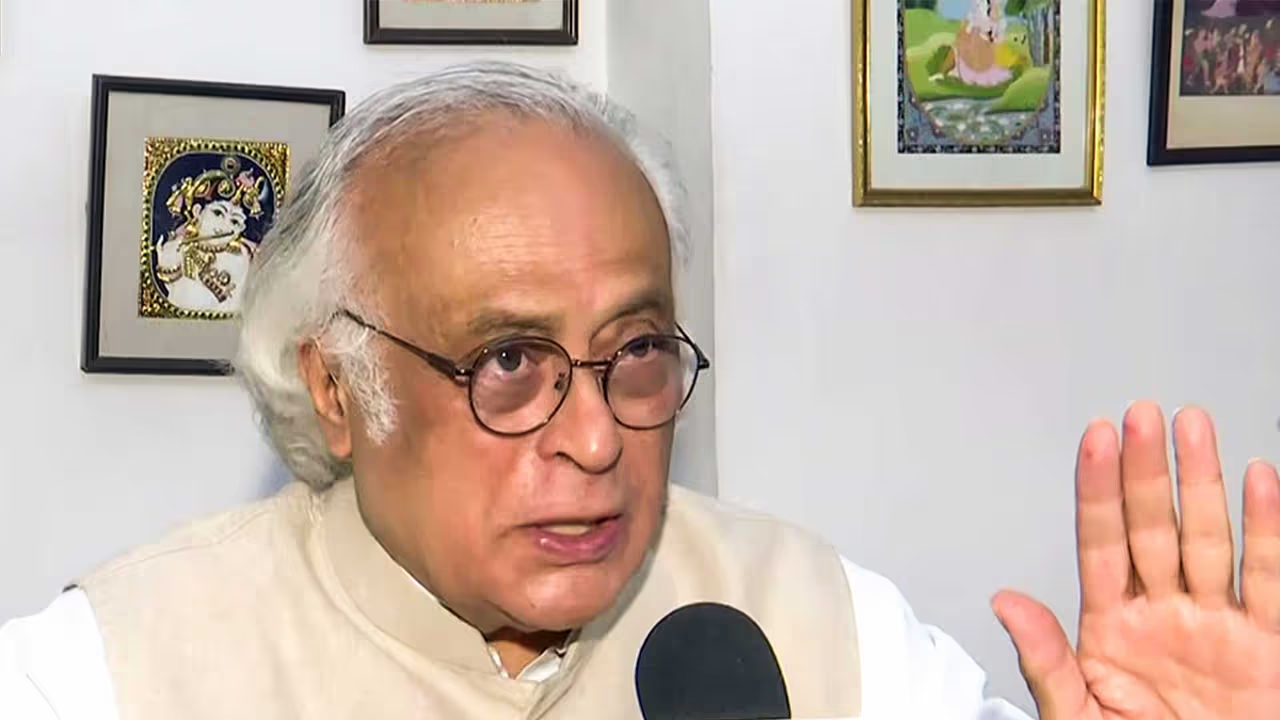
Jairam Ramesh criticised the E20 fuel rollout, citing its ecological impact on water resources and food security. He alleged India's ethanol production relies on water-intensive crops, unlike other nations using agricultural residues.
Senior Congress leader and Rajya Sabha MP Jairam Ramesh on Thursday criticised the Centre's nationwide rollout of E20 fuel, alleging that while it is being projected as a measure to promote cleaner energy and reduce oil imports, it fails to adequately address its impact on water resources and food security.
In a post on X, Ramesh said a comprehensive assessment of the E20 programme should take into account its ecological footprint, particularly the large amount of water required for ethanol production from crops such as sugarcane, rice and maize. The Modi government is billing the hurried nationwide rollout of E20 fuel as a step towards cleaner energy and lower oil imports. But a holistic assessment of its ecological impact must account for E20’s impact on water resources and food security. While other countries largely… — Jairam Ramesh (@Jairam_Ramesh) August 6, 2026 "The Modi government is billing the hurried nationwide rollout of E20 fuel as a step towards cleaner energy and lower oil imports. But a holistic assessment of its ecological impact must account for E20's impact on water resources and food security," he said.
Concerns Over Water-Intensive Crops
The Congress leader said that unlike several other countries that produce ethanol from agricultural residues and waste biomass, India's ethanol production depends largely on sugarcane, rice and maize, which he described as water-intensive crops.
He claimed that "sugarcane and paddy together consume nearly 70 per cent of India's irrigation water and alleged that producing one litre of sugarcane-based ethanol requires around 3,630 litres of water, while rice-based ethanol can require up to 10,790 litres and maize-based ethanol about 4,670 litres".
Ramesh further said the "concerns were significant at a time when groundwater levels were declining across many parts of the country. He also noted that the NITI Aayog's 2021 ethanol roadmap had recognised the need to transition towards more sustainable feedstocks".
'Centre Subsidises Rice for Ethanol'
The Congress leader further alleged that the Centre subsidises the use of rice for ethanol production. "The Modi Government in fact subsidises the use of rice for ethanol production - it recently admitted in Parliament that it supplies rice to ethanol distilleries at nearly 40 per cent below its average procurement cost," he said.
Calling for a broader evaluation of the policy, Ramesh said, "A genuinely "green" fuel policy must account for the entire ecological footprint of the fuel it promotes. The motivations for E20 are clearly not environmental".
AAP's Kejriwal Alleges US Pressure
Earlier, Aam Aadmi Party (AAP) national convenor Arvind Kejriwal on Thursday alleged that the Centre forced the Society of Indian Automobile Manufacturers (SIAM) to withdraw its report and claimed that the government was promoting ethanol "against all scientific evidence" due to pressure from the United States.
In a post on X, Kejriwal said, "U forced SIAM to withdraw their report. Typical Modi style. Gundagardi". He further alleged, "Modi ji never respected science, engg or research. He only serves his hidden agenda. Here, he is under pressure from Trump to buy ethanol from the US. Unable to withstand that pressure, he is bulldozing ethanol on the whole country against all scientific evidence." (ANI)
(Except for the headline, this story has not been edited by Asianet Newsable English staff and is published from a syndicated feed.)