
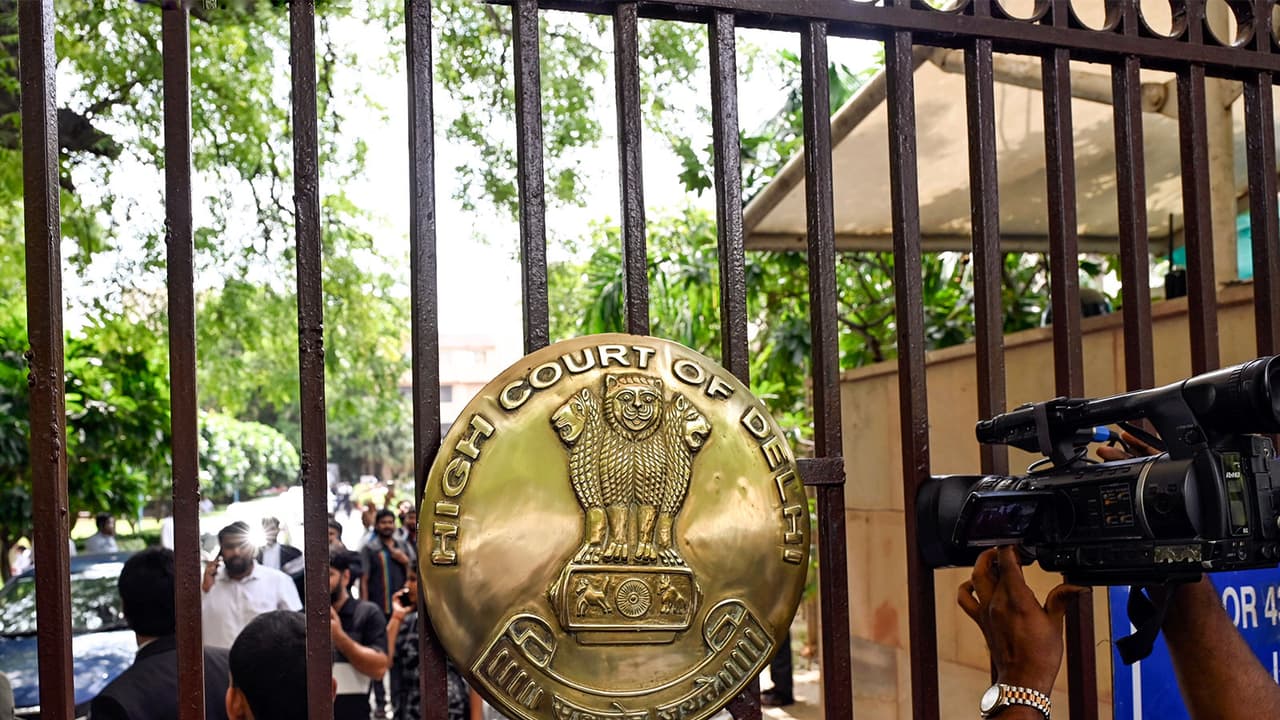
Delhi HC upholds the city govt's DBT policy for school uniforms, stating courts can't dictate welfare delivery methods. The ruling notes the RTE Act doesn't mandate in-kind supply, citing logistical challenges of physical distribution.
Emphasising judicial restraint in matters of government policy, the Delhi High Court has upheld the Delhi government's decision to provide school uniform assistance through Direct Benefit Transfer (DBT), ruling that courts cannot insist on a particular mode of welfare delivery when the law itself does not prescribe one.
RTE Act Doesn't Mandate In-Kind Uniform Supply
A Division Bench headed by Chief Justice Devendra Kumar Upadhyaya held that neither the Right of Children to Free and Compulsory Education Act, 2009, nor the Delhi RTE Rules, 2011, require uniforms to be supplied strictly in kind. The court observed that as long as the statutory obligation to provide uniforms is fulfilled, the executive is entitled to choose the mechanism best suited to practical realities.
Government's Plea and Logistical Challenges
The judgment came on a review petition filed by the Government of NCT of Delhi seeking modification of an April 13, 2023, order, which had kept open the issue of whether cash transfers in lieu of uniforms were permissible under the RTE framework. The government relied on a policy decision dated June 10, 2025, approved by the Cabinet, citing significant logistical challenges in procuring, stitching and distributing uniforms across thousands of schools with differing designs and colour combinations.
Accepting these submissions, the court found that implementing uniform distribution in kind would involve an "impossible" exercise of taking individual measurements, navigating lengthy procurement processes and ensuring timely delivery before the academic session. In contrast, the court said, direct transfer of funds would ensure students receive uniforms without delay.
Judicial Restraint and Final Order
Rejecting the petitioner's insistence on physical supply of uniforms, the bench held that the RTE Rules mandate the provision of uniforms but are silent on the mode of delivery. "The insistence that actual physical uniforms be provided cannot be accepted," the court said, adding that the government's decision could not be characterised as arbitrary, irrational or contrary to law.
The court also relied on settled Supreme Court jurisprudence to reiterate that policy decisions should not be interfered with unless they are shown to be mala fide, unconstitutional or violative of statutory provisions. It underlined that courts cannot act as appellate authorities over executive policy or substitute their own views on administrative feasibility.
Finding no infirmity in the decision-making process, the High Court modified its 2023 order to the extent it applied to uniforms and directed the Delhi government to ensure the timely disbursal of adequate amounts in accordance with the DBT policy. With these directions, the review petition was disposed of on January 23, 2026. (ANI)
(Except for the headline, this story has not been edited by Asianet Newsable English staff and is published from a syndicated feed.)