
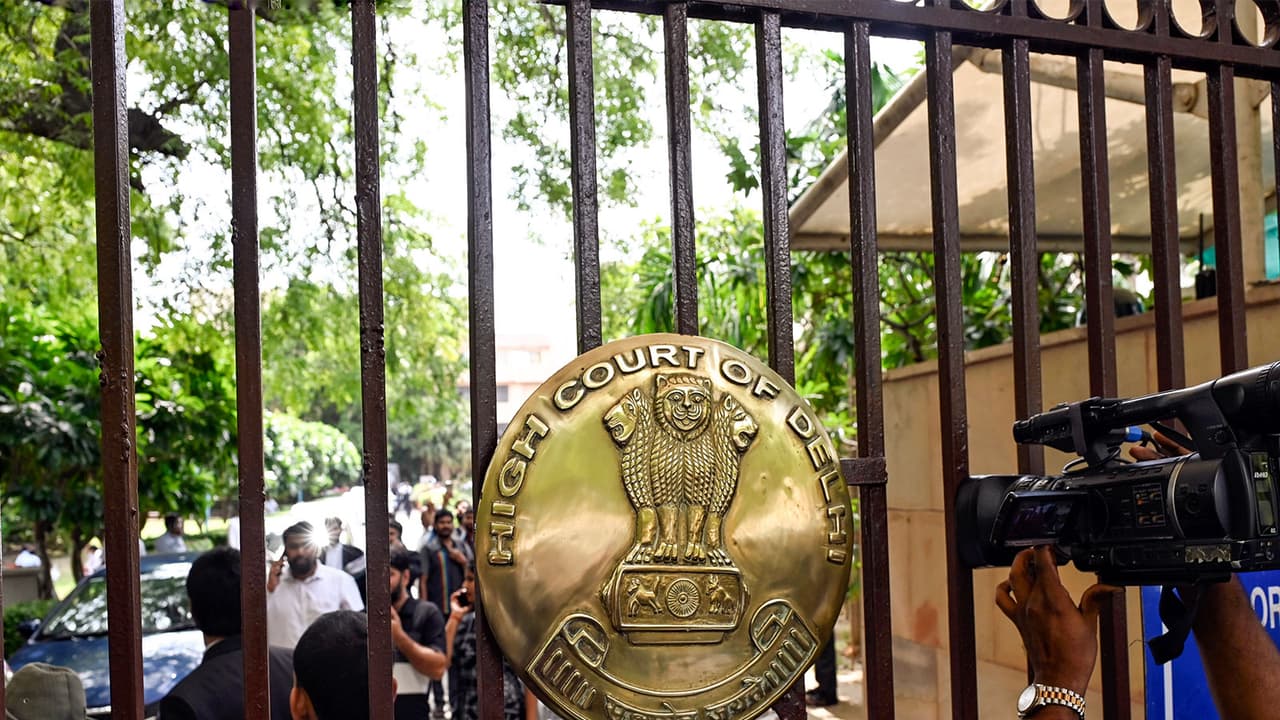
Delhi HC set aside a 2010 order for leasehold-to-freehold land conversion, stating the govt can't be compelled to part with public land. The court held the conversion policy isn't an enforceable right and distinguished contractual resumption from acquisition.
The Delhi High Court has set aside a 2010 order directing conversion of leasehold land into freehold in favour of National Cold Storage & Refrigeration Pvt Ltd, holding that the Union government cannot be compelled to part with ownership of public land under the leasehold-to-freehold conversion policy.
Scope of the Judgment
In a detailed common judgement disposing of several Letters Patent Appeals and a connected writ petition, the Division Bench examined the nature of the 1951 lease, the scope of the government's right of resumption, the applicability of the Land Acquisition Act, and whether the lessee had an enforceable right to freehold conversion. The Court noted that the land was held under a purpose-specific lease granted for operating a cold storage, with an express clause reserving to the government the right to resume the land at any time for public or administrative purposes. It held that despite the long duration and renewal provisions, the lease remained conditional and defeasible and did not confer ownership or near-ownership rights on the lessee.
Conversion Policy Not an Enforceable Right
Setting aside the Single Judge's April 5, 2010, order, the Bench held that the leasehold-to-freehold conversion policy is an executive measure which only grants a right to apply and does not create a mandamus-enforceable entitlement. The Court observed that directing conversion in the present case would have the effect of extinguishing the government's reversionary interest and converting public land into private ownership immediately before public use, a result not intended by the policy.
Arguments Presented in Court
Union Government's Stance
Appearing for the Union of India, Central Government Standing Counsel Ashish K. Dixit argued that the lease constituted a complete contractual code, that substantial portions of the land had already been resumed for public projects, and that conversion could not be granted amid pending disputes and resumption proceedings. The Court accepted the submission that courts cannot compel the State to divest itself of title over land which it continues to own.
Lessee's Contention
Senior advocate Dhruv Mehta, appearing for National Cold Storage & Refrigeration Pvt Ltd, contended that the lease was long-term in nature, that conversion charges had been accepted, and that compensation upon resumption ought to be determined by applying principles of the Land Acquisition Act, including market value. He also argued that the reference to the Act in the lease permitted adoption of statutory compensation principles.
Court Rules on Resumption vs. Acquisition
Rejecting this interpretation, the Bench held that resumption under the lease is contractual and distinct from compulsory acquisition under statute. It clarified that the lessee is not entitled to market-value compensation for land upon resumption. Compensation, if any, is confined to the value of buildings and structures on the resumed land and a proportionate refund of the premium, as expressly provided under the lease deed.
The Court further held that the Land Acquisition Collector exceeded jurisdiction by determining compensation for land on a market-value basis, noting that the reference to the Land Acquisition Act in the lease is only for guidance in valuation and does not import the full statutory compensation regime. Drawing a clear distinction between contractual resumption and statutory acquisition, the Bench held that the two operate in separate legal fields and must not be conflated.
Final Verdict and Implications
With the conversion order set aside, the Court observed that the State cannot be compelled to acquire its own land and that repossession of leased government land must ordinarily proceed in accordance with the resumption clause contained in the lease. (ANI)
(Except for the headline, this story has not been edited by Asianet Newsable English staff and is published from a syndicated feed.)