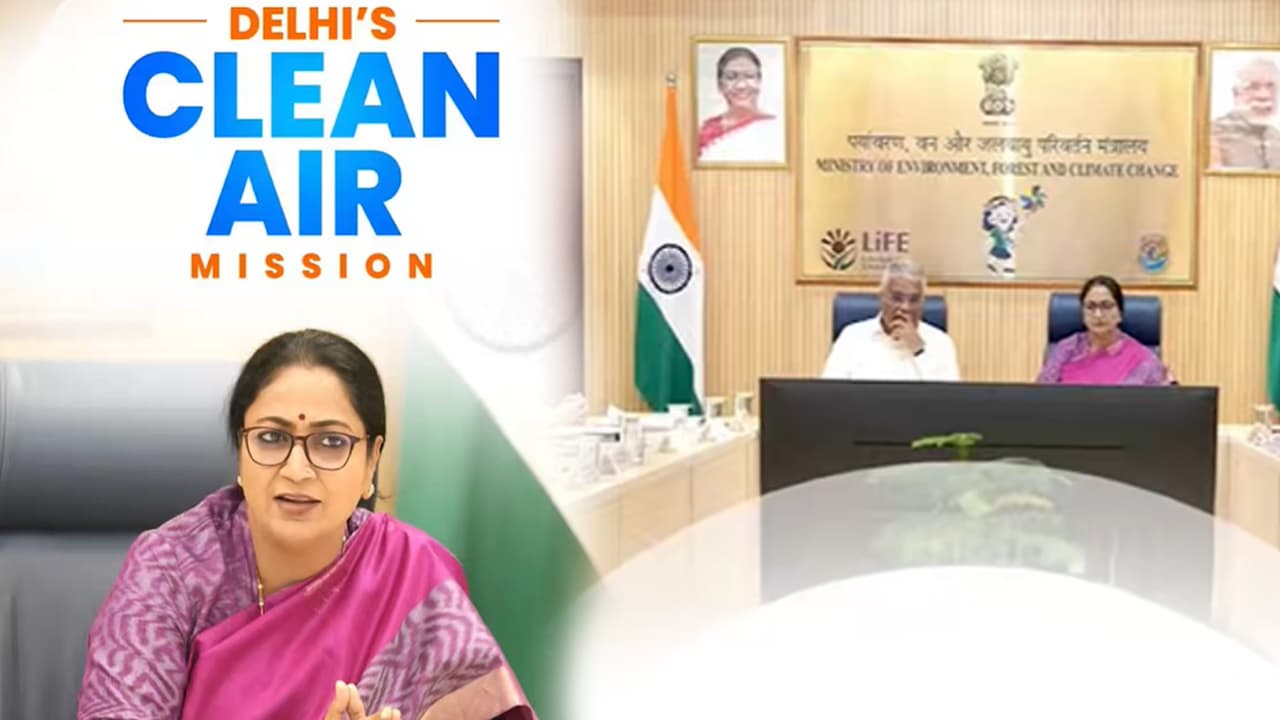
Delhi’s Clean Air Action 2026 targets vehicle emissions, construction dust, waste burning and industrial pollution with 37 hotspot plans, PUCC checks, winter vehicle curbs, AI monitoring and citizen participation.
Preparations to deal with air pollution during winter are being made by Delhi, which is working on finalizing the time-bound strategy to deal with sources of air pollution in consultation with the Central Government and Delhi government. The Delhi Clean Air Action 2026 aims to reduce pollution caused due to vehicles, roads, construction dust, waste burning, industries, public transport, green cover and traffic hotspots. Ten major interventions to control air pollution have been suggested for winter.
37 Pollution Hotspots Will Have Local Action Plans
In its latest analysis, special importance has been given to pollution hotspots in Delhi. Programmes of Jan Bhagidari are supposed to be held at these spots by October 10 in which citizens, RWAs, market associations and other government agencies will be involved.
The officials have been told to find out particular sources of pollution in each of these spots and monitor the implementation of measures locally rather than the city-wide measures.
Related Articles

‘No PUCC, No Fuel’ At 500 Fuel Stations
Pollution from vehicles continues to get special attention from the authorities. The “No PUCC, No Fuel” campaign aims to prevent such vehicles from getting their fuel.
The awareness and enforcement campaign will be rolled out through roughly 500 ANPR-fitted fuel stations in the city. NCR wide guidelines have also included fuel availability restrictions for non-complying PUCC vehicles starting October 1, 2026.
Construction Dust and Open Burning Under Scrutiny
All dust-emitting demolition and outdoor civil construction projects will be prohibited from November 1 to January 31. Construction and demolition ban will remain in force from December 10 to January 20 based on exemptions that have been notified.
The government plans to make registration on Malba app mandatory to approve building plans as well as increase technology-based construction monitoring. Steps to reduce open waste burning will also be taken into account.
Vehicle And Office Restrictions During Winter Periods
Starting November 1, 2026, entry of vehicles registered in other states apart from Delhi that are not up to BS-VI emission standards will be barred; CNG and electric cars will be exempted. Additional restrictions for winter season will include double parking fees, flexible working hours, and work-from-home facilities.
Industrial Pollutants Get AI Monitored
The other important element that can be identified includes industrial enforcement. Plans are in place to enable an AI based Command and Control Centre along with 334 enforcement teams against non-compliant industrial units and to raise the number of air quality monitoring stations from 47 to 60.
EVs, Public Transportation And Citizen Participation
Moreover, the plan will also emphasize on EV Policy 2026, incentives for vehicle scrappage and registration through the Parivartan Scheme. Campaigns regarding public transportation and citizen participation will also be intensified.
Thus, it is apparent from the above discussion that the approach of the government is aimed at preparing for winter pollution levels in advance and not after the occurrence.