
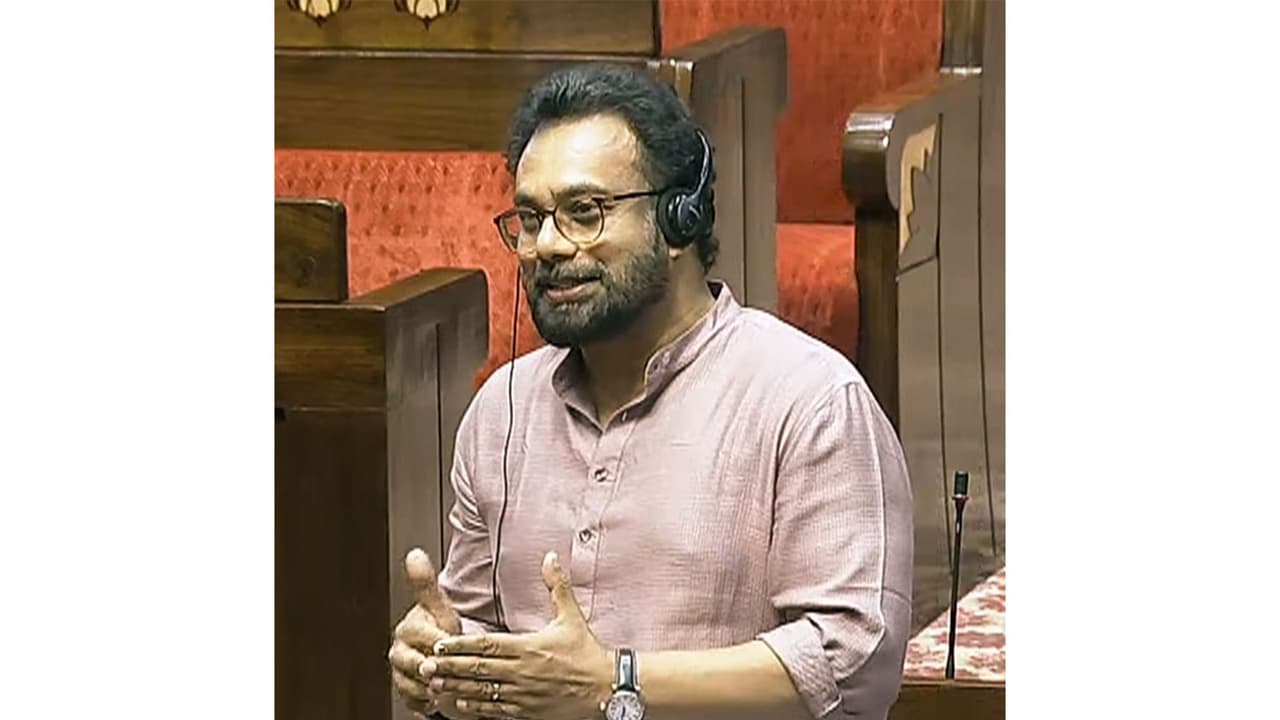
CPI(M) MP John Brittas urged the Centre to withdraw a bill criminalising the prevention of singing Vande Mataram. In a letter to Amit Shah, he argued the bill unsettles constitutional balance, pluralism, and liberty of conscience.
CPI(M) MP John Brittas on Sunday requested the Centre to withdraw the Prevention of Insults to National Honour (Amendment) Bill, 2026, which he said extends criminal liability to the prevention of singing of the National Song Vande Mataram.
Union Home Minister Amit Shah is scheduled to introduce the Bill in the Rajya Sabha on Monday. In a letter to Amit Shah, John Brittas argued that the proposed Bill deviates from the constitutional settlement that has governed the status of the National Anthem and the National Song.
'Delicate Constitutional Balance at Risk'
Acknowledging the contribution of Vande Mataram to India's freedom movement, the CPI(M) MP alleged that the Bill risks "unsettling a delicate constitutional balance founded upon pluralism, liberty of conscience and voluntary patriotism."
The Bill, he said, seeks to amend Section 3 of the Prevention of Insults to National Honour Act, 1971, by extending criminal liability to acts of intentionally preventing the singing of, or causing disturbance to any assembly engaged in the singing of, the National Song, Vande Mataram. "While the profound contribution of Vande Mataram to India's freedom movement is beyond dispute and commands the highest respect from every Indian, the proposed amendment departs from the carefully evolved constitutional settlement that has governed the status of the National Anthem and the National Song since the birth of our Republic. In doing so, it risks unsettling a delicate constitutional balance founded upon pluralism, liberty of conscience and voluntary patriotism," Brittas said.
Cites Freedom of Speech and Religion
He added that certain parts of the song invoke Hindu deities and imagery, so a "constitutional compromise was achieved" in 1950 preserving both the "historic importance of Vande Mataram and the inclusive character of the nation." Arguing against the criminalisation of not singing Vande Mataram, he said that the "Article 19(1)(a) guarantees freedom of speech and expression, which includes the freedom to remain silent except where constitutionally permissible restrictions exist. Article 25 protects freedom of conscience and the right freely to profess, practise and propagate religion, subject only to public order, morality and health. Article 21 protects personal liberty and dignity, while Articles 14 and 29 reinforce the constitutional commitment to equality and India's pluralistic social fabric. The Constitution deliberately refrains from imposing compulsory expressions of patriotism beyond what is expressly required by law."
Parliamentary Debate on Vande Mataram
The debate on the Vande Mataram was taken up in Parliament in December 2025, where the BJP-led NDA launched a sharp attack against Congress, accusing the party of suppressing the national song. Prime Minister Narendra Modi initiated the discussion on the 150th anniversary of Vande Mataram in the Lower House of Parliament, while Amit Shah initiated the discussion in the Rajya Sabha. Meanwhile, the Congress maintained that the party had made Vande Mataram the slogan during the freedom struggle. (ANI)
(Except for the headline, this story has not been edited by Asianet Newsable English staff and is published from a syndicated feed.)