
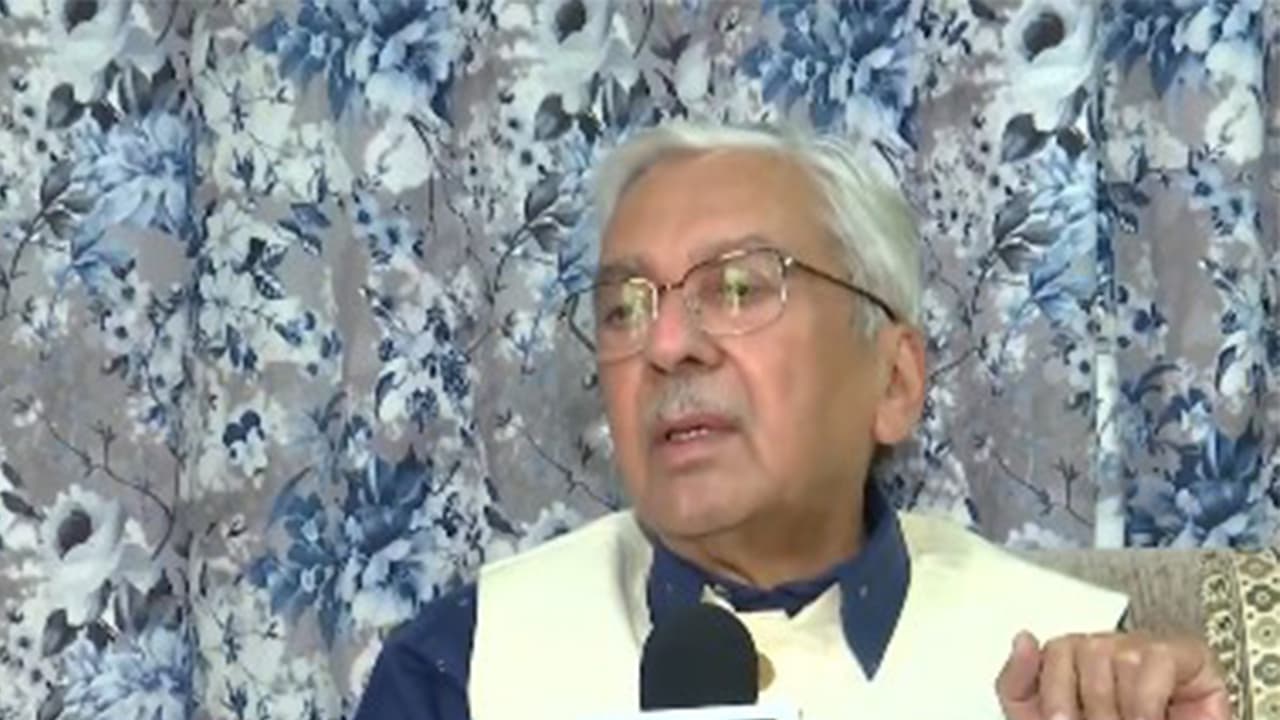
Former NCERT Director JS Rajput states the three-language policy is a guideline, not mandatory, with states holding the power. Meanwhile, Tamil Nadu firmly rejects the policy, vowing to stick to its established two-language framework.
Former NCERT Director JS Rajput has emphasised that school education is the responsibility of the state government, clarifying that the Centre's three-language policy serves as a guideline rather than a mandatory directive.
Former NCERT Director JS Rajput, while speaking to ANI, said, "Not just Hindi. One can study Odia or Telugu. That is to be arranged by the state government. School education is the responsibility of the state government... The Centre has given indications, there are no directives... In our case, the state has the power. They have to decide. This is another aspect that everyone would like to study English... But nobody can say that it's compulsory... This is the flexibility that has been brought..."
Tamil Nadu Upholds Two-Language Policy
Earlier, Tamil Nadu Education Minister Anbil Mahesh Poyyamozhi has backed Chief Minister MK Stalin's remarks on the Central Board of Secondary Education's (CBSE) three-language curriculum, asserting that the state government remains committed to its long-standing two-language policy introduced by Periyar and will not "compromise" on its principles.
Speaking to ANI, Poyyamozhi emphasised that the message conveyed by the Chief Minister was clear that Tamil Nadu would not yield to what it perceives as attempts to impose policies contrary to its established educational framework. "The Chief Minister has firmly upheld the two-language policy set by Periyar, refusing to compromise. Even when offered Rs 3,458 crores, the state declined, insisting that ideology cannot be imposed. The message is clear that the state will not bend. The Chief Minister's words underline that the state board and its principles remain uncompromised," said the Tamil Nadu Education Minister.
CBSE's Three-Language Policy Rollout
CBSE is set to introduce a phased three-language policy from the 2026-27 academic year, beginning with Class 6. The policy requires students to learn an additional language, with at least two of the three being Indian languages.
Tamil Nadu is scheduled to go to the polls for its 234-member Legislative Assembly in a single phase on April 23, with the counting of votes set to take place on May 4. (ANI)
(Except for the headline, this story has not been edited by Asianet Newsable English staff and is published from a syndicated feed.)