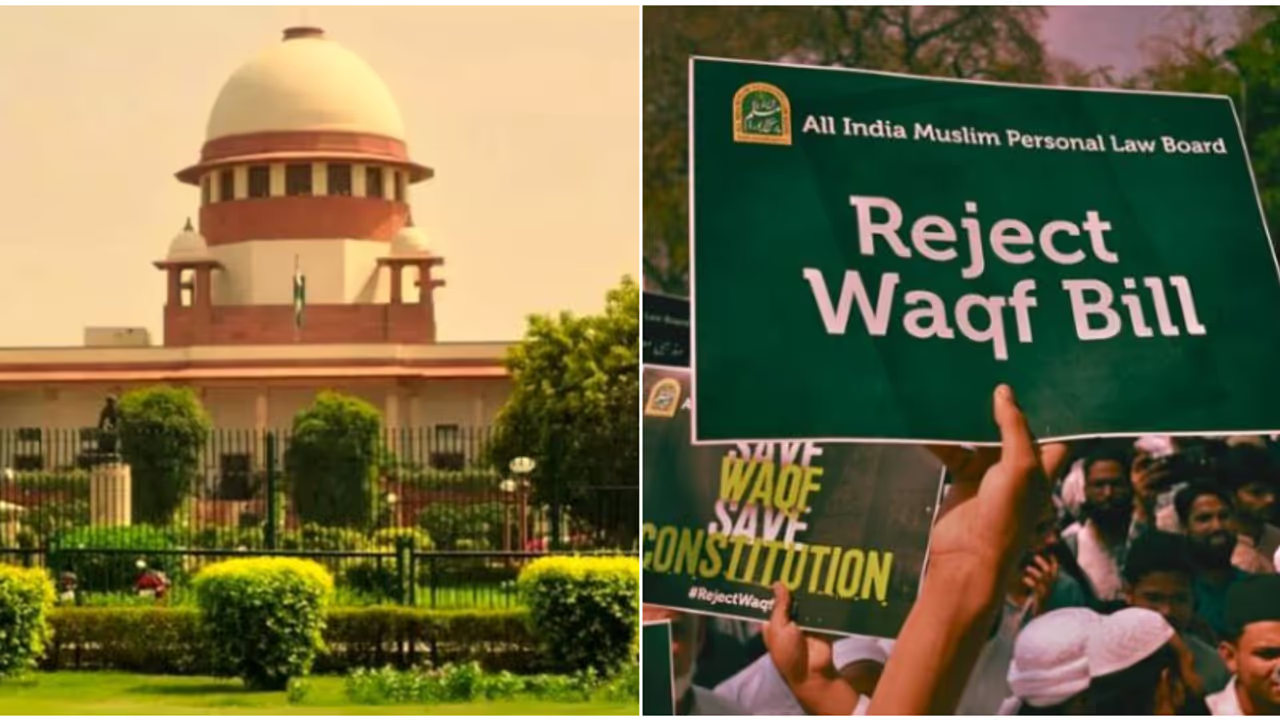
The Supreme Court has temporarily halted certain provisions of the Waqf (Amendment) Act, 2025, including the inclusion of non-Muslims in Waqf boards and the removal of 'waqf by user' recognition.
Government has defended its recent amendments to the Waqf Act, 2025, in response to the Supreme Court's interim stay on certain provisions of the law. The Centre argued that the concept of "waqf by user" has been recognized only upon registration for the past century, aligning with consistent practice. Therefore, the recent amendments, which remove the "waqf by user" provision, are in line with established procedures.
Earlier this month, the Supreme Court issued an interim order halting the implementation of three contentious provisions of the Waqf Amendment Act, 2025. These include the removal of the ‘waqf by user’ clause, the inclusion of non-Muslims in Waqf boards and councils, and the powers granted to Collectors to determine the status of Waqf properties on disputed government land. The court's decision came amid concerns over potential violations of constitutional rights related to religion and property.
In its defense, the Centre stated that the inclusion of non-Muslims in Waqf boards is intended to promote inclusiveness and is not an intrusion into the administration of Waqf properties. The government also assured the Court that no appointments would be made to Waqf boards or councils under the amended law until further orders.
Related Articles

The controversy surrounding the Waqf Amendment Act has sparked significant debate, with critics arguing that the changes could undermine the autonomy of Waqf institutions and infringe upon the rights of the Muslim community. Supporters of the amendments contend that the reforms are necessary to enhance transparency and accountability in the management of Waqf properties.
The Supreme Court has scheduled the next hearing on the matter for May 5, 2025, and has directed the Centre to file a detailed response to the petitions challenging the constitutional validity of the Waqf Amendment Act. The outcome of this case is expected to have significant implications for the governance of Waqf properties and the broader discourse on religious and property rights in India.