
Amid student concerns over Class 12 exam errors, the Education Ministry clarified that the digital On-Screen Marking (OSM) system is not new and ensures accuracy, with no scope for marking or totalling errors in the answer sheets.
Ministry Addresses Concerns Over CBSE Class 12 Marking
Amid students expressing concern over errors in checking of the answers of the Class 12 examination this year, a Ministry of Education official on Sunday said that the digital marking process was not new for the CBSE.
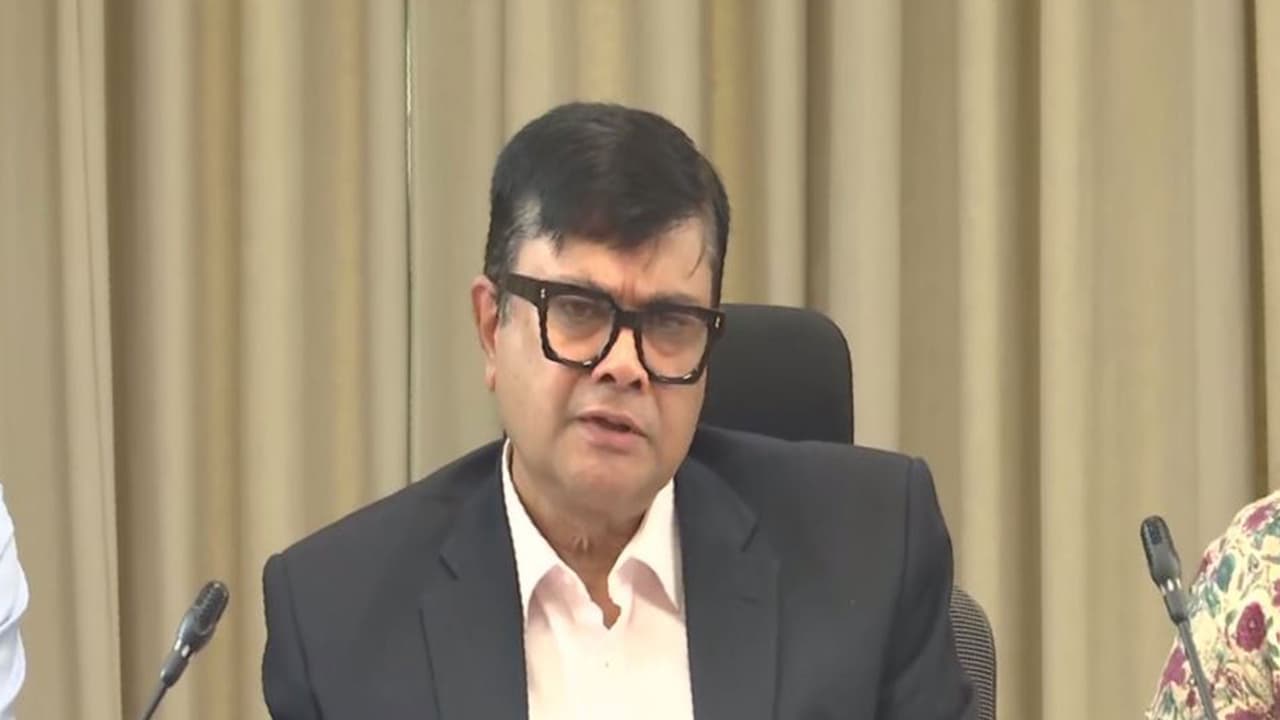
Addressing a press conference in the national capital, Secretary, Department of School Education and Literacy, Sanjay Kumar said that special attention has been given to checking the Class 12th exam answer sheets, underlining that there was no scope for marking errors. Kumar highlighted that several students have concerns regarding the marking or totalling and highlighted that the answer sheets were checked using the digital On-Screen Marking (OSM) system.
On-Screen Marking System Reintroduced
"As you are aware, the Class 12 results recently declared by the CBSE were marked using an On-Screen Marking (OSM) system this time. Following this, certain concerns have been raised--specifically, students feel that the overall pass percentage has declined. Indeed, the pass percentage has dropped by 3 per cent compared to the previous year, falling from 88 per cent to 85 per cent. Some students feel that they should have received higher marks than those actually awarded to them," he said.
First introduced in 2014, the OSM system is not a brand-new concept. However, it was deemed unfeasible to continue at that time due to technical limitations, but it has been reintroduced this year. "I would like to emphasise that On-Screen Marking is neither a novel concept nor is this the first time it has been implemented. The CBSE first initiated the OSM system in 2014; however, at that time, due to technical infrastructure limitations, it was deemed unfeasible to continue the process immediately. We have successfully reintroduced it this year," he said.
Scanning Process and Security Measures
Kumar said that the answer sheets were scanned to make their PDF copies, underlining that a three-level security was maintained during the scanning. "This time, when the 12th class exams were conducted, the answer sheets were scanned, and their PDF copies were made. The total number of answer sheets of 98 lakh students who took the examination was scanned, and three levels of security were also maintained in scanning. One advantage of this has been that the mistakes that sometimes used to happen in totalling have been completely eliminated. This decision was taken, and teachers were trained in this," he stressed.
Handling of Illegible Answer Sheets
He further added that around 13,000 answer sheets were not decipherable due to the very light colour of the ink during the scan. The same copies were checked by the teachers manually. "Ultimately, it was also found that in the end, we had about 13,000 such answer sheets, which we found that no matter how many times we scanned them, there was some illegibility in them because the ink used was of very light colour, so after scanning, we were not able to make that legible. The teachers were told that the 13,000 answer sheets were taken out and checked manually, and after checking manually, the marks obtained on those were introduced by us," he said.
He reiterated, "I would like to say that special attention has been given to the security level and the issues, so that the marking done through on-screen marking is accurate." (ANI)
(Except for the headline, this story has not been edited by Asianet Newsable English staff and is published from a syndicated feed.)