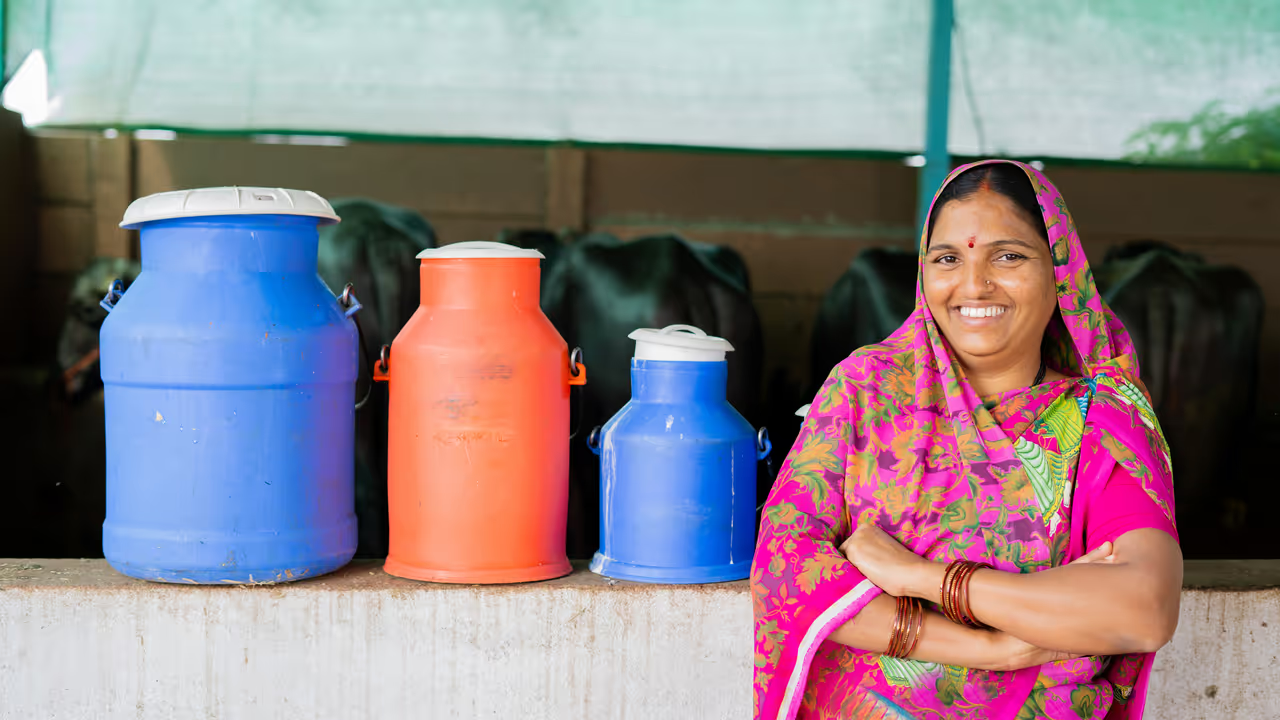
In Rajasthan’s Sirohi district, solar-powered milk chillers are preventing large milk losses caused by extreme heat and long travel distances. Through Asha Mahila and WWF India, 10 villages now use instant chillers that cool milk within minutes.
In Rajasthan's Sirohi district, the days begin before sunrise. Women milk their cows, feed their livestock, finish their household chores, and set out for the nearest Milk Pooling Point with steel cans balanced on their hips. For many years, this journey was filled with worry. The intense heat often spoiled the milk before it reached the bulk collection centre. The loss was painful because every litre of milk mattered. Today, however, a simple solar-powered solution is changing lives, protecting income, and bringing confidence to thousands of women.
Women farmers faced major losses due to extreme heat
Among the early risers is Gokri Devi from Khambal village. She has been supplying milk to the Asha Mahila Milk Producer Organisation for seven years. She remembers the older days very clearly. Summers were especially difficult. If the milk did not reach the collection point quickly, it would spoil. She tells The Better India, "Pehle doodh jaldi nahi puachta centre toh garmi mein kharab ho jaata tha and humein nuksaan hota tha."
The heat in Rajasthan rises sharply, and milk in metal cans quickly becomes warm, increasing bacterial growth.
Related Articles

Milk collection agent Laxman Ram shares a similar memory with The Better India. He explains that earlier, the milk often failed the quality tests by the time it reached the bulk centres. This meant the women received lower payments or faced rejections. But the installation of solar-powered milk chillers, known locally as MilkoChill units, changed everything. “Now the milk stays fresh. The quality has improved more than ever,” he tells with confidence to The Better India.
Laxman is one of ten sahayaks, or operators, whose households recently received instant solar milk chillers under a project supported by WWF India. These chillers, placed within villages, reduce the time milk spends in heat and help maintain quality from the moment it is collected.
Solar chillers bring a technological shift
The ten installed chillers have a combined capacity to cool 5,000 litres of milk per day using 33.5 kWp of solar power. These compact, decentralised machines are quietly transforming how milk is stored and transported in Sirohi district. Each chiller has a 500-litre capacity and a 3.5 kW solar rooftop. The system freezes thermopacks that help reduce the milk temperature to around 4-6°C within minutes.
Shiv Kumar Tomar, Head of Producer Institution Building and Quality, explains the process to The Better India: “Milk is collected in the morning and evening, passed through the thermopacks, and its temperature drops quickly. This prevents rejection due to heat, improves shelf life, and ensures women receive their rightful income.”
This simple cooling system has solved a long-standing challenge. Earlier, bulk chillers had to run on unreliable grid electricity. Power cuts were frequent, forcing operators to use costly diesel generators. This increased expenses and added pollution. The solar chillers now operate without fuel, reducing costs and environmental harm.
Asha Mahila Milk Producer Organisation also organises events dedicated towards farmers' awareness training. The body recently organised 'Prosperity through Cow Dung' program at Sagrod village in Banswara.
Asha Mahila: A women-led organisation with a growing footprint
The success of this solar project rests on the strong foundation created by Asha Mahila. The organisation, which started in 2016 with just 11 women, has now grown into a massive network of 50,000 women across 1,100 villages in ten districts of Rajasthan. Every day, the organisation collects over 1.5 lakh litres of milk.
Asha Mahila functions as a Producer Company with financial support from the Dairy Health and Nutrition Initiative of India Foundation (DHANII), Tata Trusts Dairy Mission, and technical support from NDDB Dairy Services. It was set up to give rural women a reliable and fair system to sell milk and earn income safely.
However, even with strong networks, one major hurdle remained i.e. keeping milk cool in a region where summer temperatures often cross 45°C. Milk collected in metal cans warms rapidly, increasing bacterial counts and reducing its suitability for high-quality dairy products like paneer, curd, and sweets.
Dairy technologist Drakshi Choudhary explains to The Better India that the organisation performs the Methylene Blue Reduction Test (MBRT) to check milk quality. “A longer MBRT means better quality, but earlier, we were losing quality even before the milk reached the central chilling plant,” she says. The solar chillers have now changed those numbers dramatically.
How the milk pooling system works
Asha Mahila's model is built on village-level Milk Pooling Points run by local sahayaks. Women bring their milk here for testing and weighing. Once pooled, insulated vehicles transport the milk across rugged terrain to larger chilling centres or bulk coolers. In summer, this becomes a race against time. Milk comes out of cows at around 35°C, but in metal cans, in high heat, the temperature rises further. The bacterial count increases quickly, lowering quality within a few hours.
The solar-powered chillers stop this rapid spoilage. Immediate chilling ensures the milk remains fresh even if the transport vehicle is delayed by blocked roads or unexpected stops.
The financial and behavioural investment
The project required more than just technology, it needed trust and investment from the community. WWF India covered 100% of the CAPEX cost for the chiller units. Each unit costs around Rs 6.5 lakh. But farmers had to invest in building a 10x10 feet room with an RCC roof and secure a grid connection for backup.
Convincing farmers took time. Shiv explains to The Better India, "It took three to four months to convince a set of farmers. We took them to see units already working. Once they saw results, their fear went away."
The technical partner, Prompt Technologies Pvt Ltd, provided training and support. Asha Mahila continues to help with maintenance and coordination, ensuring these machines run sustainably.
Why WWF India saw potential in Asha Mahila
According to WWF India’s Project Coordinator, Vishal Dev, the model stood out because of its ownership. “Asha Mahila is women-owned and professionally run. Women are equity holders and decision-makers. Their willingness to adopt new technology made it an ideal partner,” he says.
The new cooling system directly benefits these women by protecting their milk and their earnings.
Changing power dynamics inside homes
For many women, joining Asha Mahila has brought more than income. It has brought independence. Chairman of Asha, Narsa Kunwar, says earlier women received money from middlemen irregularly and often had little control over how it was used. Payments now come directly into women’s bank accounts every ten days.
“When the money comes in the woman’s account, the man asks her for it,” she says with a smile. Ownership certificates, training, village committees, and high school requirements for board members ensure women stay at the centre of the organisation.
Women who rarely stepped outside their homes now attend workshops, manage accounts, and speak confidently in public meetings.
Narsa Kunwar herself travelled to Paris to receive an international award for the solar milk cooling initiative. For her and others, this moment symbolised the possibilities for rural women. “Women in our village never thought of travelling anywhere. Going to Paris showed them we can stand anywhere if we work together,” she tells The Better India.
The chillers offer relief, quality, and time
By August 2023, ten solar chillers were operational. The impact was immediate. The MBRT improved by 40–50% in villages using these chillers.
Operators like Laxman Ram and Lasa Ram say the stress has reduced. Earlier, delays in transport caused huge losses. Today, even a delay of a few hours does not spoil milk. Women also save time. With no rush to beat the heat, they gain half an hour in the morning, precious time for cooking, childcare, or household work.
A model that strengthens India’s cold chain
The solar chillers reduce dependency on power cuts and diesel generators. They freeze thermopacks using stored solar energy, keeping milk cold for several hours. This is especially important in regions where heat and distance threaten milk quality.
WWF India believes that village-level technological interventions, when combined with strong women-led governance, can transform supply chains. The organisation hopes this model will attract policy support and financing, making it possible to scale across India.
Dairy technologist Drakshi hopes future chillers will hold 1,000 litres instead of 500. This would allow milk to be collected for longer, reduce cleaning and transport trips, and save money.
Shiv and Vishal also envision wider adoption. They want more villages integrated into a stronger cold chain network.
For the women of Asha Mahila, the technology protects their milk, their time, and their confidence. They now see themselves as active economic contributors, not just quiet workers.
As another day ends in Sirohi, the solar panels absorb the last evening light. Inside the cooling rooms, the thermopacks freeze again, preparing for the next morning. The future of thousands of women farmers, once tied to the unforgiving desert heat, now rests safely in chilled steel cans-powered by the sun.