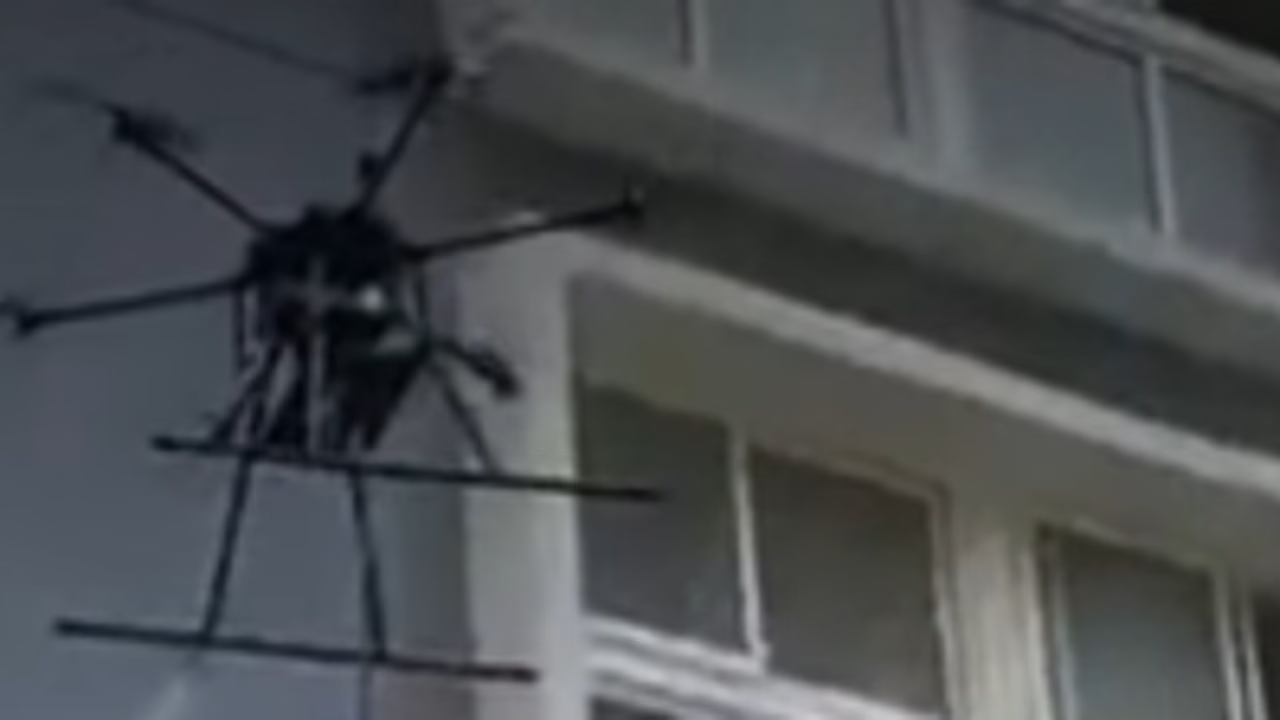
Bengaluru startup Soaron has developed Colorown Spray, a drone-based painting system for high-rise buildings. The six-rotor drone can cover up to 5 square metres per minute, aiming to make exterior painting safer and faster.
Painting tall buildings often requires workers to operate at dangerous heights using scaffolding, suspended platforms or rope-access systems. A Bengaluru-based startup, Soaron, is looking to change this with its drone-powered painting technology called Colorown Spray. The system uses a specialised six-rotor drone, also known as a hexacopter, to spray paint onto the exterior walls of high-rise buildings. Instead of carrying paint onboard, the drone is connected to a hose that supplies paint through a pump positioned on the ground. The technology aims to make exterior painting safer and more efficient by reducing the need for workers to operate hundreds of feet above the ground.
Colorown Spray claims coverage of 5 square metres per minute
According to the company's announcement, the Colorown Spray prototype is designed to cover up to 5 square metres per minute. Soaron has also stated that the prototype has reached Technology Readiness Level 6 (TRL 6), indicating that the technology has been demonstrated in a relevant environment. The six-rotor design helps the drone remain stable while carrying out spraying operations along building exteriors. Its ground-connected paint supply system also allows it to continue spraying without relying entirely on a limited onboard paint capacity. The innovation could have applications in painting large residential complexes, commercial towers and other high-rise structures.
Viral Video: Jeddah Security Guard Saves Child From Oncoming Truck In Split-Second Rescue! (WATCH)
Viral Video: Man Steals Cables From Jaipur Flyover In Broad Daylight! (WATCH)
Can drone technology make construction work safer?
The development could offer an alternative to conventional exterior painting methods, particularly where working at significant heights presents safety challenges. By using drones, companies may be able to reduce workers' direct exposure to dangerous conditions while improving the speed and precision of painting operations. However, the prototype will require further testing and validation before large-scale commercial deployment. Factors such as weather conditions, paint consistency, surface coverage and operational safety will play an important role in determining its practical use. If successfully commercialised, Colorown Spray could mark an interesting step towards greater automation in India's construction and infrastructure industry.