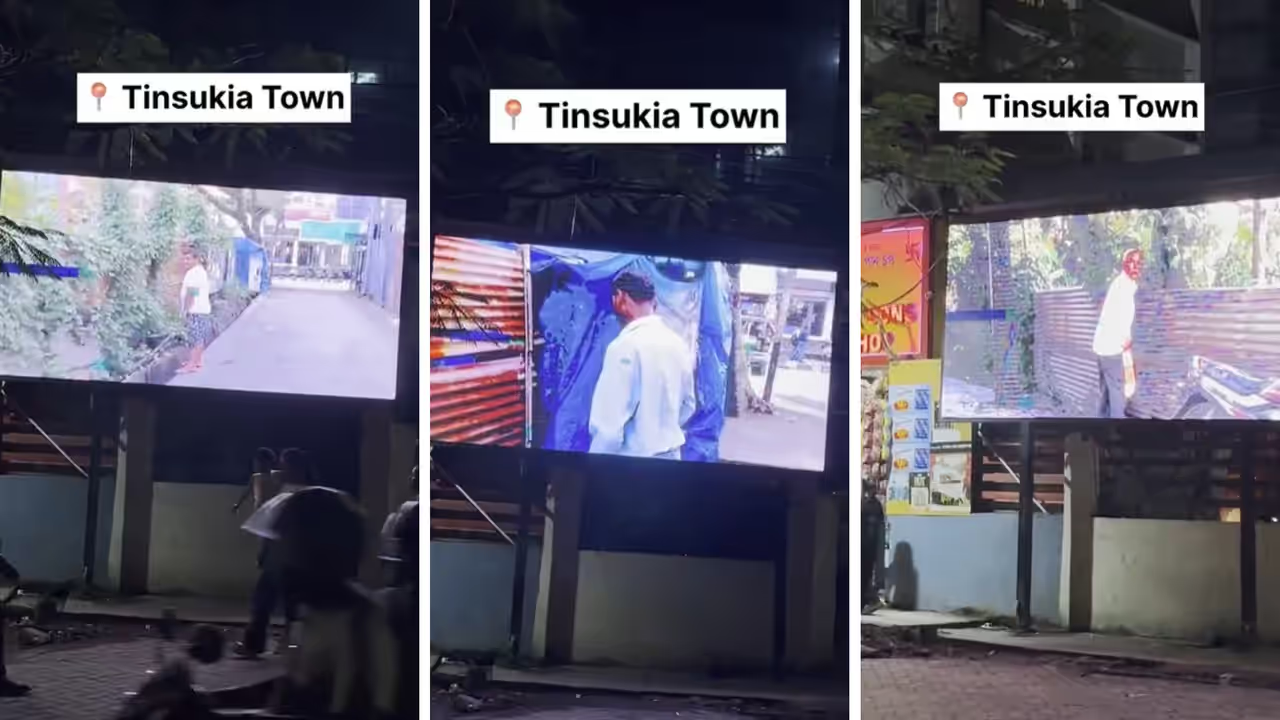
Assam's Tinsukia Municipal Board has launched a 'Hall of Shame' campaign, displaying CCTV footage of people allegedly caught urinating in public or littering on roadside LED screens. While many praised the move as a bold step to improve civic behaviour, others questioned its legality, privacy implications.
The Tinsukia Municipal Board (TMB) in Assam has launched an unusual campaign to discourage public urination and littering. Named the 'Hall of Shame', the initiative uses CCTV cameras to record people allegedly violating civic rules and displays the footage on a large LED screen at a busy public location.
Karnataka Shocker! Bus Conductor Held After Obscene Acts Towards College Students in Mangaluru
According to municipal officials, the campaign was introduced after fines failed to bring lasting behavioural change, a report by the Times of India said. . The videos are recorded with the help of civil defence volunteers and shown publicly to discourage repeat offences
Why the campaign was started
Officials quoted by the Times of India, said the board had received repeated complaints from residents, students and shop owners, especially from the GNB Road area, where public urination remained a regular problem.
Related Articles

Although the municipal board was collecting monthly fines of around Rs 75,000 to Rs 80,000, the issue continued. Earlier, mirrors were installed at sensitive spots to discourage offenders, but that effort also failed.
Teacher Arrested for Sending Class 7 Student to Buy Liquor in 'Dry' Gujarat
Officials said public toilets are available across the town, yet many people continued to urinate in the open. The board has warned that repeat offenders could face stricter action under municipal rules.
Internet reacts with mixed views
Videos of the campaign quickly spread across social media, triggering a lively debate.
Many users welcomed the move, saying strict measures are needed to improve public behaviour. Some argued that repeated awareness campaigns and fines have not worked, making stronger action necessary.
Others, however, questioned whether publicly displaying people's faces was legally justified. Several users raised concerns about privacy and asked whether such a campaign could violate individual rights.
Delhi Shocker! Woman's Harassment Inside DTC Bus Caught on Camera, Viral Video Triggers Outrage
Some also suggested that authorities should first ensure enough clean and well-maintained public toilets are available before publicly shaming offenders.
Civic responsibility versus privacy
The campaign has opened a wider discussion on how cities should deal with civic violations. Supporters believe public accountability can encourage cleaner habits, while critics argue that punishment should remain within legal limits and respect personal privacy.
As the debate continues, the Tinsukia initiative has become one of the most talked-about civic campaigns on social media, highlighting the challenge of balancing public hygiene with individual rights.