
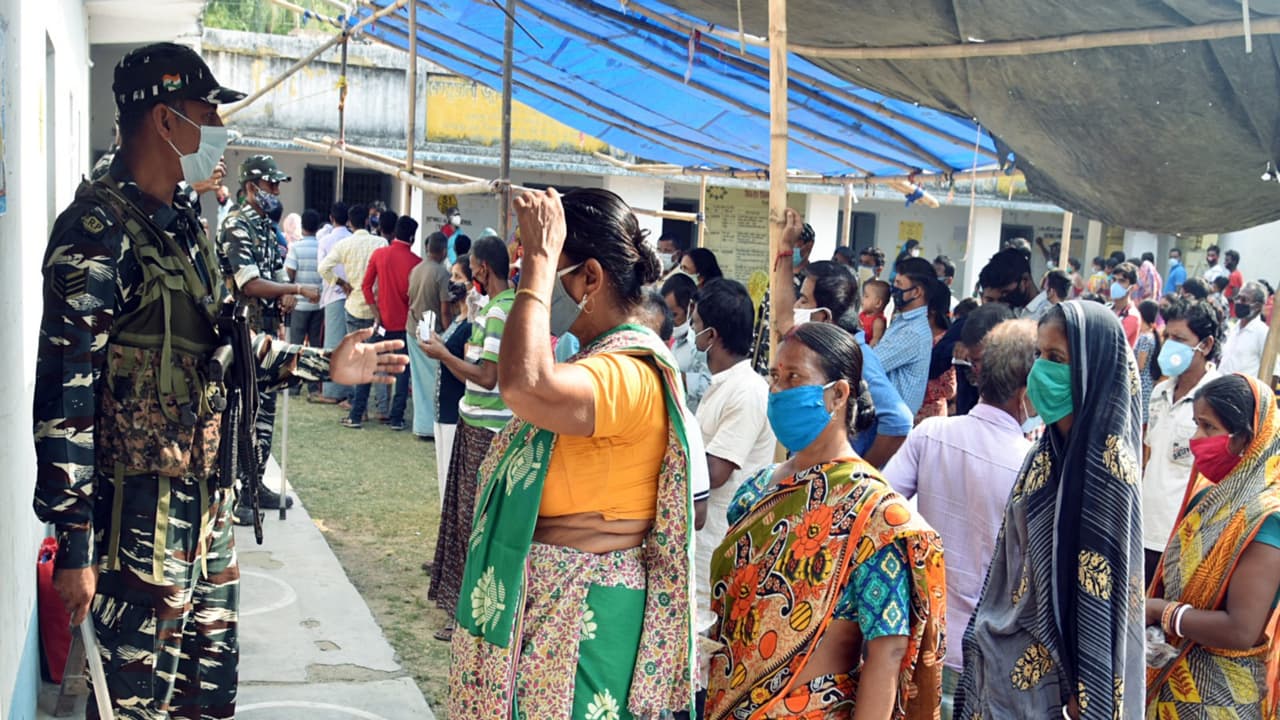
Asansol has become a key electoral battleground in West Bengal's Assembly elections. The Asansol Dakshin seat sees a high-profile contest between BJP's sitting MLA Agnimitra Paul and TMC's Tapas Banerjee in the politically significant region.
As West Bengal prepares for the upcoming Assembly elections, the Asansol Lok Sabha constituency, which includes seven Assembly segments, has emerged as a key electoral battleground, with major political parties stepping up their campaigns.
Key Contest: Agnimitra Paul vs Tapas Banerjee
BJP leader Agnimitra Paul, the sitting MLA from Asansol Dakshin and Vice President of the party's West Bengal unit, remains one of the most prominent faces in the constituency. Known for her active political presence and organisational role, she is seeking to retain her seat in what is expected to be a closely fought contest. Among the key contests, Asansol Dakshin is witnessing a high-profile battle. Agnimitra Paul is up against Trinamool Congress (TMC) leader Tapas Banerjee, the current MLA from Raniganj, who earlier represented Asansol Dakshin from 2011 to 2021.
Constituency's Significance and Political Landscape
The Asansol Lok Sabha constituency includes Pandabeswar, Raniganj, Jamuria, Asansol Dakshin, Asansol Uttar, Kulti and Barabani. It is considered politically significant due to its location in the state's industrial belt.
Asansol, which is part of the Asansol-Durgapur industrial zone, is known for its coal, iron and steel industries, making it one of the most economically important regions in West Bengal. However, despite its industrial importance, several civic issues continue to affect residents. Poor road conditions and inadequate drinking water supply remain major concerns. Heavy vehicular movement has also damaged roads in many areas, causing daily difficulties for commuters.
Politically, the constituency has been regarded as a stronghold of the TMC, although the BJP has made steady gains in recent years. The region also has a significant Hindu voter base, estimated at around 75 per cent, making it crucial for both parties.
Election Schedule and Past Results
According to the election schedule, polling in West Bengal will be held in two phases on April 23 and April 29, while the results will be declared on May 4. West Bengal has a total of 294 Assembly seats, with the majority mark set at 148.
2021 and 2016 Assembly Election Performance
In the 2021 Assembly elections, the All India Trinamool Congress (AITC) secured a decisive victory, winning 213 seats with a vote share of 48.5 per cent. The Bharatiya Janata Party (BJP) emerged as the main opposition, winning 77 seats with a vote share of 38.5 per cent. Smaller players, including RSPMA and Independent candidates, won one seat each. The total declared seats stood at 292.
In comparison, the 2016 Assembly elections also saw AITC dominate, winning 211 seats with a 45.6 per cent vote share. The Indian National Congress secured 44 seats with 12.4 per cent votes, while the CPI(M) won 26 seats with a 20.1 per cent vote share. Other parties, including the BIP and RCP, won three seats each, while Independents secured one seat. The 'Others' category accounted for six seats with a 7.7 per cent vote share.
With both the TMC and BJP intensifying their efforts, Asansol is set to play an important part in determining the outcome of the upcoming Assembly elections. (ANI)
(Except for the headline, this story has not been edited by Asianet Newsable English staff and is published from a syndicated feed.)
