
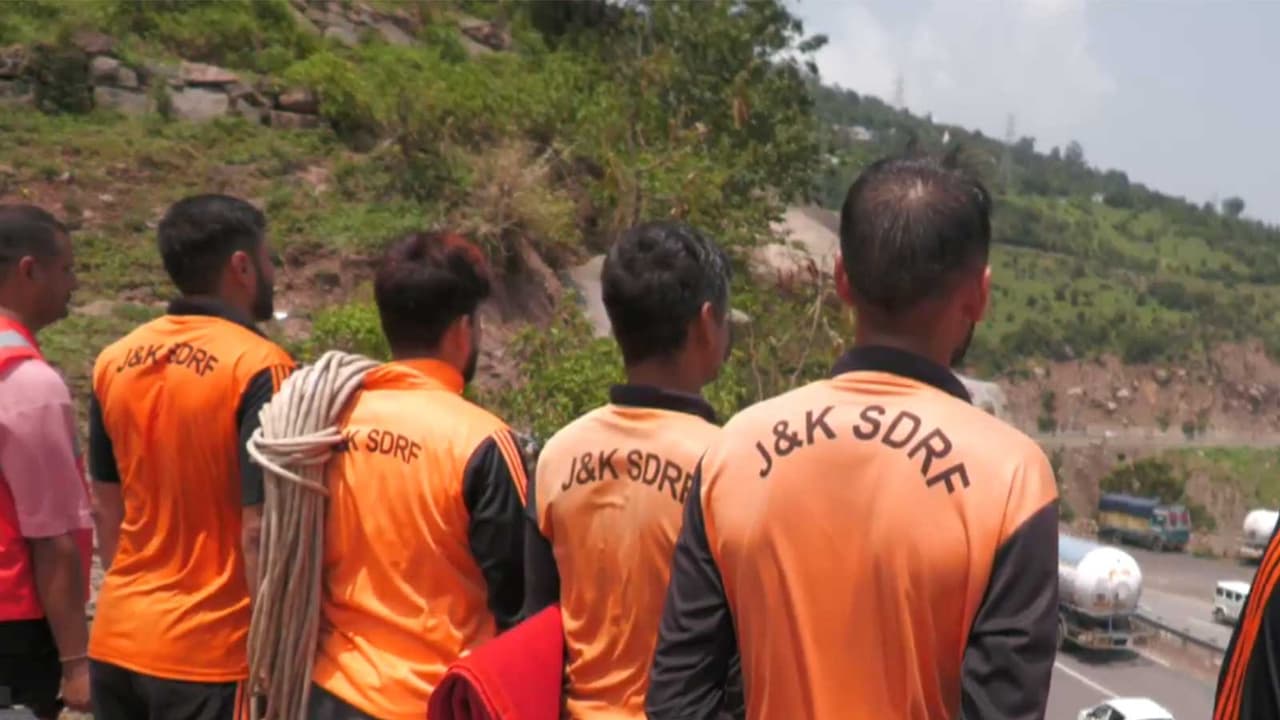
The J&K SDRF has established a 24x7 emergency response camp along the Jammu-Srinagar National Highway to ensure the safety of Amarnath Yatra pilgrims. The team is fully equipped and prepared for any eventuality, including flood situations.
The Jammu and Kashmir State Disaster Response Force (J&K SDRF) has set up a 24x7 emergency response camp along the Jammu-Srinagar National Highway to ensure the safety of pilgrims during the Shri Amarnath Yatra.
According to Sub-Inspector, J&K SDRF, Kartar Singh, the camp has been established under the directives of the Additional Director General of Police. Speaking to ANI on Saturday, Singh said, "Our team consists of at least 20 personnel, including members from both the SDRF and the Home Guard. This camp has been set up under the directives of the ADG, and we are deployed along the National Highway for the pilgrimage."
He added that the team remains on standby round the clock to respond to any incidents during the yatra. "We remain on standby 24/7 to respond to any incidents. We are fully equipped with modern gear. We are prepared for any eventuality, including flood situations," Singh said.
Comprehensive Security and Medical Arrangements
Earlier, the fourth batch of pilgrims had successfully departed from the Bhagwati Nagar base camp in Jammu on Sunday morning. A comprehensive, multi-layered security cover has been seamlessly put in place across the transit corridors to ensure the completely safe and smooth movement of pilgrims travelling through the valley. Devotees expressing their initial impressions highly lauded the elaborate security infrastructure, noting that the visible safety nets have significantly motivated them for the high-altitude darshan ahead.
To address high-altitude health challenges and manage transit emergencies, the Udhampur Health Department has finalised a robust medical matrix stretching along the Jammu-Srinagar National Highway (NH 44), specifically covering the sector from the Tikri Kali Mata Temple to the Chenani-Nashri Tunnel. Ten stationary first-aid camps have been operationalised at key bottleneck areas to provide immediate relief. Six fully equipped, life-support ambulances have been deployed at strategic intervals.
Digital Surveillance and Yatra Schedule
The 57-day pilgrimage officially commenced and is being heavily monitored using digital surveillance and RFID tracking systems to ensure crowd management and safety. The annual yatra is scheduled to conclude on August 28, coinciding with the festival of Raksha Bandhan.
(Except for the headline, this story has not been edited by Asianet Newsable English staff and is published from a syndicated feed.)