
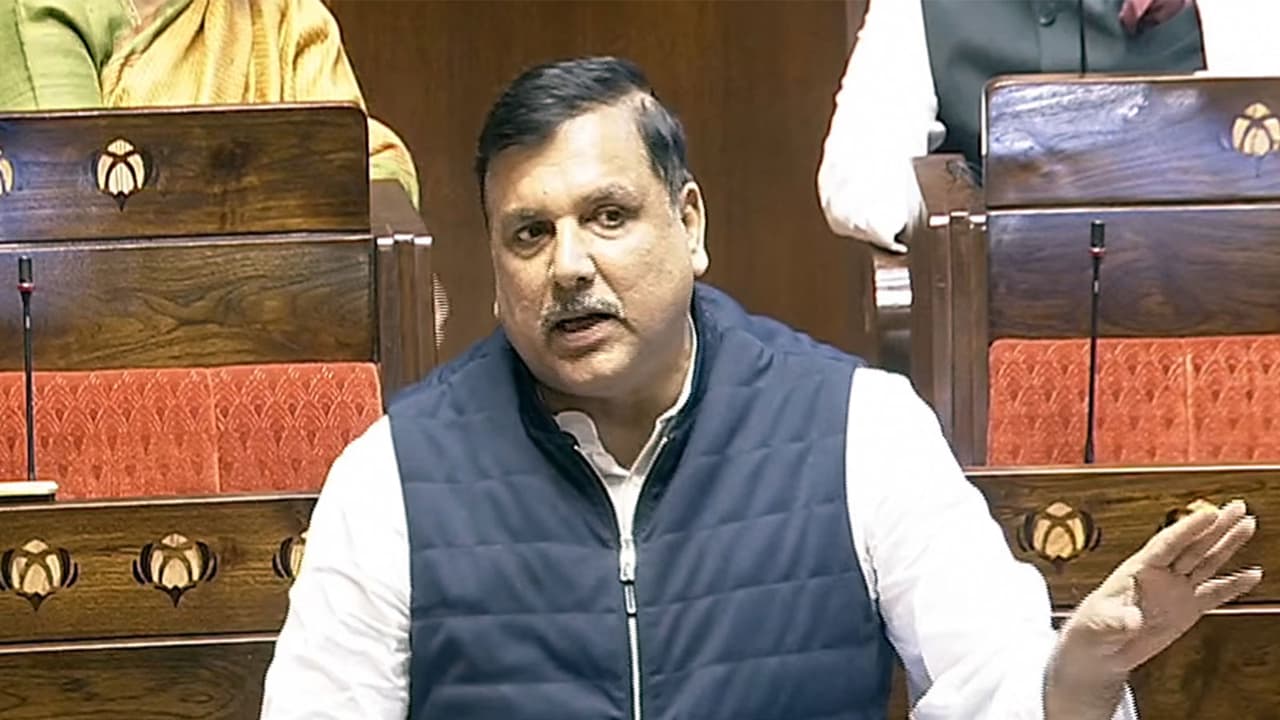
AAP MP Sanjay Singh submitted a notice in Rajya Sabha to discuss the LPG shortage and price hikes affecting the hospitality sector, citing West Asia tensions. He warned of business closures, while the Centre assured that energy supplies are secure.
AAP MP Seeks Discussion on LPG Crisis in Rajya Sabha
Aam Aadmi Party (AAP) MP Sanjay Singh on Friday submitted a notice of motion under Rule 267 in the Rajya Sabha, seeking to suspend the day's business to discuss the Liquefied Petroleum Gas (LPG) shortage, rising prices of commercial gas and the impact on the hospitality sector.
Citing the "ongoing war and geopolitical tensions in West Asia", specifically around the Strait of Hormuz, Singh argued that India's energy security is facing major disruptions. In the notice, he wrote, "India is facing serious disruptions in LPG supply due to increasing tensions in the Strait of Hormuz. Approximately 85-90% of India's LPG imports pass through this route. India is the world's second-largest importer of LPG, with an annual consumption of over 31 million metric tonnes, of which about 67% of the demand is met through imports."
Impact on Hospitality Sector and Black Market Fears
Singh noted that on March 7, LPG prices were increased, with domestic cylinders rising by ₹60 and commercial cylinders by approximately ₹115, affecting the hospitality sector across major cities. "This LPG shortage has had a severe impact on the hospitality sector. Approximately 90% of restaurants in the country rely on LPG cylinders for cooking. Due to the current crisis, many hotels and restaurants in various parts of the country, including Delhi, Mumbai, Bengaluru, Hyderabad, and Chennai, have been forced to limit their operations or temporarily close their kitchens," the notice read.
The Rajya Sabha MP further added that representatives of the industry, including the National Restaurant Association of India (NRAI), have warned of "adverse impact on employment" due to business closures if the situation were to continue. "The restaurant industry represents about 500,000 establishments, has an annual turnover of approximately ₹5.7 trillion, and provides employment to over 8 million people," he stated.
He also claimed that reports of LPG cylinders lack market is also surfacing, alleging that per cylinder is reaching ₹3,200 to ₹5,000. "This has led to a significant increase in the operating costs of eateries and is adversely affecting food inflation. In view of the serious impact on business, employment, and the food service sector across the country, clarification is sought from the Government..." the notice said.
Call for Immediate Discussion
Singh listed three topics of discussion in the notice: (i) What is the current status of LPG supply and import in India (ii) Which steps are being taken by the government to stabilize LPG prices and the supply chain (iii) What measures are taken to ensure adequate LPG supply to hotels, restaurants, and other commercial establishments
"Therefore, considering the seriousness of the matter, I request that under Rule 267, all proceedings of the House be suspended and an immediate discussion be held on this extremely important subject," Singh wrote to the upper house.
Centre Assures Energy Supplies Remain Secure
His notice of motion comes amid heightened global concerns after shipping through the Strait of Hormuz, through which about 20 per cent of the world's crude oil, natural gas and LPG normally flows, was disrupted following the ongoing conflict involving Iran, Israel and the United States.
Meanwhile, Union Petroleum and Natural Gas Minister Hardeep Singh Puri on Thursday assured Parliament that India's energy supplies remain secure despite major global disruptions caused by the ongoing conflict in West Asia and subsequent closure of the Strait of Hormuz.
In his statement in the Lok Sabha, Puri said the government has taken multiple measures to safeguard the country's energy security and ensure the uninterrupted availability of petroleum products, cooking gas, and natural gas.
Puri said India has successfully diversified its crude oil sourcing to reduce dependence on the Hormuz route. Before the crisis, about 45 per cent of India's crude imports passed through the strait. (ANI)
(Except for the headline, this story has not been edited by Asianet Newsable English staff and is published from a syndicated feed.)