
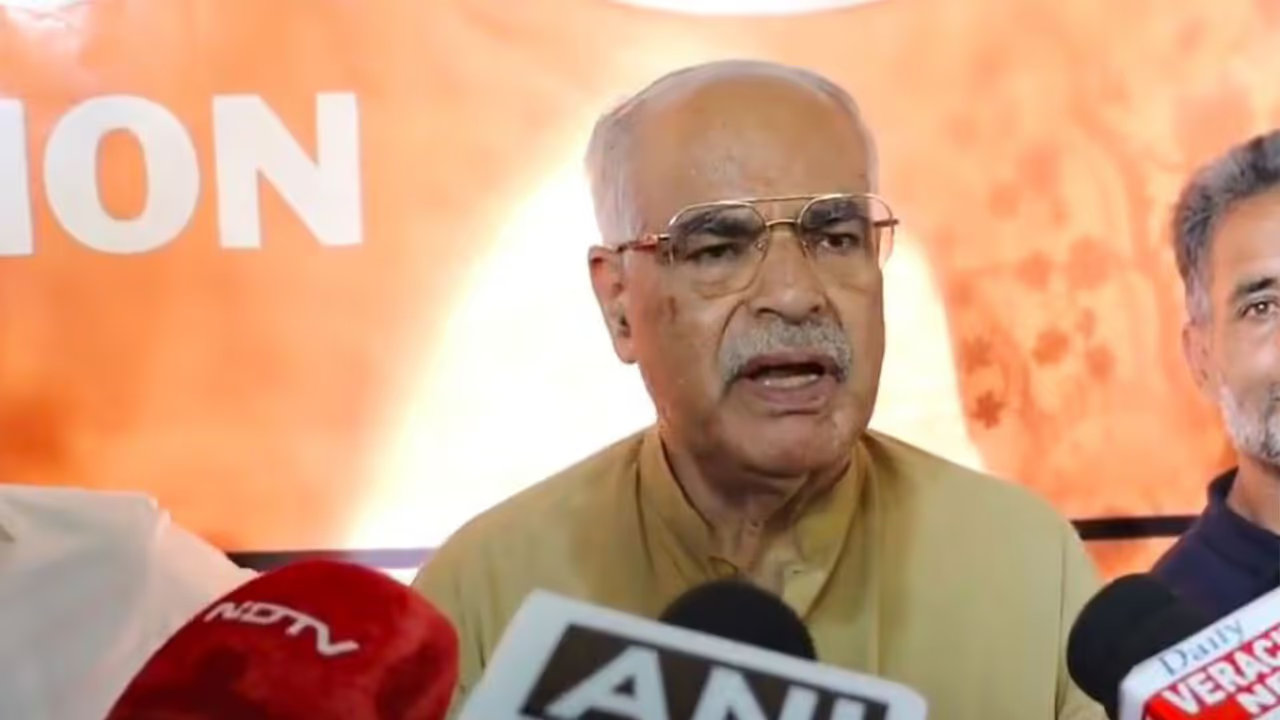
On the 7th anniversary of Article 370's abrogation, BJP leader Ashok Koul hails restored normalcy in J&K. PDP's Mehbooba Mufti leads protests, demanding restoration of special status, while NC calls for the return of statehood.
BJP Hails 'Return to Normalcy'
Marking the seventh anniversary of the revocation of Article 370, Bharatiya Janata Party leader Ashok Koul highlighted that the region's administrative and social framework has completely recovered, allowing ordinary citizens to resume normal routines without fear or restriction. Talking to the reporters on Tuesday, Ashok Koul highlighted the ground-level changes and freedom experienced by residents. He said, "The most significant development is that the system, which had previously been derailed, is back on track. Earlier, people could not move about freely or conduct business properly; today, that has changed. People can now engage in trade and keep their shops open late into the evening. They can go about their daily lives without hindrance."
Koul further emphasised that dismantling the former special status has eliminated historic barriers that previously hindered youth education and public movement. "Our children and youth, who once could not attend schools, universities, or colleges, can now do so with ease. We have decided to hold grand celebrations for it, both in Kashmir and across the entire country," Ashok Koul said.
PDP Protests, Demands Restoration
People's Democratic Party (PDP) chief Mehbooba Mufti on Tuesday held a candlelight protest in Srinagar on the eve of the seventh anniversary of the abrogation of Article 370, alleging that the BJP-led government "looted the special status of Jammu and Kashmir" and demanding the restoration of Articles 370 and 35A. Speaking about the proposed protest on August 5, Mehbooba Mufti said, "The PDP, our community, we will fight. Along with resolving the Kashmir issue, we will also address Articles 370 and 35A and the release of prisoners languishing in various jails across the country."
Mehbooba said Article 370 was not merely a constitutional provision but represented the identity and rights of the people of Jammu and Kashmir. "Article 370 was not just an article. It was our identity, our honour, our pride, and the protection of our land and jobs. They have made us completely worthless. But this day will not last. This is a dark night because a conspiracy was hatched, and using a brute majority in Parliament, the Constitution of India was changed," she had said.
She added, "What was given to us was given by the Constitution of this country, not China or Pakistan. We had joined India with love and certain conditions, but everything was destroyed."
Targeting the BJP, Mufti said, "Just as the BJP looted the Ram temple, they looted the special status of Jammu and Kashmir. Like they are being punished for that, they will be punished for this too." She reiterated her demand for restoration of the special status of Jammu and Kashmir, saying, "Along with the resolution of the Jammu and Kashmir issue, Articles 370 and 35A will also have to be restored."
On the proposed protest, she said, "We will stay here tonight, and tomorrow we will try to stage a protest and send a message to the entire country that the people of Jammu and Kashmir are alive and Article 370 is our right."
NC Calls for Statehood Restoration
National Conference MLA Sajjad Shaheen also called for the restoration of Jammu and Kashmir's statehood, saying that the people of the Union Territory had been wronged. Speaking on the eve of the anniversary of the abrogation of Article 370, Shaheen said, "The emotions of the people of Jammu and Kashmir were played with. This state, which is called the crown of the country, was downgraded and converted into two Union Territories."
He further said, "The Government of India should fulfil the promise it made on the floor of the House to restore Jammu and Kashmir's statehood. The government has also given an affidavit in the Supreme Court promising to restore statehood. That promise should be fulfilled."
J&K vs PoJK: A Contrasting Trajectory
Meanwhile, seven years after the abrogation of Article 370, Jammu and Kashmir and Pakistan-occupied Jammu and Kashmir (PoJK) present contrasting realities, with the Union Territory witnessing greater stability and development, while PoJK continues to witness allegations of unrest, restrictions and public protests.
As Jammu and Kashmir continues to witness expanding infrastructure, improved public services and a relatively peaceful environment following the abrogation of Article 370, residents and political voices in Pakistan-occupied Jammu and Kashmir continue to raise concerns over governance, development, economic hardship and restrictions on civil liberties, highlighting the contrasting trajectories of the two regions over the past seven years. (ANI)
(Except for the headline, this story has not been edited by Asianet Newsable English staff and is published from a syndicated feed.)